Fort Polk to be renamed Fort Johnson to honor World War I hero
Share
Explore Our Galleries









Breaking News!
Today's news and culture by Black and other reporters in the Black and mainstream media.
Ways to Support ABHM?
By Kaanita Iyer, CNN
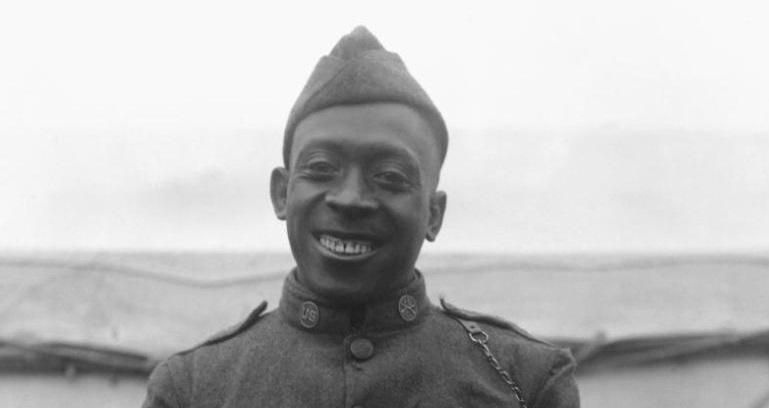
The US Army on Tuesday will officially rename Louisiana’s Fort Polk military base, the latest US military installation to be redesignated as part of an effort to strip Confederate leaders of the honor.
The base will be retitled Joint Readiness Training Center and Fort Johnson. This is in honor of Sgt. William Henry Johnson, a Black US soldier during World War I. [Sgt. Johnson] fought off about two dozen Germans alone, killing at least four. It was previously named after Confederate commander Lt. Gen. Leonidas Polk.
“Sgt. Henry Johnson embodied the warrior spirit, and we are deeply honored to bear his name at the Home of Heroes,” said Brig. Gen. David Gardner, the commanding general of the base.
“Sgt. Johnson’s acts of self-less service during World War I will inspire those at our installation, where we have trained and deployed America’s men and women to fight and win our nation’s wars for over 80 years,” he added.
Johnson, who was awarded a Purple Heart and Medal of Honor posthumously, enlisted two months after the US became officially involved in World War I. [He] began his military career in a segregated New York regiment based in Harlem.
[…]
Johnson was outspoken about the racism experienced by Black soldiers. The Army punished him by canceling the speaking engagements that he was assigned after his heroic actions. He died in 1929 of myocarditis following a tuberculosis diagnosis.
“As a Black American whose bravery wasn’t acknowledged at the time, Sgt. Johnson personified the Army values and was the epitome of strength,” said Brig. Gen. Isabel Rivera Smith, the director of joint staff for New York National Guard.
Read more about Sgt. Johnson’s legacy in the original article.
Read more about the unsung Black heroes of WWI in this Breaking News article.
Find more Breaking News here.
Comments Are Welcome
Note: We moderate submissions in order to create a space for meaningful dialogue, a space where museum visitors – adults and youth –– can exchange informed, thoughtful, and relevant comments that add value to our exhibits.
Racial slurs, personal attacks, obscenity, profanity, and SHOUTING do not meet the above standard. Such comments are posted in the exhibit Hateful Speech. Commercial promotions, impersonations, and incoherent comments likewise fail to meet our goals, so will not be posted. Submissions longer than 120 words will be shortened.
See our full Comments Policy here.