For Black-owned businesses, concerns extend beyond inflation, supply chain issues
Share
Explore Our Galleries









Breaking News!
Today's news and culture by Black and other reporters in the Black and mainstream media.
Ways to Support ABHM?
By Curtis Bunn and Claretta Bellamy, NBC News
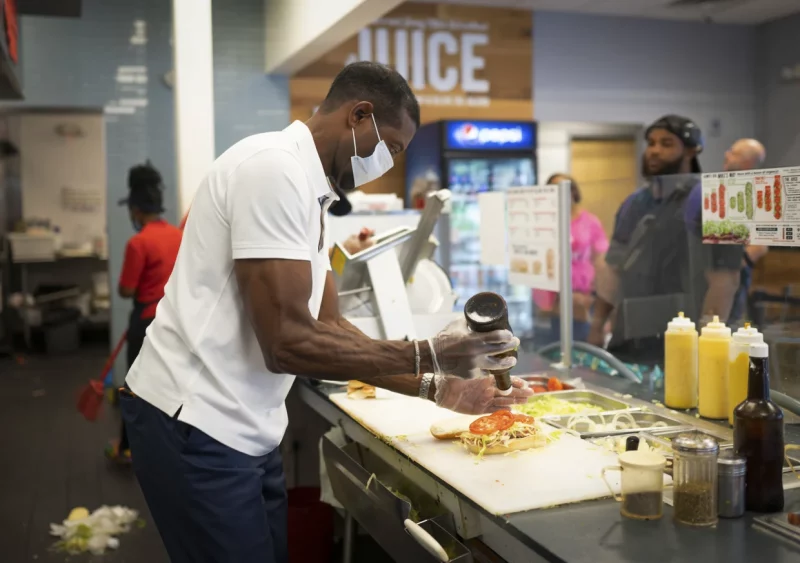
When Keith Millner, wife Charmaine and two of their friends decided to open a Jersey Mike’s Subs sandwich shop in Atlanta in 2019, they had no idea they would end up working behind the counter.
Their doors opened in November 2020, during the heart of the Covid pandemic. When businesses started reopening in July 2021, the nature of commerce had changed — and Black businesses felt the reverberations. For this group at Jersey Mike’s, part of the work became finding dedicated workers post-pandemic. With little to no options, they were forced to don aprons and hats and roll up their sleeves.
“It’s either that or close the business,” said Millner, a former commercial banker who now coaches individuals and organizations on corporate culture, public speaking and other areas. “We were trained on every aspect of the business. So, yeah, we ran the counter, made sandwiches, worked the grill, ordered inventory — whatever it took. And we still do.”
A recent study of small business owners by the U.S. Chamber of Commerce found that inflation and supply chain issues are the top challenges entrepreneurs face today. However, Black business owners, like Millner and Co., face other unique hurdles that are specific to the Black community.
Unlike their white counterparts, Black businesses deal with systemic racism — a fact highlighted in a study on the government’s Payment Protection Program (PPP). The study shows that there are structural inequities “built-in to the administration of the program, the application process, and the fee structure.” Additionally, Black businesses often encounter racism and discrimination when securing bank financing, which leads to them having difficulties acquiring loans.
Read about securing funding and other difficulties faced by Black business owners.
This could spell disaster for the Black-owned businesses and employees hired during the pandemic.
Don’t forget to check out more relevant news stories.
Comments Are Welcome
Note: We moderate submissions in order to create a space for meaningful dialogue, a space where museum visitors – adults and youth –– can exchange informed, thoughtful, and relevant comments that add value to our exhibits.
Racial slurs, personal attacks, obscenity, profanity, and SHOUTING do not meet the above standard. Such comments are posted in the exhibit Hateful Speech. Commercial promotions, impersonations, and incoherent comments likewise fail to meet our goals, so will not be posted. Submissions longer than 120 words will be shortened.
See our full Comments Policy here.