For a Distinctive Black Culture, a Rerouted Parade Feels Like Erasure
Share
Explore Our Galleries









Breaking News!
Today's news and culture by Black and other reporters in the Black and mainstream media.
Ways to Support ABHM?
By Eduardo Medina, New York Times
The annual Penn Center Heritage Day Parade in South Carolina draws hundreds to celebrate the Gullah Geechee people. But a new route has Black residents feeling as if their legacy is vanishing.
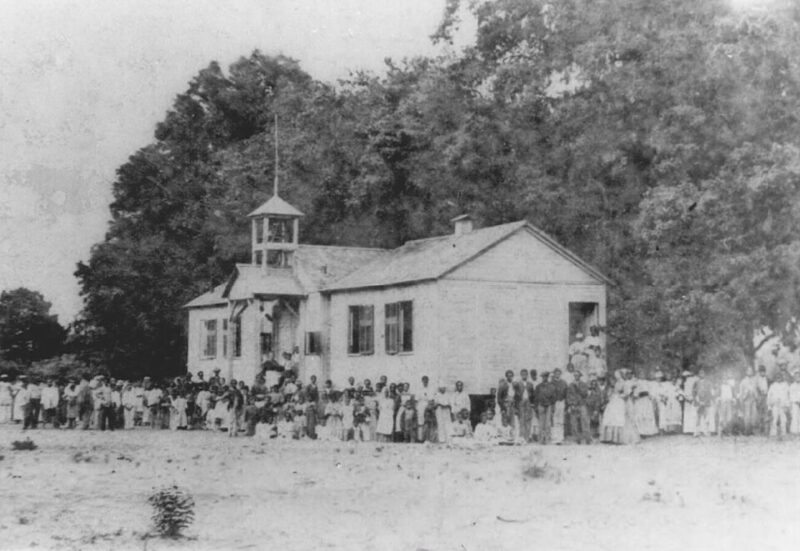
For nearly four decades, the parade on St. Helena Island celebrating the Gullah Geechee people, descendants of enslaved West Africans, has played out in the same way. It starts at the local elementary school off Highway 21 and ends roughly a mile away at the Penn Center, the first school in the South for freed slaves that now serves as a museum of Black history.
Drawing hundreds of people across the Creole-speaking diaspora every November, the Penn Center Heritage Day Parade in the South Carolina Lowcountry fills streets with people wearing colorful African garbs, playing drums and, of course, marching bands. A local church float, fluffed with purple ribbons, gets the party going with a saxophonist and a rollicking gospel choir.
But after several years of traffic complaints, the parade has been scaled back. Among others things, Saturday’s hourlong procession had fewer floats than last year. It didn’t occupy the narrow highway’s two lanes and the median, but only one lane to accommodate traffic. And it didn’t start at the school, where most residents are alumni, but on a smaller road that shortened the route.
The changes, residents say, have come to feel like a microcosm of larger issues facing the Black residents of St. Helena, who have grown more concerned about gentrification and the erasure of their culture as a wealthier, and whiter, population booms around them.
Discover how the parade is a display of heritage that’s being denied.
Other Gullah communities in the US have faced threats from rezoning.
Comments Are Welcome
Note: We moderate submissions in order to create a space for meaningful dialogue, a space where museum visitors – adults and youth –– can exchange informed, thoughtful, and relevant comments that add value to our exhibits.
Racial slurs, personal attacks, obscenity, profanity, and SHOUTING do not meet the above standard. Such comments are posted in the exhibit Hateful Speech. Commercial promotions, impersonations, and incoherent comments likewise fail to meet our goals, so will not be posted. Submissions longer than 120 words will be shortened.
See our full Comments Policy here.