Ferguson Is Having an Election, but Will Ferguson Vote?
Share
Explore Our Galleries









Breaking News!
Today's news and culture by Black and other reporters in the Black and mainstream media.
Ways to Support ABHM?
by Lauren Victoria Burke, theRoot.com
A city plagued by racial discrimination and low voter turnout hopes to turn over a new leaf on both after only 6 percent of eligible African-American voters cast a ballot in 2012.
“When people on the left get mad, they march. When people on the right get mad, they vote. From the standpoint of influencing government, voting beats marching,” said former Massachusetts Rep. Barney Frank during a TV interview March 28.
[..T]he sentiment could easily apply to what goes on in Ferguson, Mo., Tuesday, when the city holds its municipal elections.
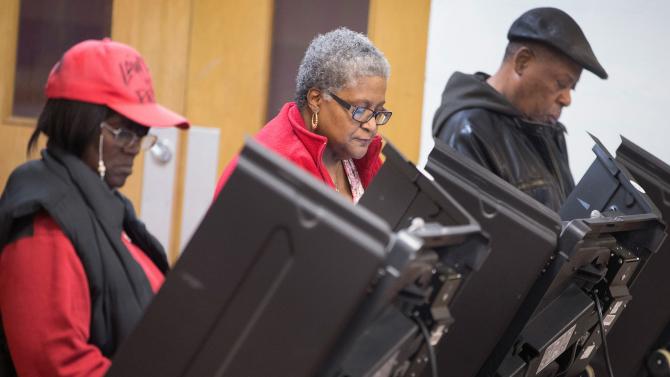
In a city where the last election only brought out 6 percent of eligible African Americans, turnout is the difference between change and more of the same.
“I attach tremendous significance to this election. This is the first election post-Mike Brown, and my opponent does not court African Americans at all, and that’s two-thirds of the people in this ward,” Ferguson mayoral candidate Bob Hudgins told The Root Thursday.
There was a lot of talk about registering voters after several weeks of protests last year following the police shooting death of Michael Brown, but results have been tepid. According to one report, only 128 new voters were registered by October 2014, after almost three months of demonstrations. Many young protesters are pushing for change through other means…
Historically, Ferguson has had very low voter turnout, leading to a majority-white city government where the mayor, City Council and police chief are white, as well as 94 percent of the police force. The weak turnout has been blamed on everything from how municipal elections are held on odd years instead of the even years of congressional and presidential elections to the transient nature of the city’s black population…
Only three African Americans have run for the Ferguson City Council in the past 120 years, despite the fact that the city has grown more and more African American. Ferguson is currently 67 percent black. Looking to change this, on Tuesday, four African Americans are running for the council in Ferguson’s three wards.
Read the full article here.
Read more Breaking News here.
Comments Are Welcome
Note: We moderate submissions in order to create a space for meaningful dialogue, a space where museum visitors – adults and youth –– can exchange informed, thoughtful, and relevant comments that add value to our exhibits.
Racial slurs, personal attacks, obscenity, profanity, and SHOUTING do not meet the above standard. Such comments are posted in the exhibit Hateful Speech. Commercial promotions, impersonations, and incoherent comments likewise fail to meet our goals, so will not be posted. Submissions longer than 120 words will be shortened.
See our full Comments Policy here.