FDA once again pushes back proposal to ban cancer-linked formaldehyde in hair relaxers
Share
Explore Our Galleries









Breaking News!
Today's news and culture by Black and other reporters in the Black and mainstream media.
Ways to Support ABHM?
By Berkeley Lovelace Jr. and Zinhle Essamuah, NBC News
The agency’s self-imposed target date for a ban proposal was pushed to July and will be pushed again to September.
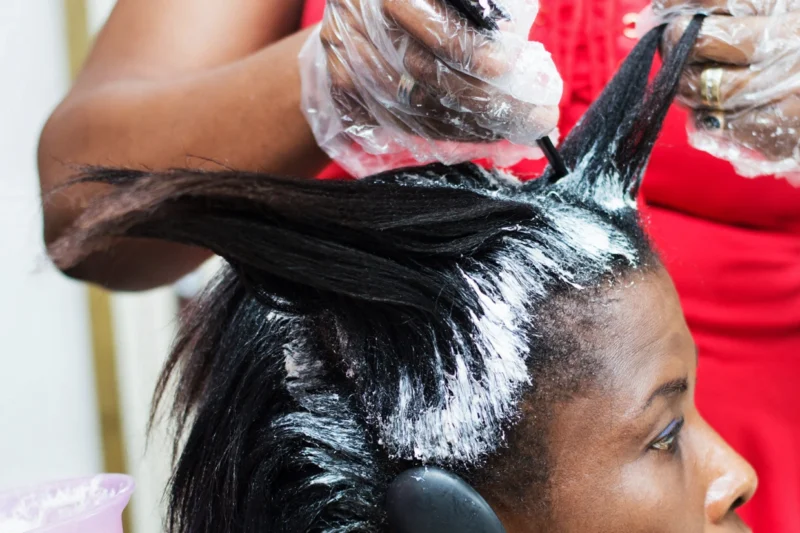
The Food and Drug Administration’s proposal to ban formaldehyde in hair care products has been pushed back once again, and the timeline for its release remains undetermined.
The FDA said in October that it planned to propose a ban on formaldehyde and other formaldehyde-releasing chemicals in hair-smoothing or hair-straightening products, often called relaxers, which are mainly marketed to Black women.
Removing the chemical from hair relaxers has been a long-standing goal for advocates. A wide range of studies have linked formaldehyde to certain cancers, including uterine cancer and blood cancer. Some companies have responded by developing formaldehyde-free formulas or by clearly labeling products that contain the chemical. Not all chemical hair relaxers include formaldehyde, but many do include components that, once heated, can release it, according to the FDA.
Find more Breaking News here.
Explore our virtual exhibit galleries here.
Comments Are Welcome
Note: We moderate submissions in order to create a space for meaningful dialogue, a space where museum visitors – adults and youth –– can exchange informed, thoughtful, and relevant comments that add value to our exhibits.
Racial slurs, personal attacks, obscenity, profanity, and SHOUTING do not meet the above standard. Such comments are posted in the exhibit Hateful Speech. Commercial promotions, impersonations, and incoherent comments likewise fail to meet our goals, so will not be posted. Submissions longer than 120 words will be shortened.
See our full Comments Policy here.