Exonerating the Scottsboro Nine
Share
Explore Our Galleries









Breaking News!
Today's news and culture by Black and other reporters in the Black and mainstream media.
Ways to Support ABHM?
From the New York Times
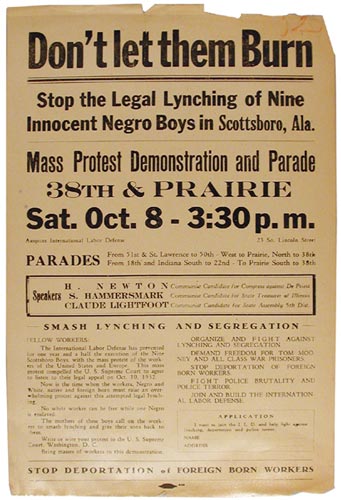
Chicago for the Scottsboro Boys.
Decades too late, the Alabama Legislature is moving to grant posthumous pardons to the Scottsboro Boys — the nine black teenagers arrested as freight train hoboes in 1931 and convicted by all-white juries of raping two white women.
The trials were feverish displays of American racism and injustice that stirred a lynch mob outside the Scottsboro jail. The travesty drew worldwide attention and eventually resulted in landmark Supreme Court rulings on the right to adequate counsel and prohibiting the exclusion of black people from juries. The case consumed the lives of the nine men, even after the rape accusation was recanted by one of the women and the testimony of other witnesses fell apart in a series of retrials and appeals. All but one defendant were sentenced to death, and though none was executed, all served time.
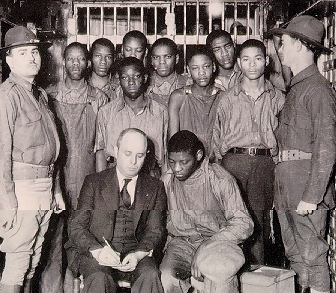
The trials epitomized the South’s Jim Crow culture and are viewed by historians as a major spark for the modern civil rights era. Gov. George Wallace of Alabama, in a populist gambit for national attention, made a show of pardoning one of the Scottsboro nine in 1976. But the fate of the others was left to drift from sight across the years, with the last of the group dying in 1989.
This week, the State Senate Judiciary Committee unanimously approved a bipartisan bill that would change state law to allow the posthumous pardons. A second measure exonerates the nine as “victims of a series of gross injustice.” Final enactment is expected. This will not in any way deliver full justice to those men and their families. But it will confirm what happened in Scottsboro eight decades ago, when street mobs cheered the rapid-fire guilty verdicts.
And the pardons will put a spotlight on the town’s newest tourist attraction, the Scottsboro Boys Museum and Cultural Center.
Read more about this famous case here.
More recently, the Central Park Five was exonerated.
Read more Breaking News here.
Comments Are Welcome
Note: We moderate submissions in order to create a space for meaningful dialogue, a space where museum visitors – adults and youth –– can exchange informed, thoughtful, and relevant comments that add value to our exhibits.
Racial slurs, personal attacks, obscenity, profanity, and SHOUTING do not meet the above standard. Such comments are posted in the exhibit Hateful Speech. Commercial promotions, impersonations, and incoherent comments likewise fail to meet our goals, so will not be posted. Submissions longer than 120 words will be shortened.
See our full Comments Policy here.