Do Racial Issues Still Push Some Over the Edge?
Share
Explore Our Galleries









Breaking News!
Today's news and culture by Black and other reporters in the Black and mainstream media.
Ways to Support ABHM?

By Richard Prince, theRoot
The suspect slain after a chase from the White House to the U.S. Capitol Thursday wasn’t identified by race, unlike the Washington Navy Yard killer who left 12 others dead less than three weeks earlier. Miriam Carey wasn’t at large, as was Aaron Alexis of Fort Worth, Texas, whose race was broadcast when reporters had little else to go on by way of description.
The public also saw photos of Christopher Jordan Dorner, “a linebacker-sized ex-cop with a multitude of firearms, military training and a seemingly bottomless grudge born when the LAPD fired him in 2009,” in the words of the Los Angeles Times, describing him during a manhunt in February. He was believed to have killed three police officers.
All three had mental health issues, and all were African American. Is there a connection?
Amy Alexander, who co-authored the 2000 book “Lay My Burden Down: Unraveling Suicide and the Mental Health Crisis Among African-Americans” with Dr. Alvin F. Poussaint, thinks so.
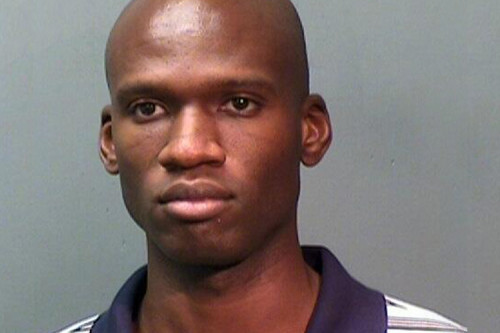
“Today a woman allegedly attempted to ram her car into gates near the White House, ” Alexander wrote Thursday on the Medium website. “She reportedly attempted to flee, and was shot by local law enforcement officials near the U.S. Capitol Building. Two weeks ago, a gunman who was apparently suffering from mental illness that led him to believe that unseen forces were out to get him shot and killed 12 workers at the Navy Yard in the District of Columbia before officers shot him dead.
“The gunman in the Navy Yard tragedy was black, and early reports of today’s incident indicate that the driver of the car that seemed to be trying to [breach] security at the White House may have been black. Were their respective mental states affected by race in America? Scoff if you like. I consider this a legitimate area of inquiry.
“The race of these two individuals who caused these violent outbursts is both important and possibly not so important — what matters to me is that violence appeared to be their court of last resort. The motivations of their respective choices are worth examining, once we learn more about their lives.
“What’s obvious right now, though, is this: We’re trapped in an endless loop of denial when it comes to race and violence in America.

[…]
After the Alexis rampage, some writers called for more attention to mental illness among African American men. “Misdiagnosing mental illness among black men has long been an acute problem — with consequences that extend beyond the Navy Yard killings to the daily gun violence throughout urban America,” Courtland Milloy wrote in the Washington Post. Among Alexis’ issues, a friend said, “He felt a lot of discrimination and racism with white people especially,” NBC News reported.
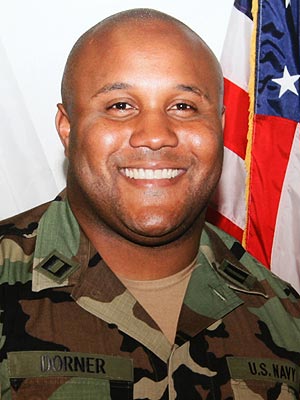
The Los Angeles Times wrote about a manifesto that Dorner issued: “Dorner felt isolated growing up as one of the few African American children in the neighborhoods where he lived and was the victim of racism, according to the manifesto. ‘My first recollection of racism was in the first grade,’ Dorner allegedly wrote, recalling a fellow student at Norwalk Christian School who called him a racial slur. Dorner said he responded ‘fast and hard,’ punching and kicking the student.”
Alexander’s thoughts are worthy of follow-up by other journalists. “Main point is that there’s a direct through line in our US history that links violence, racism,” she told Journal-isms by email. “Add mental health and you’ve a perfect storm of disaster!”
Read more Breaking News here.
Comments Are Welcome
Note: We moderate submissions in order to create a space for meaningful dialogue, a space where museum visitors – adults and youth –– can exchange informed, thoughtful, and relevant comments that add value to our exhibits.
Racial slurs, personal attacks, obscenity, profanity, and SHOUTING do not meet the above standard. Such comments are posted in the exhibit Hateful Speech. Commercial promotions, impersonations, and incoherent comments likewise fail to meet our goals, so will not be posted. Submissions longer than 120 words will be shortened.
See our full Comments Policy here.