Could Roe’s Collapse Mean Everything is Up for Grabs?
Share
Explore Our Galleries









Breaking News!
Today's news and culture by Black and other reporters in the Black and mainstream media.
Ways to Support ABHM?
By Jessica Washington, The Root
Legal experts say the Roe decision could spell the end for many rights Americans have come to rely on.
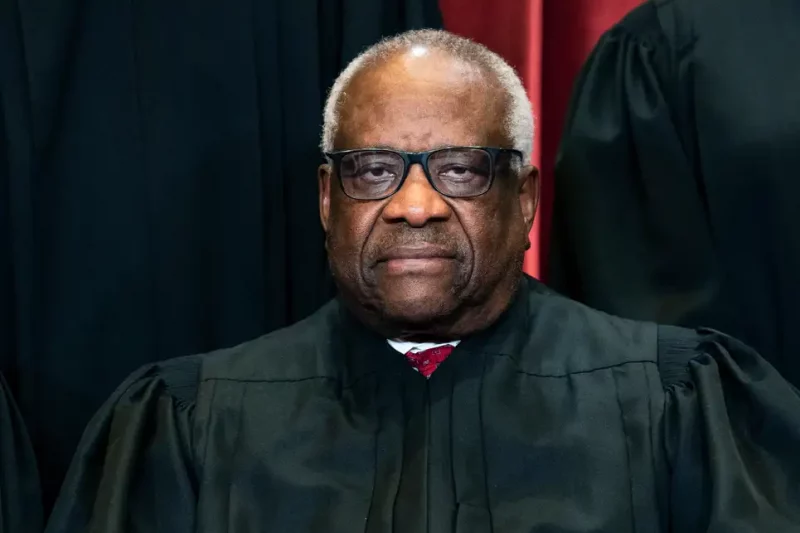
The Supreme Court closed out this session with a metaphorical bang, upending fifty years of court precedent by overturning Roe v. Wade, the case establishing the constitutional right to an abortion.
In the wake of this seismic decision, we reached out to legal experts to figure out what the Supreme Court might do next, the answer, anything.
What is terrifying to me is that they took the biggest issue and just did away with it first,” says Meg York, a family law attorney at Vermont Law School’s South Royalton Legal Clinic.
York says that any of the Supreme Court cases that rely on substantive due process, which protects implied fundamental rights like the right to privacy (abortion is considered a privacy right) and the right to marriage, could be up for grabs…
What’s worse, is that Justice Clarence Thomas explicitly called for overturning several of these substantive due process cases in his opinion, including Obergefell v. Hodges, Griswold v. Connecticut, and Lawrence v. Texas.
Discover why some people are so concerned about future SCOTUS decisions.
It’s frustrating because we just celebrated 55 years of legalized interracial marriage, a precedent set by SCOTUS. Some people even believe we should do away with the Supreme Court entirely.
Breaking news never stops, even on a holiday.
Comments Are Welcome
Note: We moderate submissions in order to create a space for meaningful dialogue, a space where museum visitors – adults and youth –– can exchange informed, thoughtful, and relevant comments that add value to our exhibits.
Racial slurs, personal attacks, obscenity, profanity, and SHOUTING do not meet the above standard. Such comments are posted in the exhibit Hateful Speech. Commercial promotions, impersonations, and incoherent comments likewise fail to meet our goals, so will not be posted. Submissions longer than 120 words will be shortened.
See our full Comments Policy here.