Connecting With Nature to Celebrate Black History Month
Share
Explore Our Galleries









Breaking News!
Today's news and culture by Black and other reporters in the Black and mainstream media.
Ways to Support ABHM?
Gina Cherelus, The New York Times
Outlandish, a hiking store and adventure group in Brooklyn, is one of several organizations on a mission to encourage Black people to spend time outdoors.
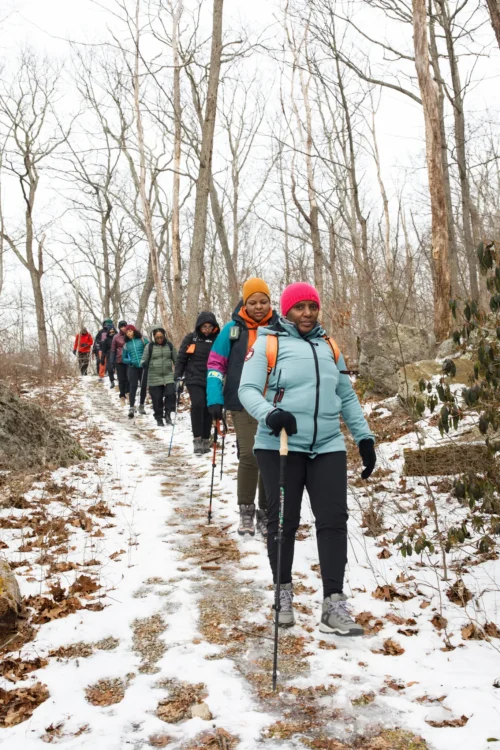
On the surface, hiking can seem as if it has a low barrier to entry. How hard is it to get up and go outside?
Dig deeper and you will find that you need proper footwear and plenty of water. Depending on the weather, moisture-wicking apparel and warm socks will come in handy. Transportation to remote areas can be complicated, and having a guide, or at least a member of your group with knowledge of the terrain, can’t hurt. And more gear will probably be needed the more hours hikers spend outside.
The barriers can be even higher for Black people and other people of color, given the lack of access to the outdoors for certain communities. There’s also a pervasive stereotype that Black people do not enjoy activities like hiking, which discourages some people from trying it in the first place.
At Outlandish, a hiking-gear store in Brooklyn founded by Benje Williams and Ken Bernard, the staff works to end such stereotypes by educating Black people and other marginalized groups on hiking and other outdoor activities. Last weekend, in celebration of Black History Month, the shop hosted a guided hike so participants could have a chance to reconnect with nature at a time of upheaval.
“That’s the hope for this hike, especially after a couple of rough weeks, just going out and breathing and remembering that things might be falling apart but there’s still a lot of beauty as well,” Mr. Williams said, referring to crackdowns on diversity, equity and inclusion initiatives by President Trump.
“I think now more than ever we want to celebrate Black history, celebrate one another, and really I think community is going to have to really be the nucleus of this next presidency,” Mr. Bernard added.
Avalou Ross, a licensed hiking and camping guide in New York who has been hiking for about 10 years via her organization, Tristate Hikers, was the main guide for the event. She has led about 20 of Outlandish’s hiking adventures, which the store calls Hikeish, and said that one of the things she stresses to participants is to “not just to connect with nature, but to connect with each other.”
“Every day that we decide to step out as a Black person into these spaces is a part of Black history,” Ms. Ross said. “And I considered myself a part of Black history because I’ve helped so many Black women face their fears of getting outdoors, especially in the winter.”
Ms. Ross also spoke to the fear that some Black people have expressed toward activities such as hiking and backpacking, claiming that they do not feel it is a space for them.
“Because they don’t see it,” she said. “They’re not exposed to it.”
See how community has ignited historical change.
Read more Breaking News.
Comments Are Welcome
Note: We moderate submissions in order to create a space for meaningful dialogue, a space where museum visitors – adults and youth –– can exchange informed, thoughtful, and relevant comments that add value to our exhibits.
Racial slurs, personal attacks, obscenity, profanity, and SHOUTING do not meet the above standard. Such comments are posted in the exhibit Hateful Speech. Commercial promotions, impersonations, and incoherent comments likewise fail to meet our goals, so will not be posted. Submissions longer than 120 words will be shortened.
See our full Comments Policy here.