Colonial Williamsburg Restores America’s Oldest Black Schoolhouse, Uncovering a Legacy of Education and Resilience
Share
Explore Our Galleries









Breaking News!
Today's news and culture by Black and other reporters in the Black and mainstream media.
Ways to Support ABHM?
By Stacy M, Brown, Washington Informer
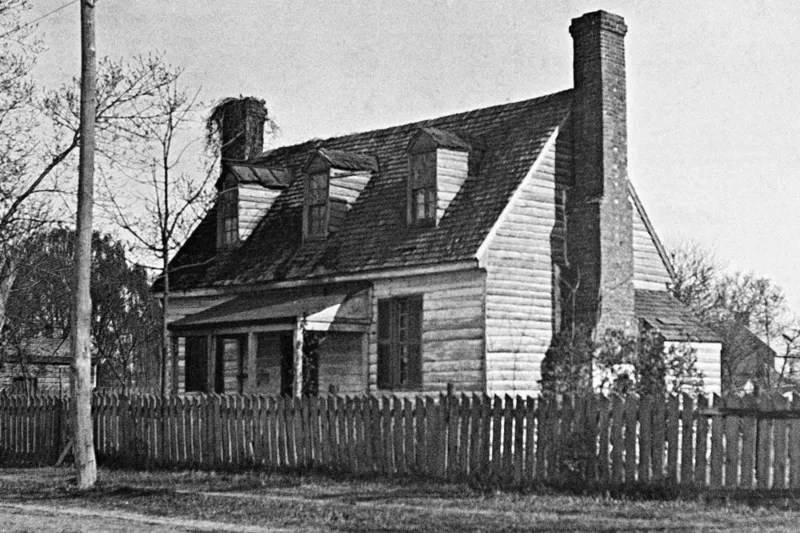
Colonial Williamsburg is nearing completion on the restoration of the Williamsburg Bray School, the oldest surviving schoolhouse for Black children in America.
Founded in 1760 by the Associates of Dr. Bray, a British Anglican charity, the school was established to teach enslaved and free Black children to read, albeit through a curriculum that promoted religious submission to slavery. Yet, for the hundreds of students who passed through its doors, literacy opened possibilities far beyond their assigned roles.
The school’s dedication on Nov. 1 marked a milestone in the project’s meticulous restoration efforts, with public tours set to begin this spring. Located on the grounds of Colonial Williamsburg in partnership with William & Mary’s Bray School Lab, the Williamsburg Bray School stands as a testament to the oppression and resilience woven into early American history.
The Smithsonian’s Secretary Lonnie G. Bunch III, who served as the keynote speaker, emphasized the significance of the structure by saying that it has “extraordinary potential” to demonstrate how a small number of people’s dreams helped shape the values of many people.
Laarn about the Rosenwald Schools and their legacy of Black-Jewish collaboration.
Comments Are Welcome
Note: We moderate submissions in order to create a space for meaningful dialogue, a space where museum visitors – adults and youth –– can exchange informed, thoughtful, and relevant comments that add value to our exhibits.
Racial slurs, personal attacks, obscenity, profanity, and SHOUTING do not meet the above standard. Such comments are posted in the exhibit Hateful Speech. Commercial promotions, impersonations, and incoherent comments likewise fail to meet our goals, so will not be posted. Submissions longer than 120 words will be shortened.
See our full Comments Policy here.