Celebrating Juneteenth with Remembrance and Resistance
Share
Explore Our Galleries









Breaking News!
Today's news and culture by Black and other reporters in the Black and mainstream media.
Ways to Support ABHM?
Sameer Rao, colorlines.com
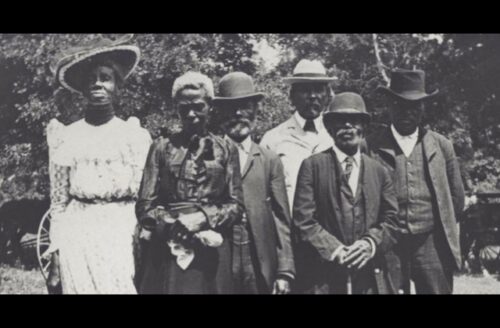
Black Americans and community organizations across the country celebrate Juneteenth today (June 19) with events and actions that honor Black liberation’s past and future.
As the Smithsonian’s National Museum of African American History and Culture (NMAAHC) describes on its website, Juneteenth traces back to the June 19, 1865, arrival of Union troops in Galveston Bay, Texas, at the tail-end of the Civil War. It was nearly two years after President Abraham Lincoln issued the Emancipation Proclamation, which technically freed Blacks in the South, but could not be legally enforced in areas under Confederate control….
Various groups are commemorating Juneteenth by honoring racial justice progress and contemporary activism in different ways.
The NMAAC livestreamed director Lonnie Bunch III’s tour of its “Slavery and Freedom” exhibit earlier today. Watch the tour below. It highlights several artifacts, including Nat Turner’s Bible and a cabin that housed escaped enslaved people.
The Movement for Black Lives is tackling one of emancipation’s failed promises—the guarantee of “40 acres and a mule”—with a nationwide day of direct actions to reclaim public and contested spaces for Black communities. The actions are part of the larger Black Land and Liberation Initiative, anchored by the BlackOUT Collective and Movement Generation, to coordinate land reclamation and reparations actions with local activism groups. Visit M4BL.net to find an action near you.
Read the full article here.
Read more Breaking News here.
Comments Are Welcome
Note: We moderate submissions in order to create a space for meaningful dialogue, a space where museum visitors – adults and youth –– can exchange informed, thoughtful, and relevant comments that add value to our exhibits.
Racial slurs, personal attacks, obscenity, profanity, and SHOUTING do not meet the above standard. Such comments are posted in the exhibit Hateful Speech. Commercial promotions, impersonations, and incoherent comments likewise fail to meet our goals, so will not be posted. Submissions longer than 120 words will be shortened.
See our full Comments Policy here.