Black Journalist Asks Why TV Shows Stereotyping Whites Aren’t Protested Like Black Shows
Share
Explore Our Galleries









Breaking News!
Today's news and culture by Black and other reporters in the Black and mainstream media.
Ways to Support ABHM?
By Tambay A. Obenson, Shadow and Act
The fact that this was written by black journalist is even more perplexing to me.
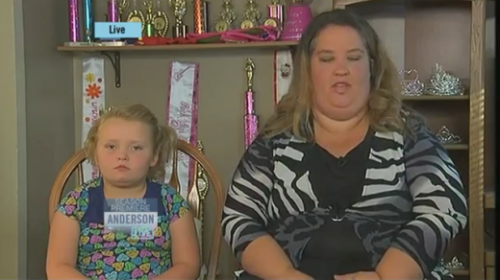
Eric Deggans, TV and media critic, penned an op-ed for NPR titled On ‘Hicksploitation’ And Other White Stereotypes Seen On TV, in which he essentially laments what he sees as a double standard when it comes to TV shows that emphasize and exploit stereotypes of white people versus those that do the same of black people.
In the piece, to argue his point, he cites shows like Here Comes Honey Boo Boo, Jersey Shore, Mob Wives and others, as examples of TV programming that exploit stereotypes of white people, and compares them to All My Babies’ Mamas – the Oxygen network reality TV series that drew protest and was eventually buried.
[…]
I certainly wouldn’t disagree with him on how problematic exploiting stereotypes in mass media can be. Although, as author Chimamanda Ngozi Adichie has said, the problem with stereotypes isn’t that they are wrong, but that they are INCOMPLETE!

I LOVE that quote!
And that’s where Mr Deggans and I part ways. The reason he gives for why he thinks shows stereotyping white people haven’t seen similar protests as those stereotyping black people, ignores one very important fact. And that is, referencing Adichie’s quote above, in mass media, there is, and has always been, a far more COMPLETE representation of white people. Black people simply haven’t had that luxury. Since the invention of the medium that is television (and let’s throw in cinema as well), America (and really the world) has been inundated with a wealth of VARIED representations of white people on screen. For every Honey Boo Boo, there are scores of other kinds of depictions of white people of all classes, on TV and in film. And these images dominate our screens, and have done so for a century, and continue to do so….
Read the complete article here.
Read more Breaking News here.
Comments Are Welcome
Note: We moderate submissions in order to create a space for meaningful dialogue, a space where museum visitors – adults and youth –– can exchange informed, thoughtful, and relevant comments that add value to our exhibits.
Racial slurs, personal attacks, obscenity, profanity, and SHOUTING do not meet the above standard. Such comments are posted in the exhibit Hateful Speech. Commercial promotions, impersonations, and incoherent comments likewise fail to meet our goals, so will not be posted. Submissions longer than 120 words will be shortened.
See our full Comments Policy here.