Black History Document Found in Chicago Home Before Demolition
Share
Explore Our Galleries









Breaking News!
Today's news and culture by Black and other reporters in the Black and mainstream media.
Ways to Support ABHM?
By Susanne M. Schafer
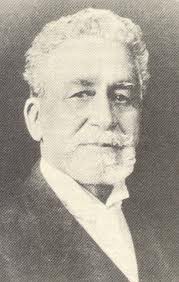
The first black man to become a University of South Carolina professor in 1873 was hailed Tuesday as a “man of courage,” who taught during the school’s fleeting era of post-Civil War desegregation and ended up inspiring the generations of scholars who followed.
Richard Theodore Greener, a promising intellectual who fought for racial equality, was invited to teach and live on the university’s Columbia campus during the tumultuous period known as Reconstruction.
“We are all extremely proud of this path-breaker,” said Bobby Donaldson, a history and African-American studies professor.
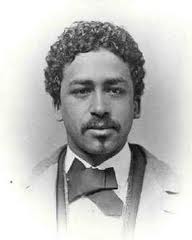
“The hiring of an African-American professor and the admission of black students — less than a decade after the end of slavery — were part of an extraordinary and daring experiment,” Donaldson said.
He spoke at a ceremony held to unveil Greener’s 1876 law diploma and law license. Those documents were recently acquired by the university and placed on display at the South Carolina Library, which is dedicated to the state’s history.
The diploma and license survived after being plucked from a Chicago home in 2009 just before it was to be demolished.
[…]
It is a stroke of luck for the school to obtain Greener’s documents. Many originals were destroyed to eradicate the memory of blacks attending the school.
To read the full article, click here.
For more breaking news, click here.
Comments Are Welcome
Note: We moderate submissions in order to create a space for meaningful dialogue, a space where museum visitors – adults and youth –– can exchange informed, thoughtful, and relevant comments that add value to our exhibits.
Racial slurs, personal attacks, obscenity, profanity, and SHOUTING do not meet the above standard. Such comments are posted in the exhibit Hateful Speech. Commercial promotions, impersonations, and incoherent comments likewise fail to meet our goals, so will not be posted. Submissions longer than 120 words will be shortened.
See our full Comments Policy here.