Black Covid long-haulers felt invisible to the health care system, so they formed their own support groups
Share
Explore Our Galleries









Breaking News!
Today's news and culture by Black and other reporters in the Black and mainstream media.
Ways to Support ABHM?
By Claretta Bellamy and Char Adams, NBC News
These Black-led groups have popped up across the country as more and more Black people have reported prolonged Covid symptoms — and difficulty getting treatment.
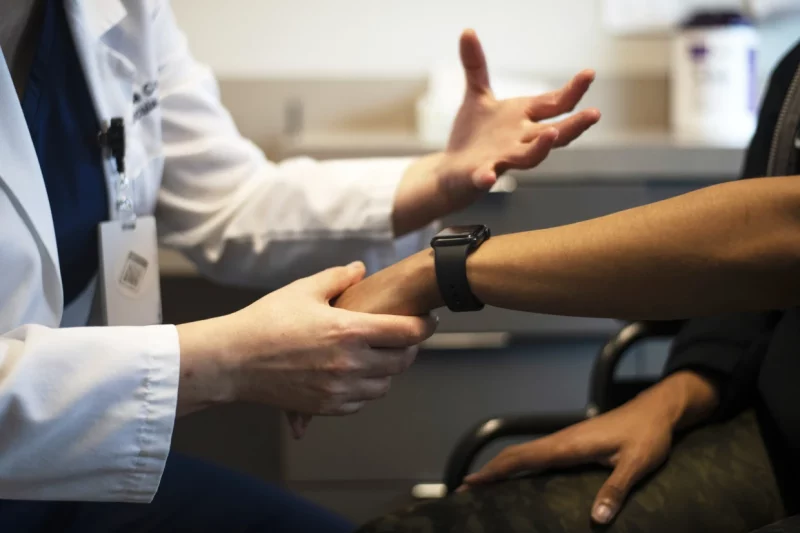
Chimére L. Smith, 40, thought her bout with Covid in March 2020 would pass within two weeks, as most mild cases do. But the Baltimore English middle school teacher found herself continuously experiencing extreme fatigue, diarrhea, dry mouth, brain fog and a sore throat, which she initially attributed to a possible sinus infection. By April, she couldn’t work or drive, had lost 30 pounds, had spinal pain and lost complete vision in her left eye. She even thought about taking her own life. Smith was experiencing long Covid.
Smith said she visited hospitals a dozen times seeking help, but the physicians brushed her off, and one doctor labeled her “aggressive” when she insisted that severe headaches she experienced were due to Covid. She said she was repeatedly discharged with no resolution after each visit.
“I would come in with notes of my symptoms and share these symptoms with these doctors and they would not hear me. They wouldn’t listen to me. They would treat me as if I was a child and I didn’t know my body,” Smith said. “I wanted to die because I could not eat. I could hardly drink. I couldn’t think. Everything that I knew about my life within those first two or three months had been destroyed.”
That’s when Smith found the BIPOC Women Long Covid ‘Long Hauler’ Support Group, a Facebook group with hundreds of women of color with long Covid who meet virtually. Since joining the group in May 2021, Smith said she has been better equipped to advocate for her own care and that of Black women living with prolonged symptoms of the virus. She’s one of many Black people across the country suffering from long Covid who have found solace in communities of people having the same experience. Similar support groups have popped up in many states since the pandemic began, with Black people uniting to tackle everything from lingering symptoms to disparities in the nation’s health care system.
Learn how Black COVID patients have had to advocate for themselves.
Even when doctors listened to Black patients, they may have been faced with faulty medical devices. This contributes to the community’s continued concerns about COVID.
Get more Black culture and community news.
Comments Are Welcome
Note: We moderate submissions in order to create a space for meaningful dialogue, a space where museum visitors – adults and youth –– can exchange informed, thoughtful, and relevant comments that add value to our exhibits.
Racial slurs, personal attacks, obscenity, profanity, and SHOUTING do not meet the above standard. Such comments are posted in the exhibit Hateful Speech. Commercial promotions, impersonations, and incoherent comments likewise fail to meet our goals, so will not be posted. Submissions longer than 120 words will be shortened.
See our full Comments Policy here.