Biden’s VA Must Have More Black Veterans In Leadership Roles To Address ‘Inequalities,’ Open Letter Urges
Share
Explore Our Galleries









Breaking News!
Today's news and culture by Black and other reporters in the Black and mainstream media.
Ways to Support ABHM?
By Bruce C.T. Wright, NewsOne
As it stands now, there is only one Black person among 17 executives at the Department of Veterans Affairs
…The Black Veteran Empowerment Council (BVEC), which describes itself as “a coalition of national, state and local veteran organizations seeking to shift long-standing racial, economic and social inequalities suffered by Black veterans in the United States,” published an open letter Wednesday urging the appointment of Black veterans to senior roles within the VA. It’s the only way that Black veterans can not only fully enjoy the benefits their white counterparts do but also have solace knowing a VA leader has their best interests at heart.
Some of that unequal treatment dates back hundreds of years while some is still happening right now, the letter said.
“Deliberate obstruction and inaccessibility of benefits have stripped countless deserving Black families of economic and educational opportunity owed to them for the selfless sacrifice of military service,” the letter said in part. “Some of the most egregious examples are the denial of survivor pension benefits following the Civil War, disproportionate distribution of the G.I. Bill after World War II, and steep inequality across VA disability claim approvals during and after the Vietnam War.”…
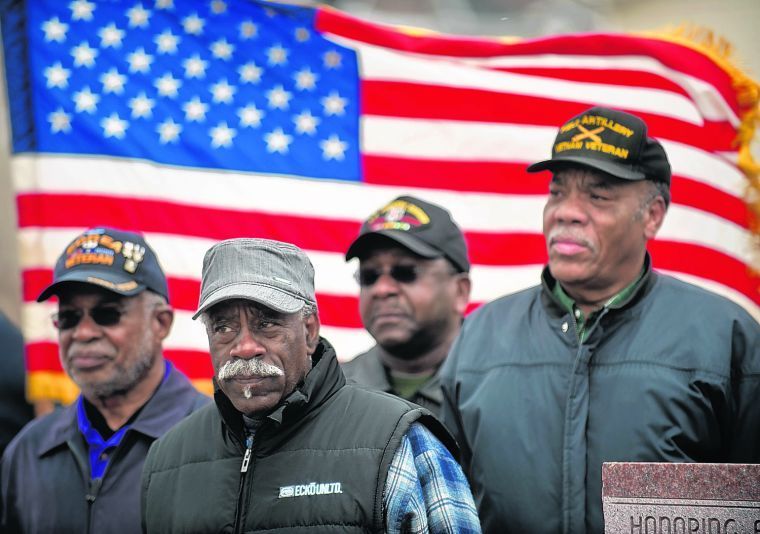
…“Though strides have been made in recent years to address severe gaps in healthcare for women, solutions to the unique challenges facing African American women-veterans under VA must be led by senior leaders committed to representing our interests,” Patricia Jackson-Kelley, President of the National Association of Black Military Women, which is part of BVEC, said.
The letter goes on to say that “entrenched racism and a callous indifference by VA to sufficiently redress these harms have further exacerbated the plight of the Black Veteran community.”…
Read the full article here.
Learn more about African-American veterans and their influence in the Civil War.
More Breaking News here.
Comments Are Welcome
Note: We moderate submissions in order to create a space for meaningful dialogue, a space where museum visitors – adults and youth –– can exchange informed, thoughtful, and relevant comments that add value to our exhibits.
Racial slurs, personal attacks, obscenity, profanity, and SHOUTING do not meet the above standard. Such comments are posted in the exhibit Hateful Speech. Commercial promotions, impersonations, and incoherent comments likewise fail to meet our goals, so will not be posted. Submissions longer than 120 words will be shortened.
See our full Comments Policy here.