Bernadette Carey Smith, Black Reporter in Mostly White Newsrooms, Dies at 83
Share
Explore Our Galleries









Breaking News!
Today's news and culture by Black and other reporters in the Black and mainstream media.
Ways to Support ABHM?
By Neil Genzlinger, The New York Times
She was one of the first Black female journalists at The New York Times and The Washington Post. The Times put her on the staff of a women’s news section.
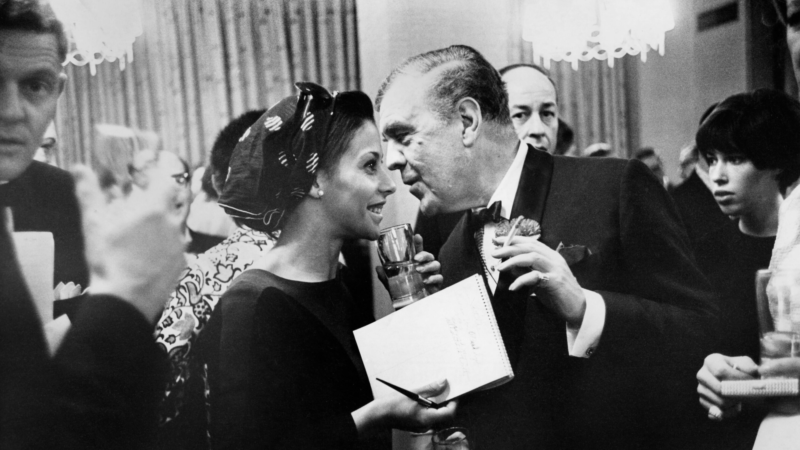
Bernadette Carey Smith, who in the 1960s was one of the first Black women to be hired as a reporter at The New York Times and The Washington Post, died on Dec. 5 at an assisted living complex in Tuckahoe, N.Y. She was 83.
Her nephew Scott Taylor said the cause was arteriosclerotic cardiovascular disease. Her death was brought to the attention of The New York Times only last week.
Ms. Smith, who married Bruce Smith, an executive at the American Communications Group, in 1980, was still Bernadette Carey when, in October 1965, The Times hired her to work on its women’s news section, which at the time was called Food, Fashions, Family, Furnishings.
[…]
At The [Washington] Post, Ms. Smith was given more substantial assignments. She covered a speech by the Rev. Dr. Martin Luther King Jr. at the National Cathedral, the funeral of Senator Robert F. Kennedy and other high-profile events.
“Her talent and perseverance produced extraordinary stories that humanized national news at a time when all too many stellar women of all colors and backgrounds were shunted off to the Pink ghetto of society pages,” Myra MacPherson, who started working at The Post just as Ms. Smith was leaving, said by email.
Read the rest of the article here.
Learn about another Black female writer, June Jordan, here.
Read more Breaking News here.
Comments Are Welcome
Note: We moderate submissions in order to create a space for meaningful dialogue, a space where museum visitors – adults and youth –– can exchange informed, thoughtful, and relevant comments that add value to our exhibits.
Racial slurs, personal attacks, obscenity, profanity, and SHOUTING do not meet the above standard. Such comments are posted in the exhibit Hateful Speech. Commercial promotions, impersonations, and incoherent comments likewise fail to meet our goals, so will not be posted. Submissions longer than 120 words will be shortened.
See our full Comments Policy here.