Baltimore Free Farm Feeds Protestors Through ‘Culinary Solidarity’
Share
Explore Our Galleries









Breaking News!
Today's news and culture by Black and other reporters in the Black and mainstream media.
Ways to Support ABHM?
By Sebastian Murdock, the Huffington Post
BALTIMORE — Inside a small, unassuming warehouse in a quiet neighborhood nestled near the outskirts of Baltimore, Maryland, a small group of activists are busy cooking, shuffling about and giving marching orders as veggies simmer on a stove and potatoes bake in an oven. Though they’re used to the hustle and bustle of cooking massive amounts of food, the past two weeks have taken a more urgent tone.
As protests enveloped the city following the death 25-year-old Freddie Gray, whose spine was severed while in police custody, the organization Baltimore Free Farm immediately began working around the clock to feed hungry demonstrators.
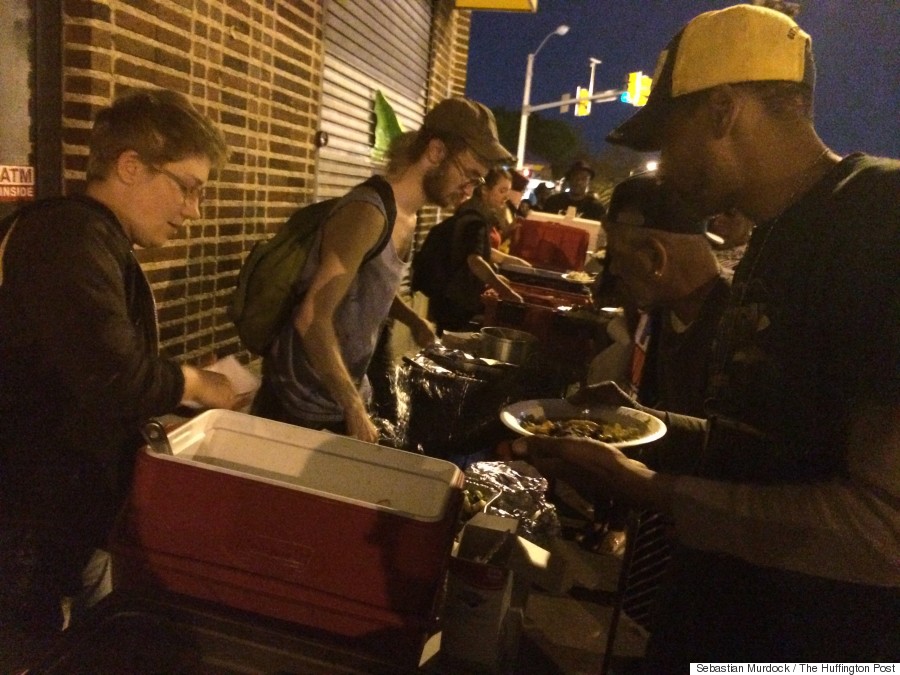
Normally, Free Farm… feeds the homeless organic vegan food weekly. The supply comes from supermarkets and kitchens across the city that deem the food below standards to serve. Free Farm first sifts through the food then proceeds to prep and serve hundreds of meals to individuals in need.
“We normally feed 80 to 100 less fortunate people every Sunday, rain or shine,” 33-year-old volunteer Kenny Vetra told the Huffington Post on Sunday. Along with their normal numbers, they’re now feeding hundreds more at multiple protests across the city.
“Feeding people at protests has helped calm things down,” Vetra says. “It’s brought people support and love through food, basically culinary solidarity with the people. It’s helped break the tension a little bit.”
As volunteers cook food inside the commune-of-sorts, a dozen or so other activists sit cross-legged in dirt out back by the garden talking plans of action. Free Farms is mainly comprised of young white adults. Today, they’re discussing how they can help the black community while acknowledging their own white privilege…
Later in the day, groups of volunteers split off to go to different locations: a protest at city hall, a gathering outside a detention center where arrested protestors are being released, and their usual Sunday spot where the homeless congregate. Food items includes chili, stir fry, tofu sandwiches, bread, potatoes and fruit salad. Fatigue has caught up with the volunteers but the determination persists…
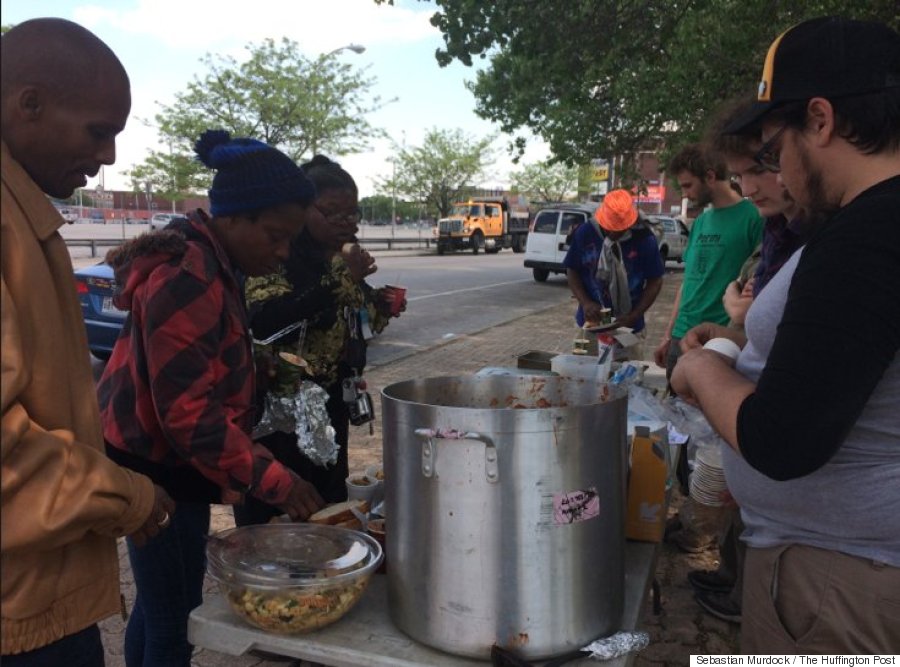
At the detention center, arrested protestors slowly trickle out, each met with a round of applause by Free Farm and other organizations there to provide free legal advice and assistance.
“Thank you so much for all you do,” says one recently released protestor as a volunteer piles his plate with food. “This is what it’s all about.”
Read the full article here.
Read more Breaking News here.
Comments Are Welcome
Note: We moderate submissions in order to create a space for meaningful dialogue, a space where museum visitors – adults and youth –– can exchange informed, thoughtful, and relevant comments that add value to our exhibits.
Racial slurs, personal attacks, obscenity, profanity, and SHOUTING do not meet the above standard. Such comments are posted in the exhibit Hateful Speech. Commercial promotions, impersonations, and incoherent comments likewise fail to meet our goals, so will not be posted. Submissions longer than 120 words will be shortened.
See our full Comments Policy here.