As Juneteenth approaches, Black Florida community renews preservation bid
Share
Explore Our Galleries









Breaking News!
Today's news and culture by Black and other reporters in the Black and mainstream media.
Ways to Support ABHM?
By Safiya Charles, SPLC
A search for Royal, Florida, in Google Maps returns a snapshot of mostly green space speckled with pools of blue. There are two county roads — one that runs north and south, another east to west — and a prominent gray line slicing through its center, marking the route of Interstate 75.
No dotted lines appear on the map to trace the outline of this rural unincorporated community of about 1,200. But historical research has defined its place.
Located in Sumter County, the state’s fastest-growing, Royal is about an hour’s drive from Orlando, Tampa and Gainesville. It is five miles west of the growing city of Wildwood and only a few miles from The Villages, the largest retirement community in the nation with a largely white, affluent population.
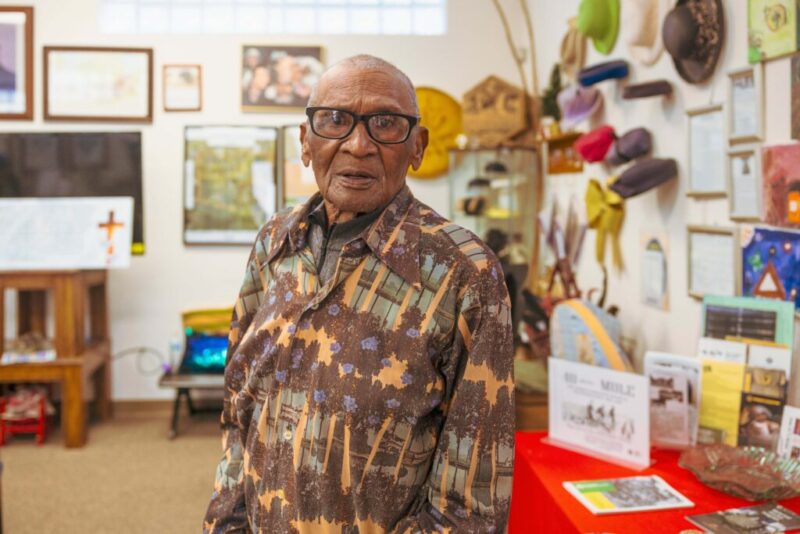
Most of Royal’s 1,200 residents are descended from people who were freed from slavery when it was abolished at the end of the Civil War. Then they settled the community from the 1860s through the 1890s. Royal native Beverly Steele’s people, the Andersons, were one of three founding families who arrived in 1865. Dossie Singleton’s grandfather came that year too; and Maitland Keiler’s in 1879.
For years, the community’s boundaries have been at the center of a debate between the Florida state historic preservation officer (Florida SHPO) and the community of Royal.
[T]he Southern Poverty Law Center is continuing its work, which began two years ago, to assist the community in seeking recognition from the National Register of Historic Places. The historic designation would help residents preserve their community.
Continue reading and learn how you can support the cause.
Discover Black history, including slavery, or check out our events calendar for Juneteenth events.
Comments Are Welcome
Note: We moderate submissions in order to create a space for meaningful dialogue, a space where museum visitors – adults and youth –– can exchange informed, thoughtful, and relevant comments that add value to our exhibits.
Racial slurs, personal attacks, obscenity, profanity, and SHOUTING do not meet the above standard. Such comments are posted in the exhibit Hateful Speech. Commercial promotions, impersonations, and incoherent comments likewise fail to meet our goals, so will not be posted. Submissions longer than 120 words will be shortened.
See our full Comments Policy here.