As Jacksonville shooting victims are eulogized, advocates call attention to anti-Black hate crimes
Share
Explore Our Galleries









Breaking News!
Today's news and culture by Black and other reporters in the Black and mainstream media.
Ways to Support ABHM?
By Noreen Nasir, Aaron Morrison, Aisha I. Jefferson, The Independent
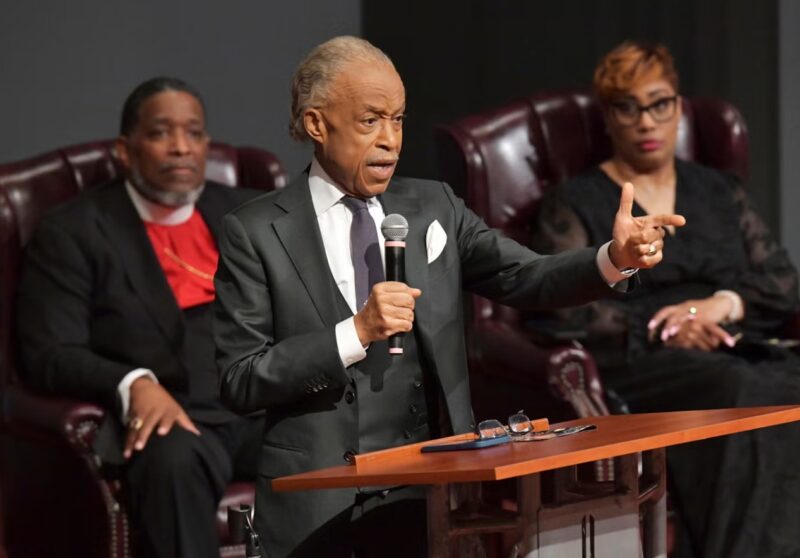
The racist motivations of the white shooter who targeted and fatally shot Black people in Jacksonville, Florida, two weeks ago have revived concerns about the threat of hate violence and domestic terrorism against African Americans.
Most hate crime victims in the U.S. are Black, and that has been the case since the federal government began tracking such crimes decades ago. But national attention on the rate of Black victimization is heightened in the wake of mass casualty racist attacks, like those in recent years at a supermarket in Buffalo, New York, and a historic Black church in Charleston, South Carolina.
Now, as families in Jacksonville eulogize loved ones lost in a hail of bullets at a neighborhood discount store, activists across the nation are calling for better measures to counter the longstanding epidemic of hate violence against Black Americans.
“How many people have to die, before you get up, whether you’re Republican or Democrat, and say we got to stop this,” the Rev. Al Sharpton asked Friday as he eulogized Angela Carr, one of the victims of the gunman who shot down three Black people at a Dollar General store in Jacksonville on Aug. 26.
[…]
Sharpton pointed to reports of neo-Nazi demonstrations in Orlando, seen just days after the Jacksonville shooting, as evidence that a climate of hate has been fomented in Florida and across the U.S.
“Look at the data,” he said.
Anti-Black hate crimes peaked in 1996 at 42% of all hate crimes, then began a steady decline until 2020. June of that year was the worst month for anti-Black hate crimes since national record-keeping by the FBI began.
Brian Levin, director of the Center for the Study of Hate & Extremism at California State University, cautions that there are gaps in the agency’s reports that can present a misleading picture of hate crimes in parts of the country. Florida, along with Virginia, Mississippi and Arkansas, had the lowest reporting rates of hate crimes to the FBI in 2021.
One journalist opines about racially motivated hate crimes.
Our breaking news archive tracks stories like this.
Comments Are Welcome
Note: We moderate submissions in order to create a space for meaningful dialogue, a space where museum visitors – adults and youth –– can exchange informed, thoughtful, and relevant comments that add value to our exhibits.
Racial slurs, personal attacks, obscenity, profanity, and SHOUTING do not meet the above standard. Such comments are posted in the exhibit Hateful Speech. Commercial promotions, impersonations, and incoherent comments likewise fail to meet our goals, so will not be posted. Submissions longer than 120 words will be shortened.
See our full Comments Policy here.