Amiri Baraka, former N.J. poet laureate and prolific author, dead at 79
Share
Explore Our Galleries









Breaking News!
Today's news and culture by Black and other reporters in the Black and mainstream media.
Ways to Support ABHM?
By David Giambusso, The Star-Ledger
Amiri Baraka, the longtime activist and former poet laureate of New Jersey died today, officials confirmed. He was 79 years old.
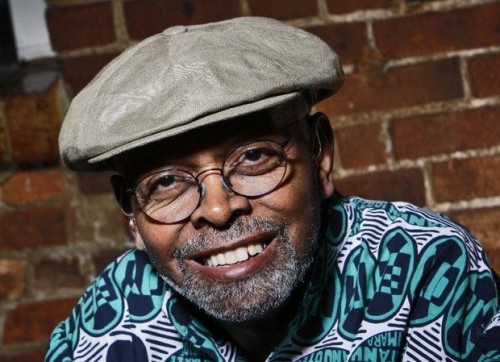
Baraka was placed in intensive care at Beth Israel Medical Center last month for an unknown reason, but a spokesman for his son’s mayoral campaign said his condition was improving late in December.
Newark Mayor Luis Quintana said Baraka will be sorely missed.
[…]
Quintana recalled Baraka’s role in the 1970 Black and Puerto Rican convention, a landmark political meeting that resulted in the election of Ken Gibson, Newark’s first black mayor.
[…]
A Newark native and resident formerly known as Leroi Jones, Amiri Baraka has published dozens of poems, essays and works of non-fiction. In 1963 Amiri Baraka wrote “Blues People,” an in-depth history of music from the time of slavery throughout the various incarnations of blues and jazz, with integrated social commentary. The book’s 50th anniversary was recently celebrated during an event at the New Jersey Performing Arts Center.
In 1964, Baraka published the book of poetry, “Dead Lecturer” that marked a significant transition in his career. Also written under the name Leroi Jones, the book featured more traditional poems but also laid the groundwork for the more radical, experimental work that would come to define his later career.
“He was able to put music into the work, even reading the work,” said Maria Maziotti Gillan, a poet and the director of the Poetry Center at Passaic County Community College. “Mostly he was able to capture an audience when he spoke. He was a able to capture an audience through his poetry but also through what he had to say.” Baraka was the state’s first poet laureate for a short time in 2002 and 2003.
In 2002, Gov. James E. McGreevey called for Baraka’s resignation as New Jersey’s Poet Laureate after a Jewish group condemned “Somebody Blew Up America.” The poem, written shortly after 9/11, included a passage claiming thousands of Israelis knew there was going to be an attack and stayed home from work — an Internet rumor not based in fact.
In typical fashion, Baraka defended his free speech and wrote an essay entitled, “I will not apologize, I will not resign.”
Check out our online exhibit featuring poetry and art by Ras Ameen.
Comments Are Welcome
Note: We moderate submissions in order to create a space for meaningful dialogue, a space where museum visitors – adults and youth –– can exchange informed, thoughtful, and relevant comments that add value to our exhibits.
Racial slurs, personal attacks, obscenity, profanity, and SHOUTING do not meet the above standard. Such comments are posted in the exhibit Hateful Speech. Commercial promotions, impersonations, and incoherent comments likewise fail to meet our goals, so will not be posted. Submissions longer than 120 words will be shortened.
See our full Comments Policy here.