America’s 50,000 monuments: More mermaids than congresswomen, more Confederates than abolitionists
Share
Explore Our Galleries



Breaking News!
Today's news and culture by Black and other reporters in the Black and mainstream media.
Ways to Support ABHM?
By Gillian Brockell, The Washington Post
Hundreds of public monuments have come down amid the racial reckoning sparked by the murder of George Floyd last year. Some were toppled by protesters armed with rope; others have been disassembled and carted away by professionals hired by local governments.
These removals may seem, well, monumental. But according to a study of U.S. public monuments, they’re a drop in the bucket, representing a mere 0.6 percent of the country’s nearly 50,000 monuments — monuments to historical figures who skew overwhelmingly White and male, including people who enslaved others, fought for the Confederacy, or never even set foot on American soil.
So who has been commemorated most often in stone, metal or wood? Unsurprisingly, Abraham Lincoln tops the list of historical figures most frequently honored with a public monument (193), edging out George Washington (171), according to the “National Monument Audit” by the nonprofit Monument Lab.
Christopher Columbus — who never visited mainland North America — comes in third, followed by the Rev. Martin Luther King Jr. At No. 5 is Saint Francis of Assisi, who also never contributed directly to American history, given that he died in Italy in 1226.
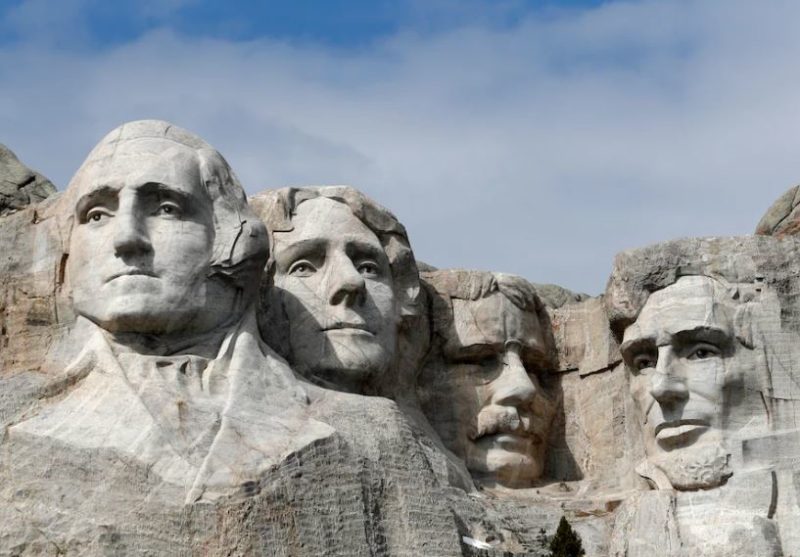
Of the men on the top 50 list, more than half were enslavers. Twelve were generals, 11 presidents and four Catholic saints or missionaries. Four were leaders of the Confederacy. Three men in the top 50 are men of color: King, Tecumseh and Frederick Douglass.
None of the top 50 were openly gay or transgender.
In public monuments, women are more often depicted as mythological and fictional figures than as historical ones. There are 22 public monuments that include mermaids but only two of congresswomen: one each for Rep. Barbara Jordan (D-Tex.) and Rep. Millicent Fenwick (R-N.J.).
While many who oppose the removal of Confederate monuments have argued that it is tantamount to forgetting history, the authors of the report say the data shows something like the opposite has been happening for hundreds of years — that in fact, our monument landscape has given us the mistaken impression that White men, and particularly White military men, are most worthy of honor and remembrance. It minimizes the contributions of others to these men’s achievements and ignores historical figures who made achievements in, say, civil rights, peace or public health.
Read the full article here.
Learn more about removals of Confederate statues in America here, here and here.
More Breaking News here.
Comments Are Welcome
Note: We moderate submissions in order to create a space for meaningful dialogue, a space where museum visitors – adults and youth –– can exchange informed, thoughtful, and relevant comments that add value to our exhibits.
Racial slurs, personal attacks, obscenity, profanity, and SHOUTING do not meet the above standard. Such comments are posted in the exhibit Hateful Speech. Commercial promotions, impersonations, and incoherent comments likewise fail to meet our goals, so will not be posted. Submissions longer than 120 words will be shortened.
See our full Comments Policy here.