Alabama Youth Council students make their own rules while learning to lead
Share
Explore Our Galleries









Breaking News!
Today's news and culture by Black and other reporters in the Black and mainstream media.
Ways to Support ABHM?
By Safiya Charles, SPLC
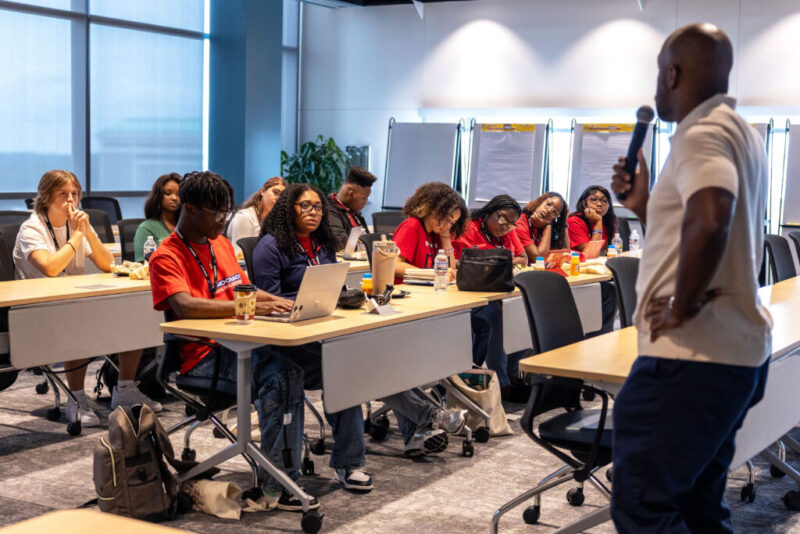
Rebecca Solaque was after something she couldn’t quite name. Then she found it this spring — in the Jefferson County branch of the Alabama Youth Council, a group of about 10 high school students that meets biweekly at the Hoover Public Library.
“I was looking for a sense of community,” said Solaque, a 16-year-old high school junior who lives in Hoover, a bedroom community to nearby Birmingham. “That doesn’t necessarily mean the people in your neighborhood or town. I see it as a group of people who believe in something and come together to try to achieve it.”
The idea for the council, one of nine spread across several Alabama counties, sprung from conversations the Southern Poverty Law Center’s Alabama state office organizer Jack Slate had as he traveled statewide, talking with young people about voting.
“As soon as the word vote came out of my mouth, they would turn around and walk away,” Slate said.
So, he changed tack. When Slate met some students in Conecuh, Jefferson and Montgomery counties, he asked them how they felt about having space to set their own priorities, make their own rules and control the agenda. They were intrigued. No one, they told Slate, had ever asked.
“At the SPLC Alabama state office, we’ve been focused on trying to engage with the community in a way that we’re learning more than we’re teaching,” he said. “One thing we learned was that young people don’t really have many outlets to organize here, especially in rural Alabama.”
The youth council’s aim is straightforward: Allow teenagers a democratically organized space where they can meet and discuss issues that matter to them and how they can work together to create the changes they want to see.
Keep reading to learn how the youth feel about this opportunity to participate.
Check out our black history galleries.
Comments Are Welcome
Note: We moderate submissions in order to create a space for meaningful dialogue, a space where museum visitors – adults and youth –– can exchange informed, thoughtful, and relevant comments that add value to our exhibits.
Racial slurs, personal attacks, obscenity, profanity, and SHOUTING do not meet the above standard. Such comments are posted in the exhibit Hateful Speech. Commercial promotions, impersonations, and incoherent comments likewise fail to meet our goals, so will not be posted. Submissions longer than 120 words will be shortened.
See our full Comments Policy here.