Activists vow to protect display on George Washington’s ties to slavery
Share
Explore Our Galleries









Breaking News!
Today's news and culture by Black and other reporters in the Black and mainstream media.
Ways to Support ABHM?
Phaedra Trethan, USA TODAY
The President’s House in Philadelphia educates visitors about Washington’s ties to slavery and is a memorial to the people who were enslaved.
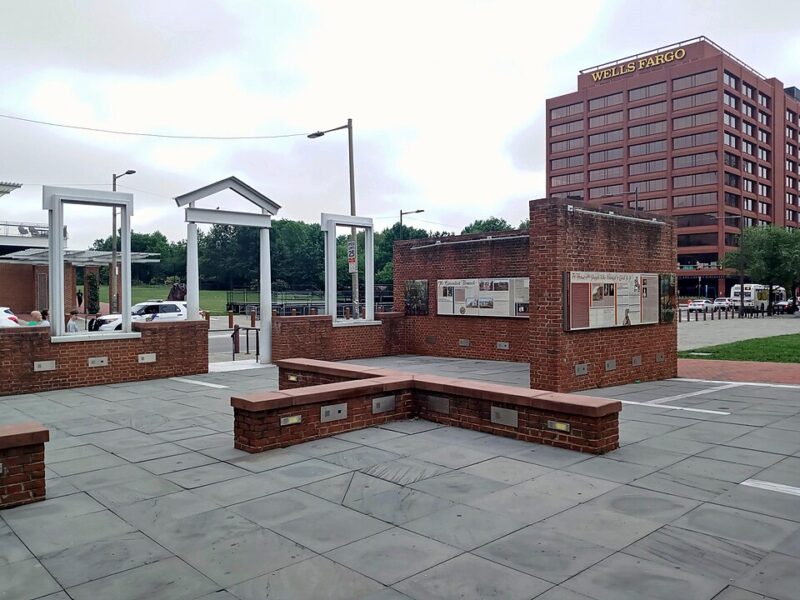
“Freedom and Slavery in the Making of a New Nation” exhibit panel at the President’s House Site in Philadelphia. (Kreuz und quer, CC0, via Wikimedia Commons)
.jpg)
Michael Coard is a criminal defense lawyer, and he peppers his thoughts about The President’s House with a familiar courtroom phrase.
“We need to tell the truth, the whole truth, and nothing but the truth,” he said more than once while discussing the displays at The President’s House, steps away from the Liberty Bell and Independence Hall in Philadelphia’s historic district.
The truth on display at The President’s House is that George Washington, the general who led the fight for U.S. independence, a Founding Father and the first President, owned human beings, profited off their unpaid labor, and, when one of them made a break for freedom, tried for years to recapture them. And while he was living in Philadelphia, then the nation’s capital, Washington kept enslaved people at the house where he resided.
Meanwhile, other displays that tell the stories of enslaved people have come under scrutiny by the Trump Administration as part of its review of monuments, memorials and museum displays that it says may “inappropriately disparage Americans.” Trump and some conservatives believe historical sites and museums focus too much on painful elements of the United States’ past, including slavery, displacement and killings of Native Americans, racism and discrimination. The President has said that focus provides “a false reconstruction of American history,” and that federally funded sites should instead promote patriotism and the idea of American exceptionalism.
For now, all of the displays at The President’s House remain in place, with no imminent plans to remove or alter them, Coard said. But he and a group of activists, preservationists and others, aware of controversies at sites including the Smithsonian and the National Museum of African American History and Culture, are still making backup plans[.]
See how staff might preserve the displays.
Discover Black history.
Comments Are Welcome
Note: We moderate submissions in order to create a space for meaningful dialogue, a space where museum visitors – adults and youth –– can exchange informed, thoughtful, and relevant comments that add value to our exhibits.
Racial slurs, personal attacks, obscenity, profanity, and SHOUTING do not meet the above standard. Such comments are posted in the exhibit Hateful Speech. Commercial promotions, impersonations, and incoherent comments likewise fail to meet our goals, so will not be posted. Submissions longer than 120 words will be shortened.
See our full Comments Policy here.