A viral high school tour underscores the haves and have-nots in America’s schools
Share
Explore Our Galleries









Breaking News!
Today's news and culture by Black and other reporters in the Black and mainstream media.
Ways to Support ABHM?
By Claretta Bellamy, NBC News
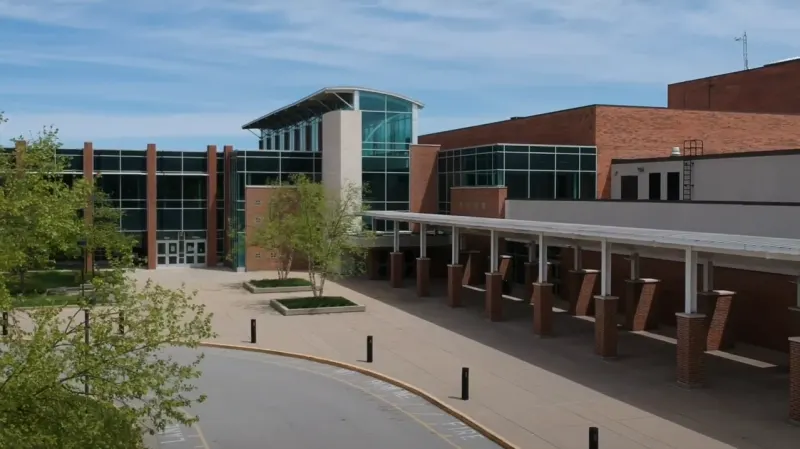
When Carlotta Berry viewed two TikTok videos of students giving a tour of their affluent high school less than 45 minutes away from her home in Avon, Indiana, she was speechless.
The video, posted earlier this month and which has since gone viral, shows Carmel High School students showing off their sprawling school’s vast amenities — which include a recording studio, a 10,000-seat stadium, a café and a planetarium.
But when the video kept appearing on her time line, Berry, who originally planned on keeping her thoughts to herself, decided to post a response, pointing out the lack of diversity of the students in the video and the inequality of resources for neighboring schools in the region, like Avon High School, which her daughter attends.
“I think that was the most appalling part to me. … At what point do you say, ‘Let me stop throwing money at this high school and consider the other schools in the area,” Berry told NBC News. “If you’ve got a natatorium and three cafeterias, can we get all the schools within a 20-mile radius of the school to have one cafeteria? One gym?”
[…]
Berry is one of 8.4 million viewers of the two TikTok videos posted to the school’s account and produced by a student club. While some were fascinated with the school’s array of facilities, others questioned why they were even built, when other schools in the region lack resources and are at a disadvantage.
Continue reading about this disparity.
Education inequality persists despite decades of struggle.
Comments Are Welcome
Note: We moderate submissions in order to create a space for meaningful dialogue, a space where museum visitors – adults and youth –– can exchange informed, thoughtful, and relevant comments that add value to our exhibits.
Racial slurs, personal attacks, obscenity, profanity, and SHOUTING do not meet the above standard. Such comments are posted in the exhibit Hateful Speech. Commercial promotions, impersonations, and incoherent comments likewise fail to meet our goals, so will not be posted. Submissions longer than 120 words will be shortened.
See our full Comments Policy here.