‘A very old political trope’: the racist US history behind Trump’s Haitian pet eater claim
Share
Explore Our Galleries









Breaking News!
Today's news and culture by Black and other reporters in the Black and mainstream media.
Ways to Support ABHM?
By Claire Wang, The Guardian
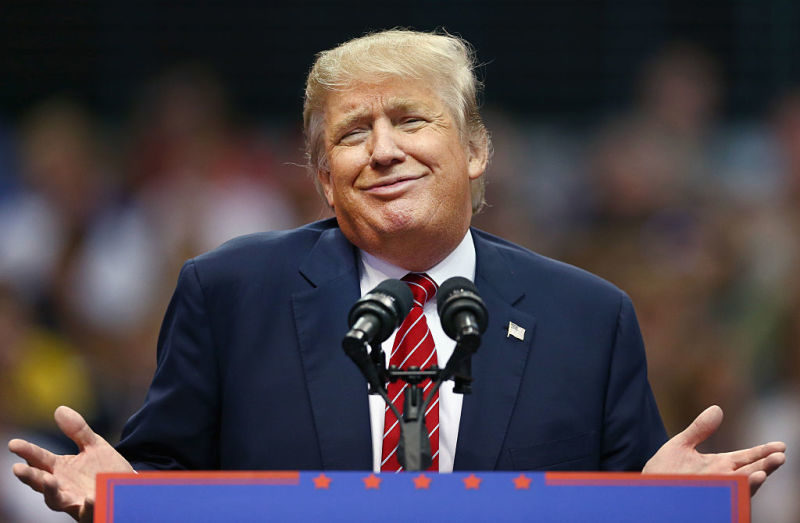
Less than half an hour into Tuesday’s presidential debate, former president Donald Trump deployed an updated version of a century-old slur against immigrant communities: that newcomers are eating other people’s pets and vermin.
“They’re eating the dogs, the people that came in, they’re eating the cats,” Trump said about Haitian immigrants in Springfield, Ohio. In the past four years, 15,000 Haitians have settled in the city of almost 60,000, most of whom through a legal resettlement program for migrants. “They’re eating the pets of the people that live there, and this is what’s happening in our country, and it’s a shame.”
Though city officials confirmed that they have received no such reports, and the baseless claim quickly drew condemnation, false claims about Haitians eating pets went viral on rightwing social media, and were quickly amplified by conservative lawmakers. The Ohio senator and vice-presidential candidate JD Vance wrote on X on Monday about reports of “Haitian illegal immigrants” abducting and eating pets and causing “general chaos” in Springfield.
People of Haitian descent say these xenophobic attacks are nothing new for their community, and experts say the “dog eater” trope is a fearmongering tactic white politicians have long deployed against immigrants of color, particularly those of Asian descent.
“The way white Americans have positioned themselves as culturally and morally superior, this is low-hanging fruit to rally xenophobia in a very quick way,” said Anthony Ocampo, a professor of sociology at California State Polytechnic University, Pomona.
Demonizing immigrants through falsehoods about their diet is a political tactic that originated in the late 19th century, during the height of anti-Chinese sentiment, said May-lee Chai, author and professor of creative writing at San Francisco State University.
Before the 1888 presidential election, Grover Cleveland’s campaign published trading cards that featured cartoonish sketches of Chinese men eating rats, and smeared his opponent, Benjamin Harrison, as “China’s presidential candidate”, according to the book Recollecting Early Asian America: Essays in Cultural History.
The Guardian traces the old political trope that’s intended to dehumanize immigrants.
Comments Are Welcome
Note: We moderate submissions in order to create a space for meaningful dialogue, a space where museum visitors – adults and youth –– can exchange informed, thoughtful, and relevant comments that add value to our exhibits.
Racial slurs, personal attacks, obscenity, profanity, and SHOUTING do not meet the above standard. Such comments are posted in the exhibit Hateful Speech. Commercial promotions, impersonations, and incoherent comments likewise fail to meet our goals, so will not be posted. Submissions longer than 120 words will be shortened.
See our full Comments Policy here.