A legacy of resistance: Historical resources for understanding local and national protest movements
Share
Explore Our Galleries









Breaking News!
Today's news and culture by Black and other reporters in the Black and mainstream media.
Ways to Support ABHM?
Introduction to this Series:
This post is one installment in an ongoing news series: a “living history” of the current national and international uprising for justice.
Today’s movement descends directly from the many earlier civil rights struggles against repeated injustices and race-based violence, including the killing of unarmed Black people. The posts in this series serve as a timeline of the uprising that began on May 26, 2020, the day after a Minneapolis police officer killed an unarmed Black man, George Floyd, by kneeling on his neck. The viral video of Floyd’s torturous suffocation brought unprecedented national awareness to the ongoing demand to truly make Black Lives Matter in this country.
The posts in this series focus on stories of the particular killings that have spurred the current uprising and on the protests taking place around the USA and across the globe. Sadly, thousands of people have lost their lives to systemic racial, gender, sexuality, judicial, and economic injustice. The few whose names are listed here represent the countless others lost before and since. Likewise, we can report but a few of the countless demonstrations for justice now taking place in our major cities, small towns, and suburbs.
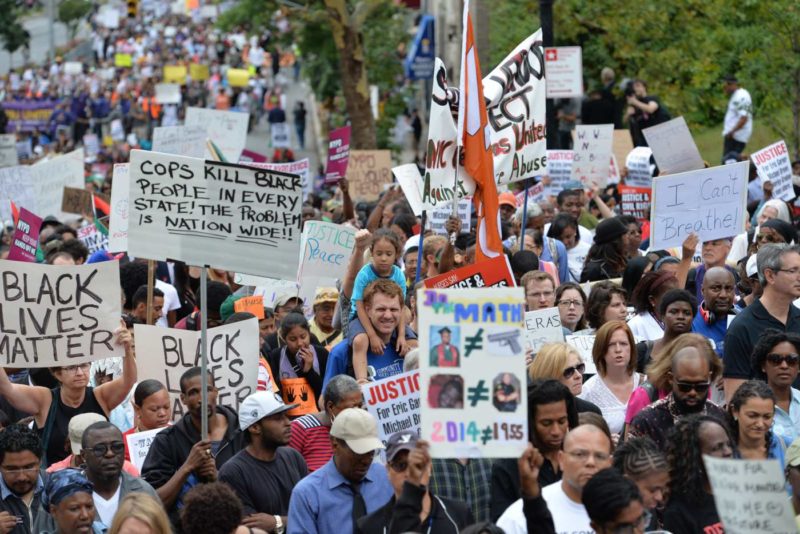
To view the entire series of Rising Up for Justice! posts, insert “rising up” in the search bar above.
A legacy of resistance: Historical resources for understanding local and national protest movements
By Ana Martinez-Ortiz, Milwaukee Neighborhod News Service
Since George Floyd was killed by a police officer in Minneapolis, Milwaukee has seen daily protests and marches throughout the city.
Many of the demonstrations have been led by young people, and Milwaukee’s history of protests shows that this is nothing new.
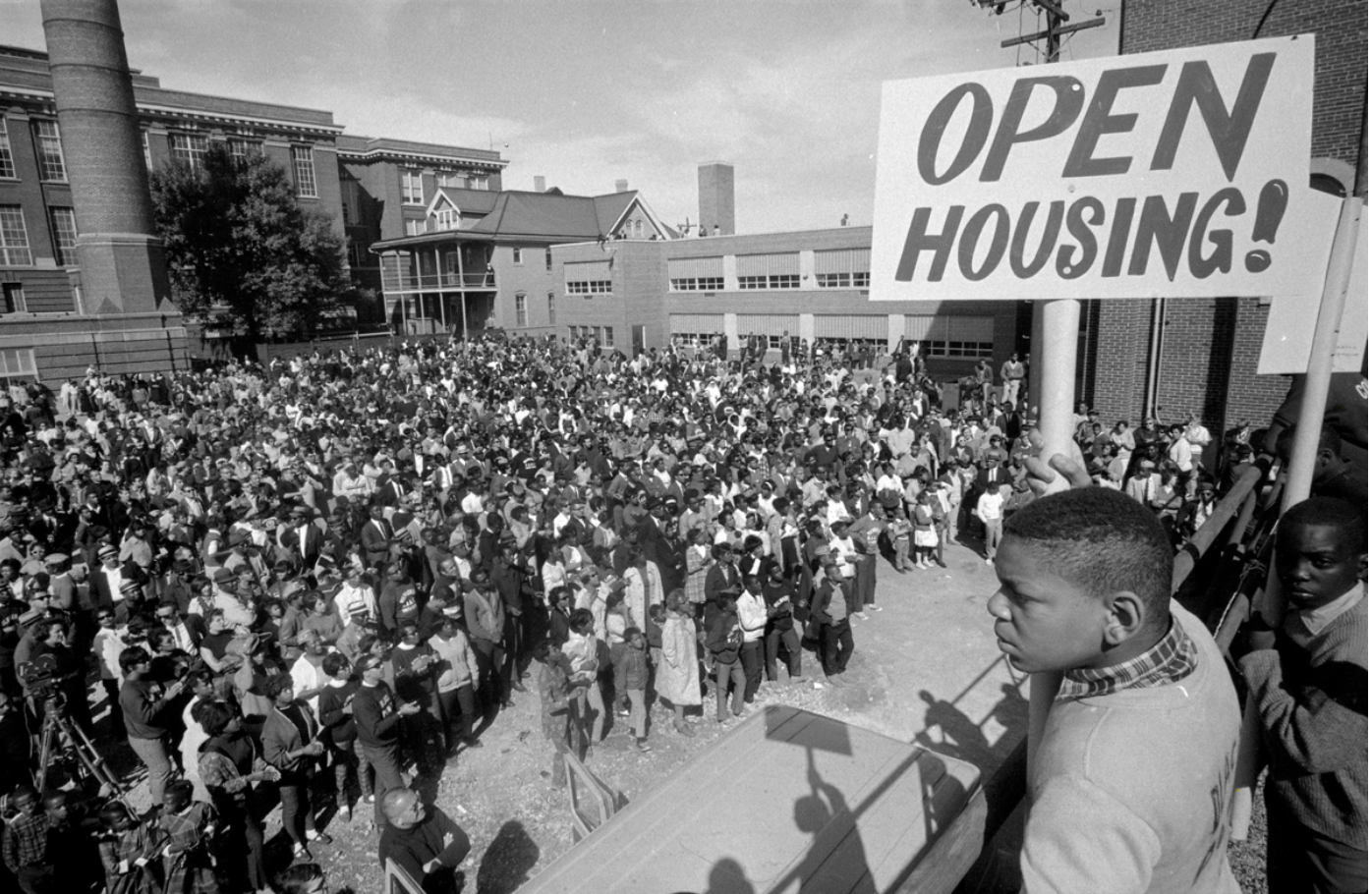
Young people have long been the leaders and organizers of protests in Milwaukee. (Photo courtesy of Milwaukee Journal Sentinel and Historic Photo Collection, Milwaukee Public Library)
Reggie Jackson, head griot at America’s Black Holocaust Museum, said an early and notable instance of youth-involved protests in Milwaukee took place in the early 1960s during the Milwaukee United School Integration Committee’s campaign against segregated schools.
In that era, some Milwaukee Public Schools went to great lengths to create the appearance of integration, while keeping segregation alive within their building. African American students and teachers from the North Side were bused in every day to schools on the predominantly white South Side but kept separately from the whites once inside the school. They started school an hour late, left early and in some cases had to ride the bus back to their neighborhoods for lunch, Jackson said.
Eventually, students, parents and teachers experiencing these indignities said enough and began holding school boycotts to desegregate schools. After the school board failed to integrate schools, Milwaukee United School Integration Committee, or MUSIC, held its first boycott on May 18, 1964, according to March on Milwaukee.
During the boycotts, students attended Freedom Schools, which were alternative schools housed in churches and community centers. Teachers taught academic subjects, but there was an emphasis on freedom, brotherhood, justice and equality.
While youth were not the leaders of the MUSIC protests, their role in protests grew as the decade continued.
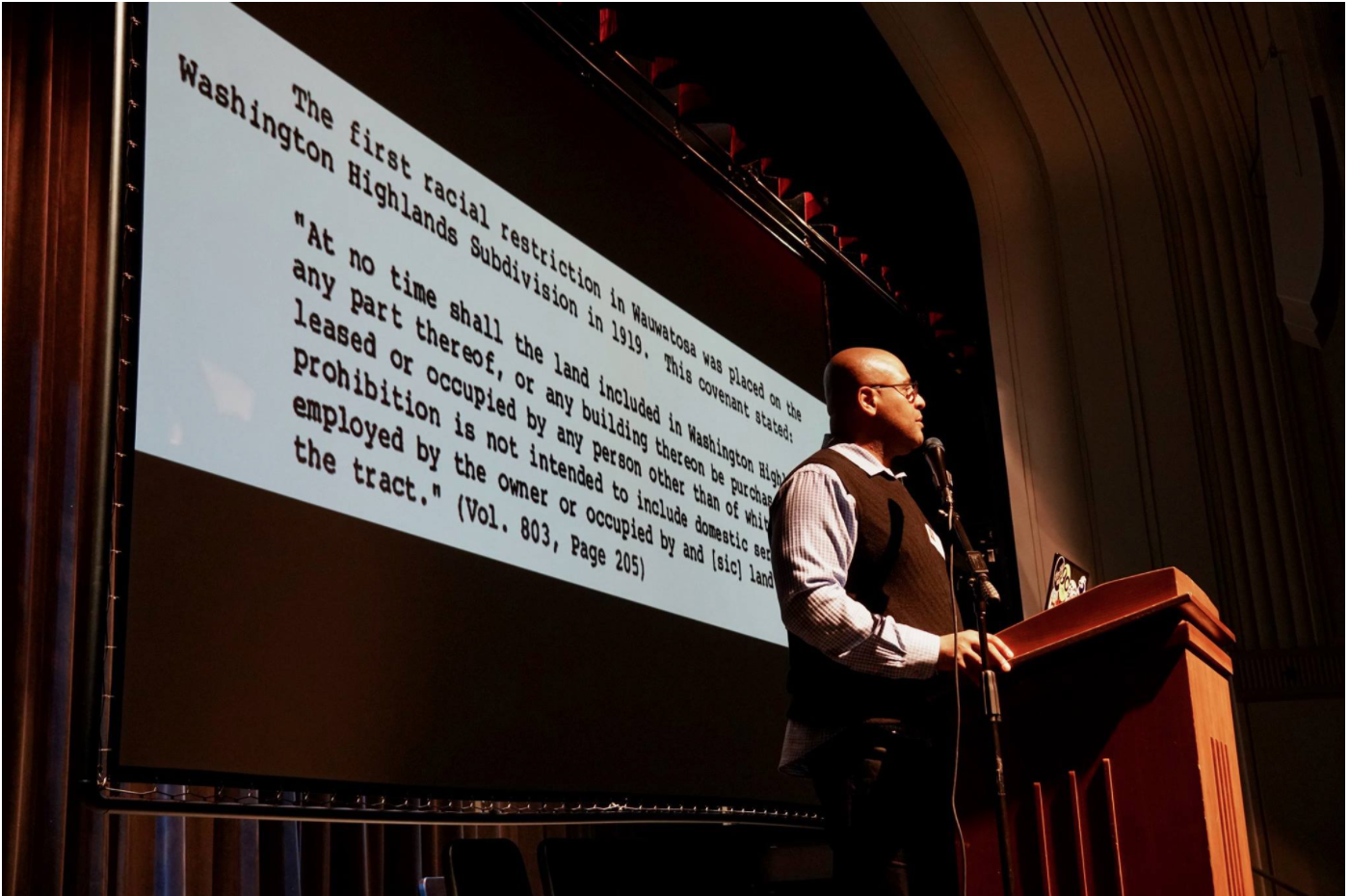
Dr. Robert Smith, the director of Center for Urban Research, Teaching & Outreach and associate professor of history at Marquette University, says young people understand the importance of what’s happening in society right now. (Photo by Adam Carr)
In 1963, the Milwaukee NAACP Youth Council, with their adviser John Givens, began its first direct action campaign against employment discrimination at a local restaurant. In 1966, it protested the white Fraternal Order of Eagles Club with adviser Father James Groppi, and a year later, joined Ald. Vel Phillips, who had been a teacher at the Freedom Schools, in the Open Housing Marches. The Youth Council marched for 200 consecutive nights for an open housing law that was passed in 1968…
The United States has a deep history of racist behavior and so many of this nation’s institutions are rooted in racism, [says Dr. Robert Smith of Marquette University], and it’s going to take a long time to uproot this sickness.
Part of addressing the root of the problem is understanding how history has shaped the policies, practices and behaviors of today.
[The original full version of this article contains] a list of critical and historical resources. The list is broken into several parts and has sections on Milwaukee’s history, educational resources, films/documentaries and books.
Find the original full article here.
For more seldom-told stories of the Civil Rights Movement and its unsung heroes, go here for historical exhibits and here for a reading list.
More Breaking News here.
Comments Are Welcome
Note: We moderate submissions in order to create a space for meaningful dialogue, a space where museum visitors – adults and youth –– can exchange informed, thoughtful, and relevant comments that add value to our exhibits.
Racial slurs, personal attacks, obscenity, profanity, and SHOUTING do not meet the above standard. Such comments are posted in the exhibit Hateful Speech. Commercial promotions, impersonations, and incoherent comments likewise fail to meet our goals, so will not be posted. Submissions longer than 120 words will be shortened.
See our full Comments Policy here.