A growing push to fix pulse oximeters’ flawed readings in people of color: ‘This can be dangerous’
Share
Explore Our Galleries









Breaking News!
Today's news and culture by Black and other reporters in the Black and mainstream media.
Ways to Support ABHM?
By Jacqueline Howard and Raenu Charles, CNN
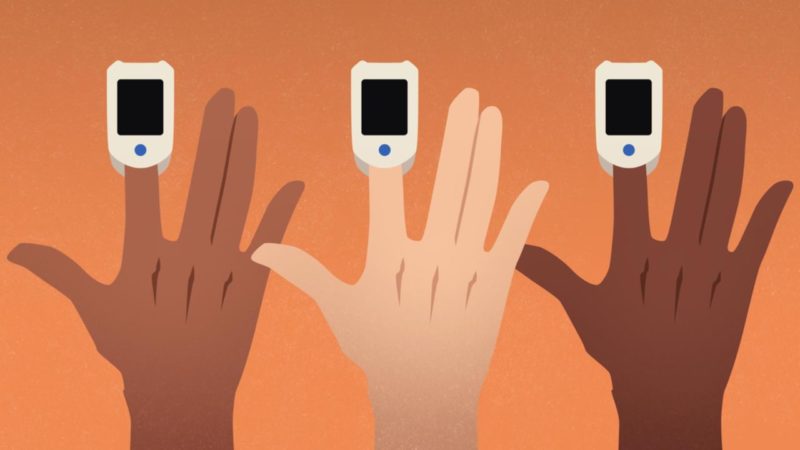
As a triple threat of respiratory illnesses – flu, Covid-19 and respiratory syncytial virus, known as RSV – sweeps the United States, emergency departments are using one small tool more than usual to monitor whether a patient needs oxygen: the pulse oximeter.
“We’re in the midst of a respiratory flood,” said pediatric emergency physician Dr. Joseph Wright, chief health equity officer at the University of Maryland Medical System, which includes 11 hospitals.
“And the pulse oximeter is used from any age to geriatrics,” he said. “This is a tool that is used on all patients, and right now, as with the height of the pandemic, it’s a tool that is used to assess children with respiratory distress as part of the RSV flood that we’re currently experiencing.”
But a growing body of research suggests that these devices, which clamp onto a patient’s fingertip to measure their blood oxygen levels, may not work as well on people with dark skin tones.
The US Food and Drug Administration is mulling over next steps for the regulation of pulse oximeter devices, which may give less accurate readings for people of color. A panel of its Medical Devices Advisory Committee met in November to review clinical data on the issue.
“For all of us, we would like to have assurance or confidence that the accuracy of the pulse ox reading in children who are melanated or have darker skin tones is reliable,” Wright said. He was not involved in the FDA discussions, but his medical system offered written testimony for the meeting.
“When I’m assessing a patient, a child, who is in respiratory distress, the pulse ox reading is but one tool. There’s the clinical assessment, obviously, and then other measures of how sick that child is,” he said, but “these devices need to be fixed. It appears that the technology to fix them is known, and the advancement here is to require manufacturers to incorporate this advanced technology.”
Learn why pulse oximeters don’t work as well for Black people.
Unfortunately, this issue led to delayed medical treatment for some COVID patients.
Our breaking news archive covers other health topics.
Comments Are Welcome
Note: We moderate submissions in order to create a space for meaningful dialogue, a space where museum visitors – adults and youth –– can exchange informed, thoughtful, and relevant comments that add value to our exhibits.
Racial slurs, personal attacks, obscenity, profanity, and SHOUTING do not meet the above standard. Such comments are posted in the exhibit Hateful Speech. Commercial promotions, impersonations, and incoherent comments likewise fail to meet our goals, so will not be posted. Submissions longer than 120 words will be shortened.
See our full Comments Policy here.