The 50-Year Legacy of HBCU Cheerleaders Who Changed the Game
Share
Explore Our Galleries


Breaking News!
Today's news and culture by Black and other reporters in the Black and mainstream media.
Ways to Support ABHM?
by Alecia Taylor, Capital B
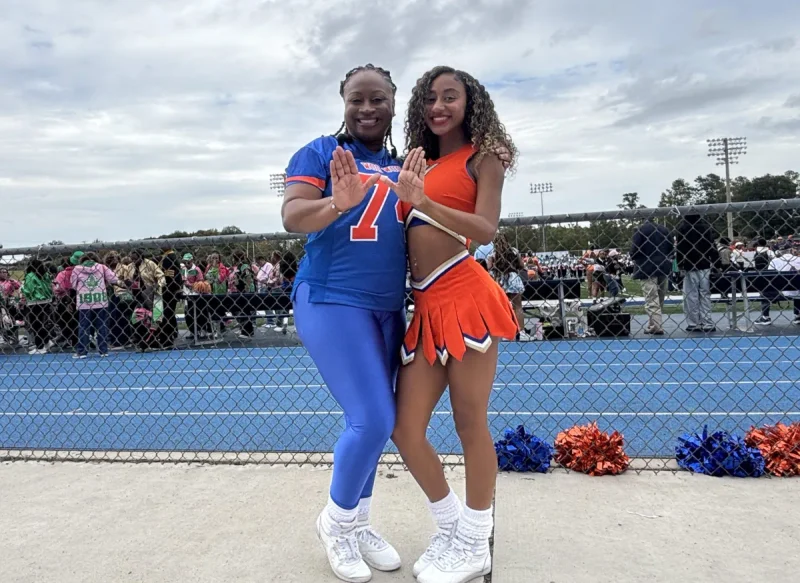
With a rhythmic style that blends stepping movements inspired by Black fraternities and sororities with chants delivered in deep, resonant voices, the Virginia State University cheer squad delivered what many at the school’s homecoming football game came to see: the rhythmic cheer style called stomp and shake.
On a brisk October day, the WooWoos cheered up and down the track, sporting slouchy socks paired with Reeboks during halftime at Virginia State University’s annual homecoming game. Their dazzling smiles, framed by classic red lipstick, got the crowd on their feet.
This year’s game between VSU and Livingstone College, a smaller HBCU in North Carolina, brought together two regional cheerleading traditions that date back to the 1970s. Asking which region invented stomp and shake can still spark an argument today.
“I refuse to go into that debate,” said Paulette Walker-Johnson, who coached the VSU squad for 35 years. “I know what God was doing in Daniel Gymnasium in 1974, beginning in 1974 with me. That’s all I can attest to.”
What’s not debatable, though, is the enduring legacy of the women who built stomp and shake throughout the years. Its style evolved beyond its Southern HBCU roots, influencing cheerleading programs nationwide. From toddlers to high school cheer squads, what started decades ago is multigenerational.
Learn more about how the style of cheerleading evolved.
HBCU is leading the way in sports to recruit students
Find more sports news in our breaking news section
Comments Are Welcome
Note: We moderate submissions in order to create a space for meaningful dialogue, a space where museum visitors – adults and youth –– can exchange informed, thoughtful, and relevant comments that add value to our exhibits.
Racial slurs, personal attacks, obscenity, profanity, and SHOUTING do not meet the above standard. Such comments are posted in the exhibit Hateful Speech. Commercial promotions, impersonations, and incoherent comments likewise fail to meet our goals, so will not be posted. Submissions longer than 120 words will be shortened.
See our full Comments Policy here.