‘We feel the pain but there is also joy’: the healing power of diasporic connection
Share
Explore Our Galleries









Breaking News!
Today's news and culture by Black and other reporters in the Black and mainstream media.
Ways to Support ABHM?
By Ebony Riddell Bamber, The Guardian
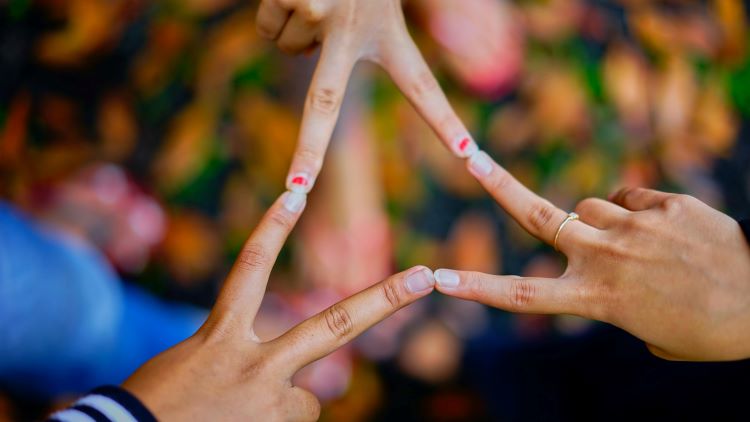
Salvador, Bahia, Brazil. In capoeira – an art form whose origins were carried across the Black Atlantic by enslaved people, but which developed and grew into a cultural form of resistance in Brazil – we sometimes wish each other axé (pronounced “ah-shay”). In doing so, we would be bestowing on our interlocutor life force, vitality or just positive energy in the capoeira roda (circle where capoeira is played) or in life.
The term is also used in Candomblé and Umbanda, syncretic afro-Brazilian religions with African roots. For me it also symbolises the ability to harness ancestral knowledge and energy to enrich the jogo (game of capoeira), embodying and paying tribute to those who kept the art form alive.
When I lived in Salvador for several months in the early 2000s, I would use the phrase a lot. It resonated with me; it unified me with my family of fellow capoeiras, whose identities found expression in the physical, musical and spiritual aspects of the art. We may have grown up on different laterals of the Black Atlantic, but we could meet and connect with our shared ancestry through the transcendent power of capoeira.
I hadn’t encountered the term in any other context, until I travelled to Savannah, Georgia, in the Sea Islands or Low country region of the US in September 2023. This was my first visit as programme director of the Legacies of Enslavement programme, an opening step in understanding how the Guardian could atone for its founders’ involvement in transatlantic enslavement.
We were participating in a Slaves in the City walking tour of Savannah, led by Sistah Patt Gunn, a Gullah Geechee elder and purveyor of an abundance of “axé”. I was overwhelmed to hear the word used during a theatrical reenactment that formed part of the tour. Looking back, I am not sure why I was so surprised.
“Àṣẹ” is a Yoruba term that can be used and understood in various contexts including to refer to divine power/energy and its manifestation, spirituality and light. It travelled with us, wherever we were enslaved. Across the Americas and Caribbean, where you will still find it in various iterations. I had found a valuable fragment, an ancestral connection, to a place I had never been to before, via my own attachment to Brazil.
[..]
The Black Atlantic. This work has really awakened in me a sense of how much connections across the diaspora, and back to the mother continent, mean to those of us who want to repair the structural, psychological and moral harm that chattel slavery represents. There are intricate, interlocking ties between people of African descent reaching over, under and through the Atlantic Ocean, but also continuing beyond, and arcing around the world again.
Keep reading to discover the connection between these places.
Learn about African Peoples Before Captivity or the Trans-Atlantic Slave Trade.
Comments Are Welcome
Note: We moderate submissions in order to create a space for meaningful dialogue, a space where museum visitors – adults and youth –– can exchange informed, thoughtful, and relevant comments that add value to our exhibits.
Racial slurs, personal attacks, obscenity, profanity, and SHOUTING do not meet the above standard. Such comments are posted in the exhibit Hateful Speech. Commercial promotions, impersonations, and incoherent comments likewise fail to meet our goals, so will not be posted. Submissions longer than 120 words will be shortened.
See our full Comments Policy here.