‘There are children here who do not want to be black’: one woman’s bid to save Mexico’s first Afro-Mexican museum
Share
Explore Our Galleries









Breaking News!
Today's news and culture by Black and other reporters in the Black and mainstream media.
Ways to Support ABHM?
By Gordon Cole-Schmidt, The Guardian
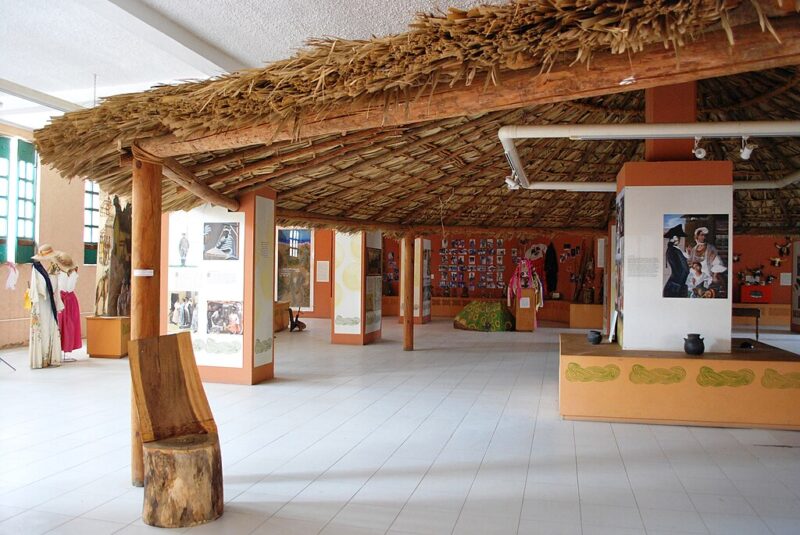
Angélica Sorrosa Alvarado is the curator, manager, tour guide, administrator, caretaker and cleaner at the Museo de las Culturas Afromestizas (Museum of Afro-Mexican Culture) in Cuajinicuilapa. “I am alone,” she says, gesturing at the cavernous halls of the museum, which she describes as “one of my proudest achievements”.
In the Costa Chica region, which is home to Mexico’s largest population of African-Mexicans, the museum is unique in the country. When it opened 25 years ago, it was heralded as recognition of the more than 2.5 million Afro-Mexicans in a country that had long overlooked them.
Now, however, the museum is now facing closure. Unpaid for 15 years and deserted by the founding committee who helped her create the space in 1999, Alvarado, 62, is fearful that she will soon have to retire. “They all left and now I am old and alone here,” she says.
[…]
“The doors to the museum must stay open because there are children growing up here who do not want to be black,” says Alvarado. “This space shows us where we came from, who we are and why we should be proud of our identity.”
Alvarado discusses her fears about the museum shutting down.
Learn more about the African Presence in Mexico.
Comments Are Welcome
Note: We moderate submissions in order to create a space for meaningful dialogue, a space where museum visitors – adults and youth –– can exchange informed, thoughtful, and relevant comments that add value to our exhibits.
Racial slurs, personal attacks, obscenity, profanity, and SHOUTING do not meet the above standard. Such comments are posted in the exhibit Hateful Speech. Commercial promotions, impersonations, and incoherent comments likewise fail to meet our goals, so will not be posted. Submissions longer than 120 words will be shortened.
See our full Comments Policy here.