‘Blue’ Grapples with Realities of Police Killings
Share
Explore Our Galleries









Breaking News!
Today's news and culture by Black and other reporters in the Black and mainstream media.
Ways to Support ABHM?
by Brenda C. Siler, The Washington Informer
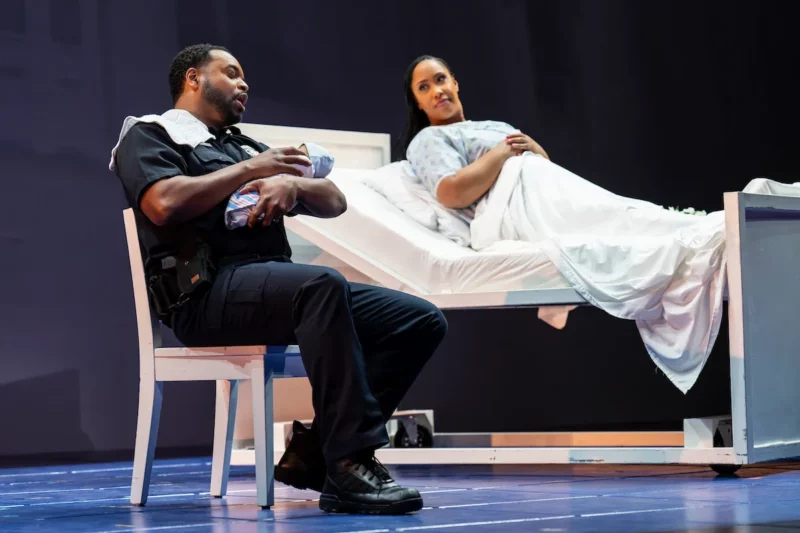
The public is bombarded with media coverage about the aftermath of the police shooting of a young Black man. Family and friends are anguished and want answers. There are protest cries for justice. The home life and family relationships before a killing are not clearly known. Audiences grapple with this tragic but all-too-common event in “Blue,” an opera at the Kennedy Center until March 25.
Composed by Jeanine Tesori, with the libretto and lyrics by Tazewell Thompson, “Blue” is a beautiful yet heartbreaking story unfolding in a production presented by the Washington National Opera (WNO). With the father a police officer, and the mother a business owner, the production is in English with projected English titles.
“It’s an extremely powerful journey through many different emotions,” said Jonathan Taylor Rush, one of the conductors of the opera, during a pre-performance lecture. “From happiness to satisfaction to conflict, anger and even grief. All of these emotions are around the story of a young Black man and the reality of the life that he has to live.”
Opera isn’t traditionally used to tell stories of the Black community, which is why it’s so notable when it does.
Comments Are Welcome
Note: We moderate submissions in order to create a space for meaningful dialogue, a space where museum visitors – adults and youth –– can exchange informed, thoughtful, and relevant comments that add value to our exhibits.
Racial slurs, personal attacks, obscenity, profanity, and SHOUTING do not meet the above standard. Such comments are posted in the exhibit Hateful Speech. Commercial promotions, impersonations, and incoherent comments likewise fail to meet our goals, so will not be posted. Submissions longer than 120 words will be shortened.
See our full Comments Policy here.