Civil rights icon Ruby Bridges says she doesn’t fear ‘backlash’ with her new ‘inspiring’ children’s book
Share
Explore Our Galleries









Breaking News!
Today's news and culture by Black and other reporters in the Black and mainstream media.
Ways to Support ABHM?
By Claretta Bellamy, NBC News
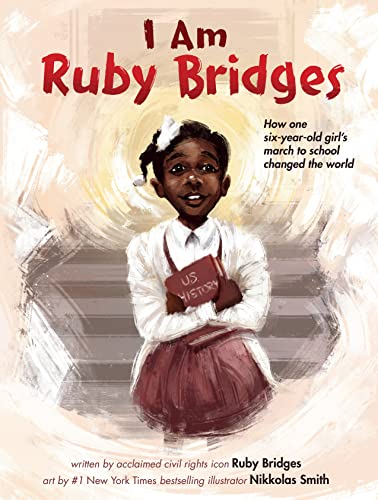
Civil rights icon Ruby Bridges made history as the first Black student to attend an all-white school in 1960, and now she’s sharing her inspirational story through a new children’s book.
“I Am Ruby Bridges” tells the activist’s story through the eyes of her 6-year-old self. It chronicles her experience as the first Black student to attend William Frantz Elementary, an all-white school in New Orleans, and the challenges she faced.
Born in Tylertown, Mississippi in 1954, the same year the U.S. Supreme Court ruled that racial segregation of children in public schools was unconstitutional, Bridges said she was the target of racial slurs, harassment and bullying from adults every day she attended school. In one incident, a white woman even held a Black doll in a coffin, she recalled, frightening her deeply. Because of her enrollment, many white parents pulled their children out of the school.
Bridges believes that her 48-page picture book, which includes vivid illustrations by Nikkolas Smith and a glossary to help young readers learn new words, will teach important lessons to the next generation of activists.
“It is important for all children to know all of our history, good or bad,” Bridges, 67, said in an email to NBC News. “It is our shared history in this country and because of it we should all know that history.”
Read about Bridges’ hopes for her new book.
Ruby Bridges is just one young Black person who changed history. Learn about one unsung hero.
Follow our breaking news archive.
Comments Are Welcome
Note: We moderate submissions in order to create a space for meaningful dialogue, a space where museum visitors – adults and youth –– can exchange informed, thoughtful, and relevant comments that add value to our exhibits.
Racial slurs, personal attacks, obscenity, profanity, and SHOUTING do not meet the above standard. Such comments are posted in the exhibit Hateful Speech. Commercial promotions, impersonations, and incoherent comments likewise fail to meet our goals, so will not be posted. Submissions longer than 120 words will be shortened.
See our full Comments Policy here.