Ketanji Brown Jackson sworn in as first Black woman on the Supreme Court
Share
Explore Our Galleries









Breaking News!
Today's news and culture by Black and other reporters in the Black and mainstream media.
Ways to Support ABHM?
By Dareh Gregorian, NBC News
Jackson, a former public defender and federal appeals court judge, replaces Justice Stephen Breyer, who has officially retired from the high court.
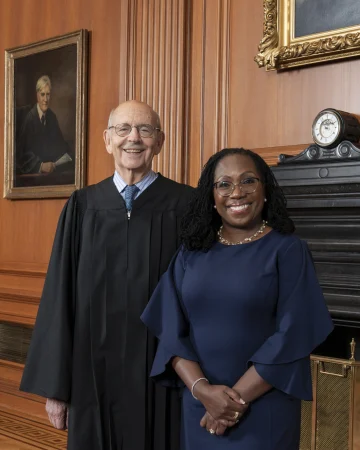
Ketanji Brown Jackson was sworn in as a Supreme Court justice Thursday, making her the first Black woman on the nation’s highest court.
Jackson, a former public defender and federal appeals court judge, was sworn in during a small ceremony shortly after Justice Stephen Breyer’s retirement became official. Chief Justice John Roberts administered the constitutional oath and Breyer administered the judicial oath.
Jackson’s husband, Dr. Patrick Jackson, their two daughters and the other justices on the Supreme Court were in attendance, as well as retired Justice Anthony Kennedy, who stepped down from the court in 2018.
After the ceremony, Jackson said in a statement, “With a full heart, I accept the solemn responsibility of supporting and defending the Constitution of the United States and administering justice without fear or favor, so help me God. I am truly grateful to be part of the promise of our great Nation. I extend my sincerest thanks to all of my new colleagues for their warm and gracious welcome.”
Read more about Jackson’s induction and speech.
Brown become Justice right after SCOTUS overturned Roe vs Wade, a decision that has some rethinking the Supreme Court entirely.
Never miss any news impacitng Black Americans.
Comments Are Welcome
Note: We moderate submissions in order to create a space for meaningful dialogue, a space where museum visitors – adults and youth –– can exchange informed, thoughtful, and relevant comments that add value to our exhibits.
Racial slurs, personal attacks, obscenity, profanity, and SHOUTING do not meet the above standard. Such comments are posted in the exhibit Hateful Speech. Commercial promotions, impersonations, and incoherent comments likewise fail to meet our goals, so will not be posted. Submissions longer than 120 words will be shortened.
See our full Comments Policy here.