Milwaukee County Recognized with Lowest Unsheltered Homeless Population in America
Share
Explore Our Galleries









Breaking News!
Today's news and culture by Black and other reporters in the Black and mainstream media.
Ways to Support ABHM?
By Milwaukee Independent
Milwaukee has been recognized by the U.S. Department of Housing and Urban Development (HUD) with the lowest unsheltered homeless population of any community per capita in the nation.
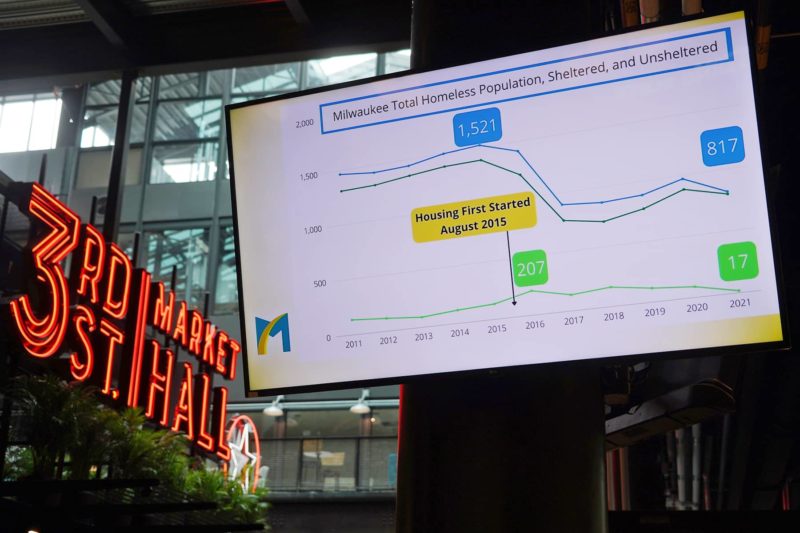
Every year HUD commemorates National Fair Housing Month in April to advance equity in housing and securing equal access to housing opportunities for all. In recent years, Milwaukee County has taken a holistic approach to improving health outcomes in the community by looking through the lens of social determinants of health. The County has invested funds into Housing First programs, with the clear view that stable housing is needed to end homelessness.
“With 17 unsheltered individuals counted last year, that represents over a 70% reduction from the previous year. And what an outstanding accomplishment,” said Milwaukee County Executive David Crowley. “Furthermore, since the starting of the Housing First program in 2015, we have seen a 92% reduction in unsheltered populations. I’m proud of the work of our housing division at Milwaukee County.”
In addition, Milwaukee County has been a national leader in rental assistance, administering over $110 million dollars in federal emergency rental assistance funds. Ongoing efforts reflect its commitment to continue focusing on increasing permanent housing options, as a means to end the cycle of homelessness.
“Housing security is a key determinant of health for County residents. When you can’t count on having a roof over your head at night it compounds stress and anxiety and contributes mightily to the poor health disparities we see throughout the region,” said County Executive Crowley. “I’m happy to say that by prioritizing an evidence-based approach and maximizing collaborative efforts in the public and private sectors, we have reached this significant milestone, but the work is not done. As a County, region, and whole community, we must use this momentum to accelerate our efforts to invest upstream and end chronic homelessness in Milwaukee County.”
Finish reading about Housing First in Milwaukee.
Housing First has been a success to reduce homelessness, unlike legal efforts in San Fransisco and cuts to federal public services. This is an important step when police target homeless black people.
Our breaking news section often details racial justice progress.
Comments Are Welcome
Note: We moderate submissions in order to create a space for meaningful dialogue, a space where museum visitors – adults and youth –– can exchange informed, thoughtful, and relevant comments that add value to our exhibits.
Racial slurs, personal attacks, obscenity, profanity, and SHOUTING do not meet the above standard. Such comments are posted in the exhibit Hateful Speech. Commercial promotions, impersonations, and incoherent comments likewise fail to meet our goals, so will not be posted. Submissions longer than 120 words will be shortened.
See our full Comments Policy here.