Movement and Space’: Civil Rights Memorial Center releases new community guide to help fight racism in America
Share
Explore Our Galleries









Breaking News!
Today's news and culture by Black and other reporters in the Black and mainstream media.
Ways to Support ABHM?
By David Hodge, Southern Poverty Law Center
The predominantly white neighborhood where I live is lined with tall, moss-covered trees that began their climb toward the sky before the Montgomery Bus Boycott energized the civil rights movement, before it was legal for Black people like me to live there.
I spent a year in this tranquil neighborhood until my sense of security was shouted down by a voice that accosted me from a short distance. Four days before the killing of George Floyd, when I pulled up to my home, a white man I had never seen before blurted out as I exited my vehicle, “Do you live here?”
I responded: “The more pertinent question is do you live here?”
Then I turned and went on about my day. He turned a shade of red that I can only assume showed his feeling of authority evacuating his body like an unexpected cough.
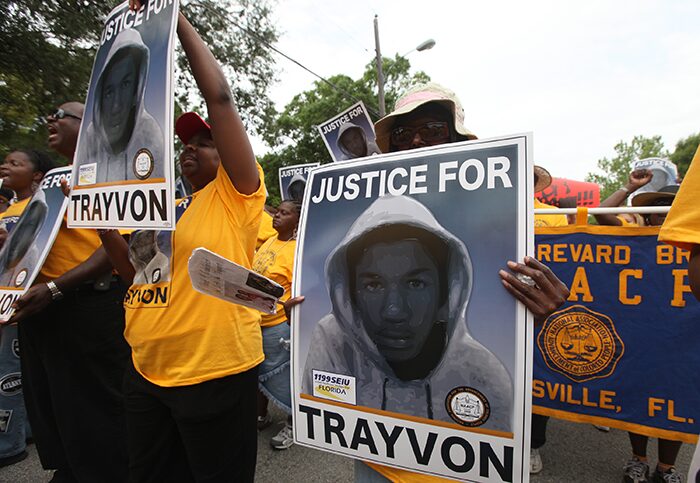
It took a few days for my inner turmoil over this incident to subside. I carried with me a bittersweet ending to that brief encounter, which could have ended the way it did for Ahmaud Arbery, Trayvon Martin or Rekia Boyd – Black people who were killed in chance encounters with either police or self-appointed “law enforcers” while exercising their right to be, to move and to occupy space…
Learn more about Racism here and here.
More Breaking News here.
Comments Are Welcome
Note: We moderate submissions in order to create a space for meaningful dialogue, a space where museum visitors – adults and youth –– can exchange informed, thoughtful, and relevant comments that add value to our exhibits.
Racial slurs, personal attacks, obscenity, profanity, and SHOUTING do not meet the above standard. Such comments are posted in the exhibit Hateful Speech. Commercial promotions, impersonations, and incoherent comments likewise fail to meet our goals, so will not be posted. Submissions longer than 120 words will be shortened.
See our full Comments Policy here.