Ways to Contribute
Share
Explore Our Galleries





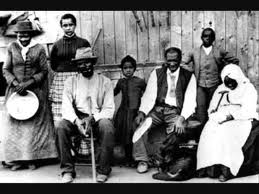




Breaking News!
Today's news and culture by Black and other reporters in the Black and mainstream media.
Ways to Support ABHM?
Three Great Ways to Contribute to ABHM:
#1 – FUNDS (make a tax-deductible donation by check or online by clicking the Donate button below)
or offer your
#2 – TIME AND TALENTS as a community volunteer or intern
- Breaking News online editor
- Scholar-griot for new online or onsite exhibits
- Social Media Communicator
#3 – OBJECTS to donate
- Museum-worthy artifacts (examples: KKK outfit, original copy of the Green Book)
- Useable equipment (examples: computer, tables, LED projector)
Why Contribute?
ABHM is a unique museum that:
- describes and memorializes the experiences of Africa's children in America from 1619 to the present as a holocaust;
- recognizes the contributions of the freedom-loving white people and others who have joined the African American struggle for justice; and
- actively engages our country in the work of racial repair, reconciliation, and healing.
If you see this work as important, there are many ways you can lend support!
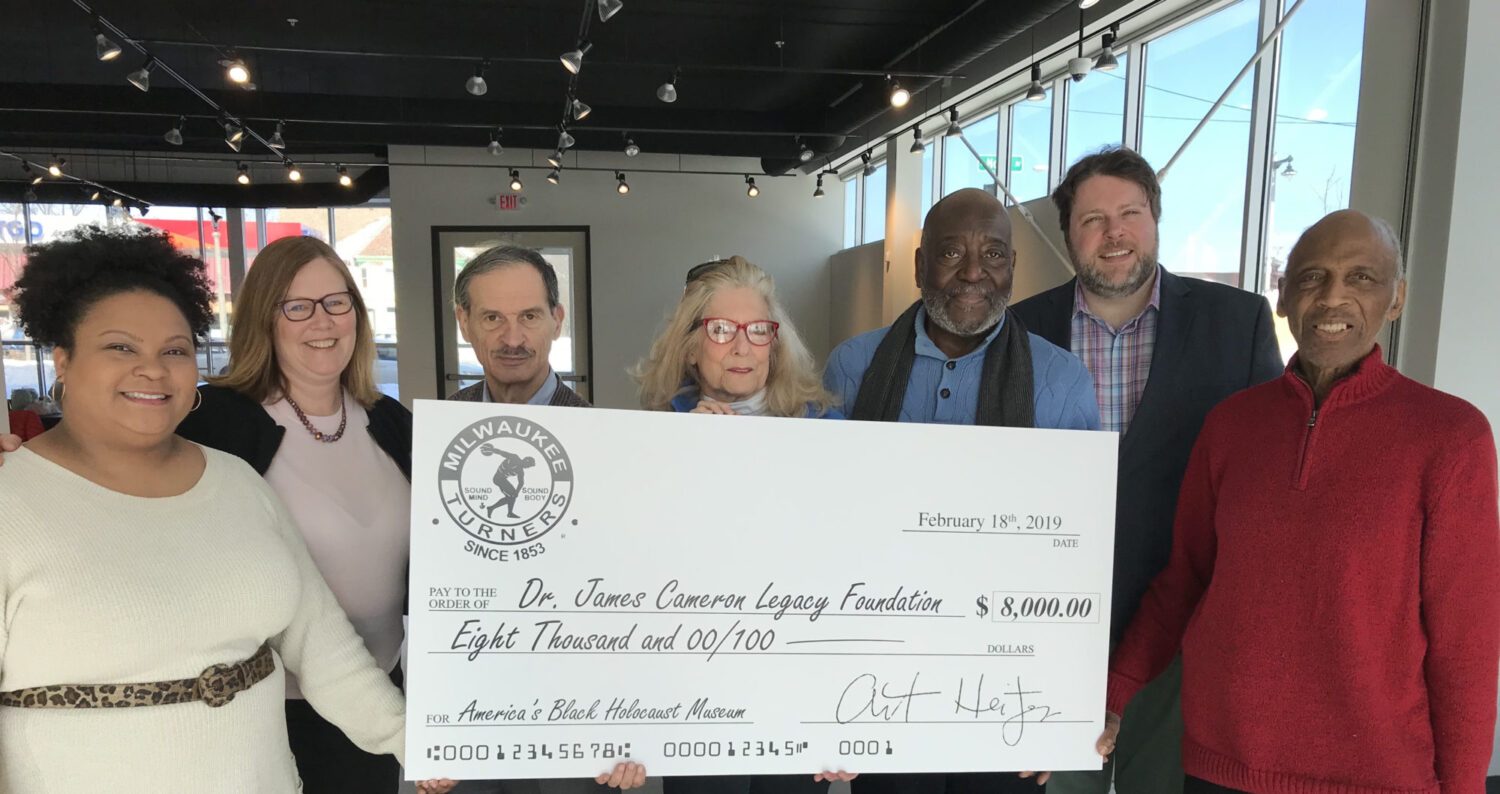
ABHM was thrilled to receive this very generous donation from the Milwaukee Turners, one of the oldest civic organizations in Milwaukee. L-R: Cydney Hargro, ABHM; Nancy Ketchman, ABHM; Art Heitzer, President of Milwaukee Turners, Patricia Obletz, Turner member; Virgil Cameron, son of Dr. Cameron and museum board member; Nicholas La Joie, Executive Director, Milwaukee Turners; and Reuben Harpole, museum board member.
More Ways You Can Contribute
Click to:
- Contribute Your Time and Talents as a Volunteer
- Take the Freedom-Lover's Pledge
- Tell a Lynching Victim's Life Story
- Tell Your Dr. Cameron Story
Thank you for your support!
Learn more about...
Griots At The Museum
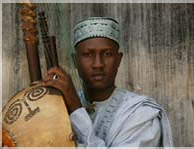
Griots are the oral historians of West Africa, who travel from town to town as living newspapers, carrying in their heads an incredible store of local history and current events. At ABHM we call the curators of our exhibits “griots,” because they tell our history and respond to visitors’ comments and questions in the Comments section at the foot of each new exhibit.
The Museum’s Four Themes: Remembrance, Resistance, Redemption, and Reconciliation
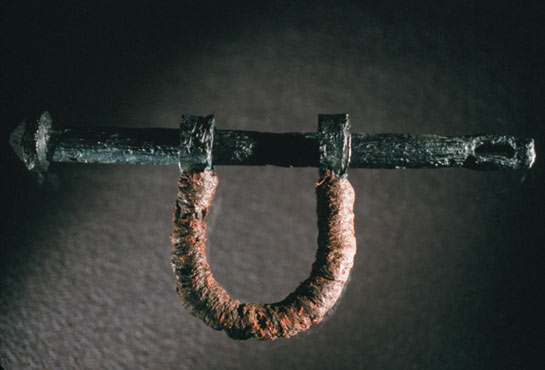
Learn about ABHvM’s Four Themes – Remembrance, Resistance, Redemption, and Reconciliation – and how they thread through the museum’s exhibits.
What Is The Black Holocaust?
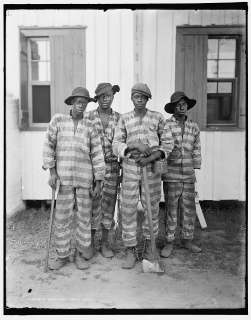
The four hundred-year history of captured Africans and their descendants has many similarities with the Holocaust experiences of European Jews – and other victims of mass atrocities. This exhibit explains those similarities and the reasons that ABHM’s founder believed it important to use the term “holocaust” in its title.
Our Mission and Vision
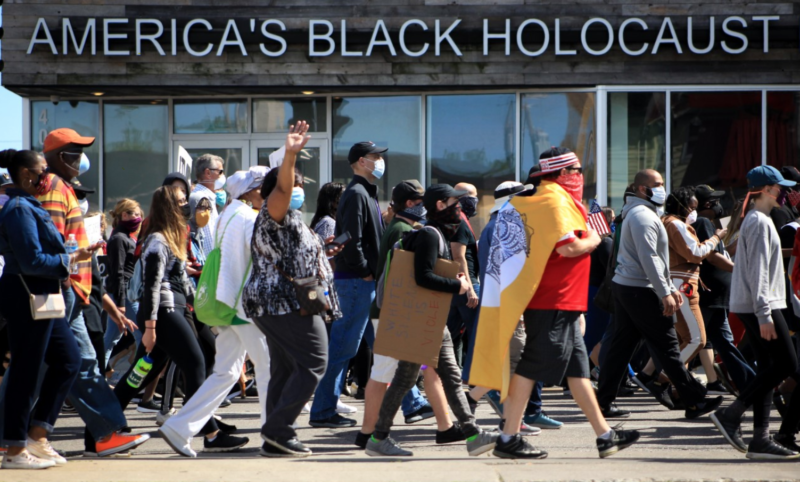
ABHM builds public awareness of the harmful legacies of slavery and Jim Crow in America and promotes racial repair, reconciliation, and healing. A society that remembers its past in order to shape a better future – a nation undivided by race where every person matters equally.
What is the Black Holocaust?
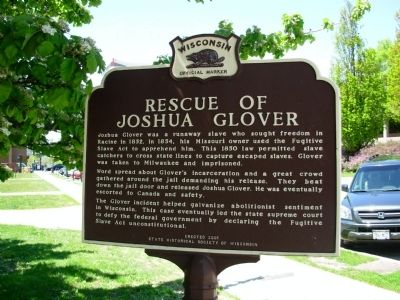
“Holocaust” comes from a Greek word meaning “burnt offering.” The term was first used to describe the massacres of Armenians in the 1890s. It was used again in the 1940s to describe the mass destruction of European Jewish communities by the Nazis, also known by the Hebrew word “Shoah.” Learn here about the 400+ years of the Black Holocaust in America and its similarities to the Nazi holocaust and other mass atrocities around the world.
Our Four Themes: Remembrance, Resistance, Redemption, Reconciliation
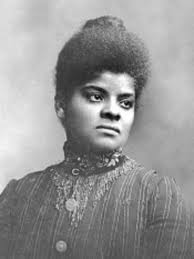
In each Gallery of this virtual museum you will find exhibits reflecting one or more of our Four Themes: Remembrance, Resistance, Redemption, and Reconciliation.
Dr. Cameron: Founder Lynching Survivor
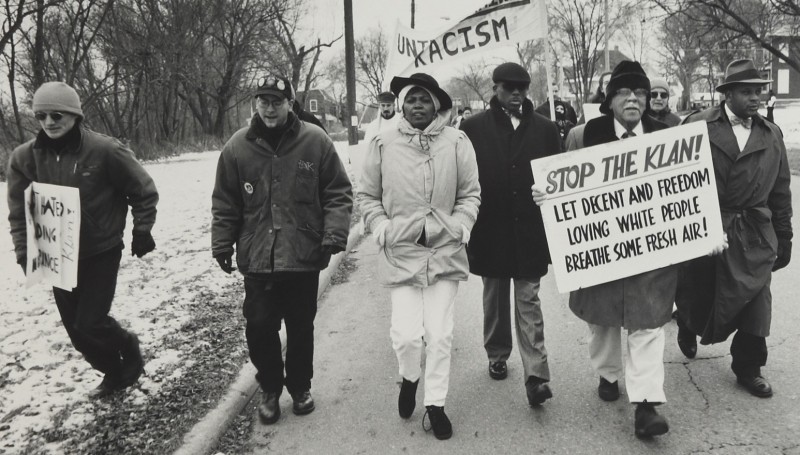
Quiet in demeanor but with a playful spirit, James Cameron was a force of nature and an unrelenting champion for civil rights. He overcame anger and hate as a young man, then dedicated his life to preserving and sharing Black history as an integral part of U.S. history, eradicating racism and fulfilling the ideals and promise of America.
Our History and Impact
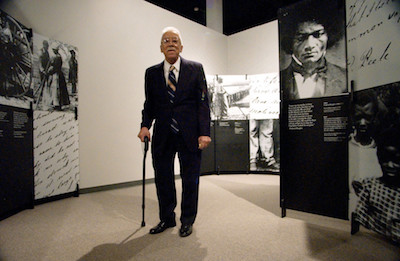
Dr. James Cameron, who survived a lynching as a teenager in 1930, founded America’s Black Holocaust Museum in Milwaukee, Wisconsin in 1988. He dedicated his entire life to helping America realize its promise of liberty and justice for all. An early civil rights activist, he fought racial segregation in 1940s Indiana.
After moving to Milwaukee, Cameron published a memoir about his lynching and coming of age during the Jim Crow era. He traveled the country educating audiences at high schools, colleges, and other venues about the Black Holocaust as an integral part of US history, seen through the lens of these personal experiences.
What is a Griot?
“Griot” (pronounced GREE-oh) is the French name given to the oral historians of West Africa. Traditionally griots travel from city to city and village to village as living newspapers, carrying in their heads an incredible store of local history and current events. They pass on their knowledge of history by singing traditional songs, which they must recite accurately, without errors or deviations. Like rappers, they also make up songs as they go to share current events, gossip, political commentary and satire.
“A Time of Terror: A Survivor’s Story”– Excerpts from Dr. Cameron’s Memoir
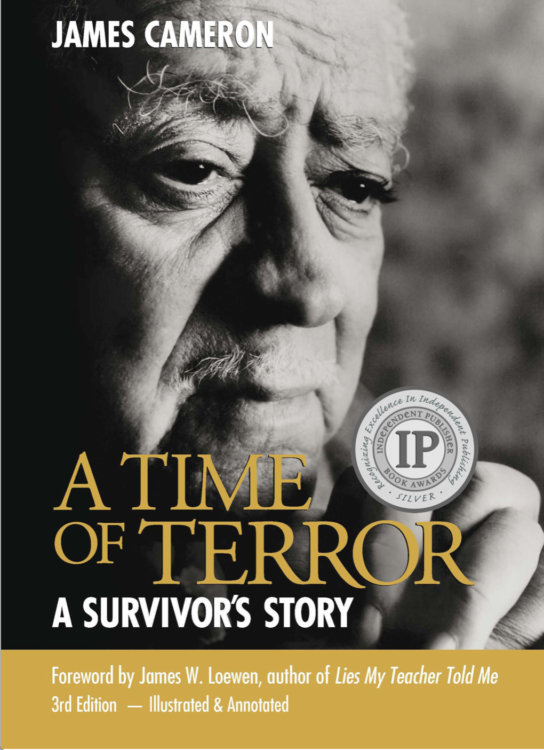
LifeWrites Press, a division of the Dr. James Cameron Legacy Foundation, released a new, expanded edition of Dr. James Cameron’s memoir on his birthday, February 25, 2016.
In May 2016 the book received a Silver Medal for Best Nonfiction, Great Lakes Region in IPPY’s (the Independent Publishers Association) international competition.
My First Visit to ABHM
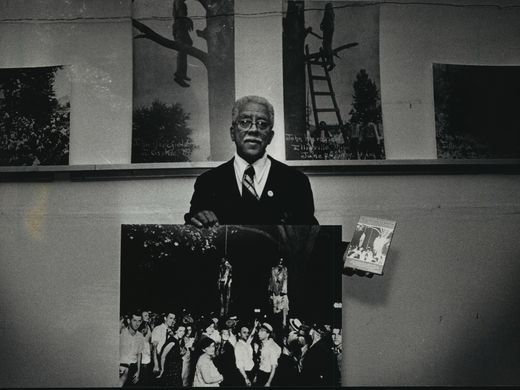
An article in the Milwaukee Journal Sentinel announced the opening date of a new museum: America’s Black Holocaust Museum. “What is that about?” I wondered, “And what is a Black Holocaust?” There was something written about lynching. Lynching? I was not sure that word had ever been said aloud by any teacher in all my grade school or high school years. Now this Mr. Cameron says that he actually survived being lynched. I had to meet him and see his museum.
Tell Your Dr. Cameron Story
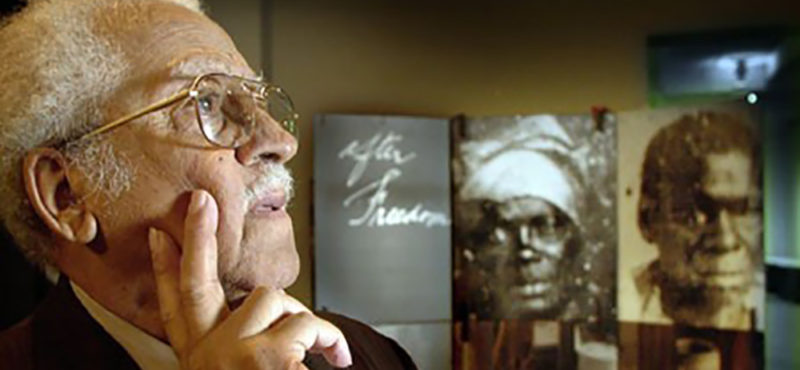
Many people interacted with Dr. James Cameron during his long life as a civil rights pioneer, family man, worker, author, orator, educator, and museum founder.
Perhaps you were fortunate to be one of those who learned, laughed, broke bread, and/or became inspired, by this man. Here is an opportunity to share your story.
Book Club Discussion Guides
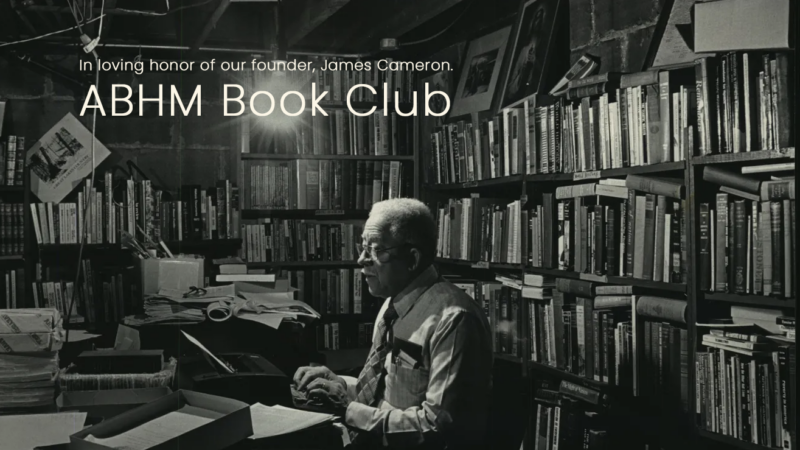
America’s Black Holocaust Museum’s founder, Dr. James Cameron, was an avid reader and inspiring writer and educator. To this day, he is the only known survivor of a lynching to write and publish a memoir about such an experience. In his honor, we created this book club in November of 2020 to bring together a community of all backgrounds to learn about and discuss our collective past, modern manifestations of racism, and how we create racial repair, reconciliation, and healing for a better the future.

Civic Season
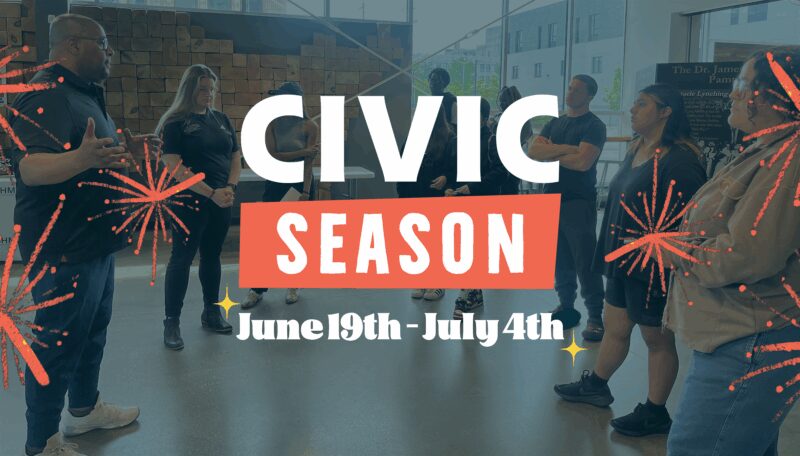
ABHM’s 2025 Juneteenth and summer programming aligned with Civic Season, a new tradition co-created by Made By Us, Gen Z, and cultural institutions to inspire meaningful civic participation among young people. Taking place annually from Juneteenth (our newest federal holiday) through the Fourth of July (our oldest), Civic Season encourages organizations nationwide to develop programs—both in-person and virtual—that connect with Gen Z. While ABHM’s efforts centered on young adults, our events welcomed participants of all ages, from early learners to community elders—reflecting our belief that history impacts everyone and that intergenerational learning strengthens civic engagement and community bonds.