5 must-see Black films from the 2024 Chicago International Film Festival
Share
Explore Our Galleries









Breaking News!
Today's news and culture by Black and other reporters in the Black and mainstream media.
Ways to Support ABHM?
By Jessica Gillespie, The Triibe
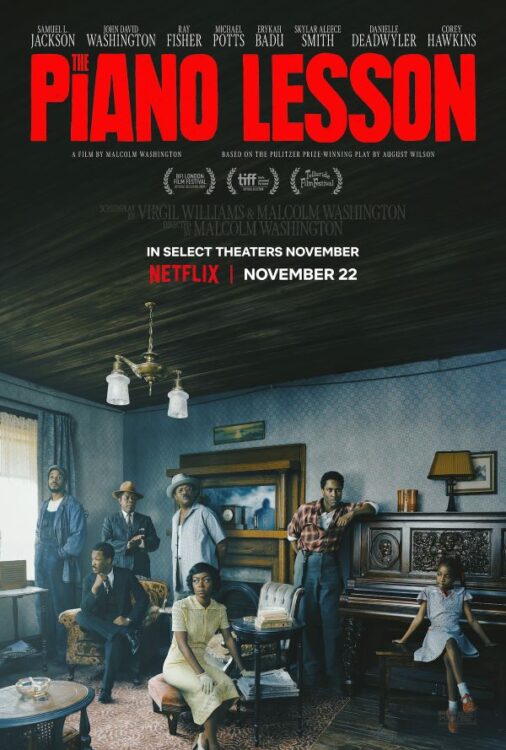
The Chicago International Film Festival celebrated its 60th anniversary from Oct. 16-27, opening with The Piano Lesson (2024) and a star-studded red carpet featuring Denzel Washington’s sons, director Malcolm and actor John David Washington, and Chicago screenwriter Virgil Williams at The Music Box Theater. The film was part of the festival’s Black Perspectives programs. Started in 1997 in collaboration with Spike Lee, the Black Perspectives program highlights the excellence and diversity of Black cinema and celebrates the cultural and historical impact of Black experiences through rich African diasporic storytelling.
In the past, the program served as the world premiere for the first film by acclaimed director Ava Duvernay, and featured the work of luminary filmmakers Lee Daniels, George Tillman, Jr. and Steve McQueen.
This year’s program presented 17 films which screened at various theaters and venues across the city, including the Music Box Theater, Gene Siskel Film Center, the Chicago History Museum, AMC NewCity 14 and the Logan Center for the Arts at University of Chicago. Also, there were community screenings at the Hamilton Park Cultural Center in Englewood and the National Museum of Mexican Art in Pilsen.
One of the most exciting aspects of this year’s festival lineup were the retrospectives and remastered filmworks; 1973’s The Spook Who Sat By The Door is truly a testament to the longevity and transformative power of Black film, then and now.
Here are a list of five films from the festival that are worth watching:
The Piano Lesson (2024) directed by Malcolm Washington
America’s leading man Denzel Washington’s sons made a movie together. Emerging director Malcom Washington and his award-winning older brother John David Washington pair up to bring this 1987 August Wilson play to the big screen. Set between Mississippi and Philadelphia over two decades, a brother and sister have a tense reunion over the fate of a deeply meaningful heirloom piano.
The original article lists the next four titles.
Find film festivals and other events in our community calendar. Learn about Black history.
More Breaking News here.
Comments Are Welcome
Note: We moderate submissions in order to create a space for meaningful dialogue, a space where museum visitors – adults and youth –– can exchange informed, thoughtful, and relevant comments that add value to our exhibits.
Racial slurs, personal attacks, obscenity, profanity, and SHOUTING do not meet the above standard. Such comments are posted in the exhibit Hateful Speech. Commercial promotions, impersonations, and incoherent comments likewise fail to meet our goals, so will not be posted. Submissions longer than 120 words will be shortened.
See our full Comments Policy here.