10 young Black changemakers across history
Share
Explore Our Galleries









Breaking News!
Today's news and culture by Black and other reporters in the Black and mainstream media.
Ways to Support ABHM?
By Kayla Grant, The Grio
From fighting for racial justice to conquering the business world, these Black youths broke barriers against incredible odds—all before turning 20.
February is the month that marks the celebration of the Black experience, a time to reflect on the past and uplift the next generation of Black men and women. When it comes to racial progress, some of the most influential changemakers in the Black community have been children. From young revolutionaries in the civil rights movement to trailblazers in the entertainment industry, Black youth across the world have stood against adversity, broken barriers and enacted change—all before reaching the age of 20. In no particular order, here is a list of 10 such young Black trailblazers.
1. Claudette Colvin
Approximately nine months before Rosa Parks, there was Claudette Colvin. In March 1955, when she was 15 years old, Colvin became the first person to be arrested for refusing to give up her seat on a bus to a white woman in Montgomery, Ala.
2. Lyda Newman
In 1898, Lyda Newman became the third Black woman to ever receive a patent—and she wasn’t yet a woman. At 13 years old, Newman created the first hairbrush with synthetic bristles. This was only the beginning of her revolutionary work; as she got older, she also became known for her activism. Newman was highlighted in many newspapers for her work in support of the women’s suffrage movement.
3. The Little Rock Nine
Following the Brown v. Board of Education ruling, Minnijean Brown, Elizabeth Eckford, Ernest Green, Thelma Mothershed, Melba Pattillo, Gloria Ray, Terrence Roberts, Jefferson Thomas and Carlotta Walls decided to enroll in Little Rock Central High School to challenge racial segregation in Arkansas schools. The group, whose ages ranged from 15 to 17 in 1957, endured a rough experience but did not let that deter them from reaching their goal.
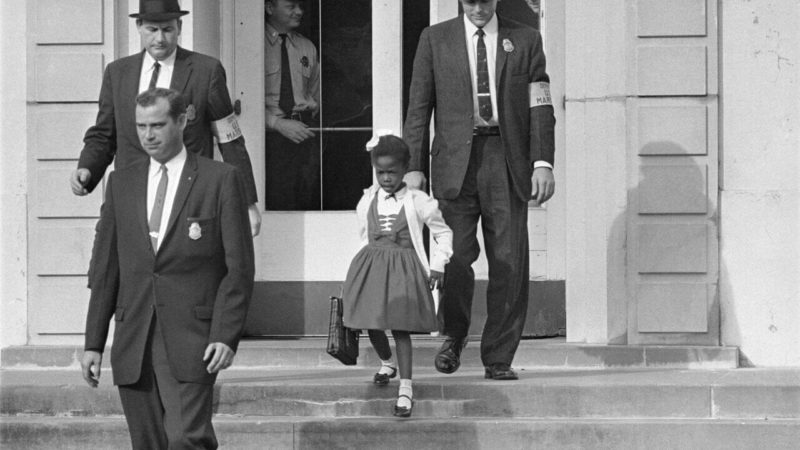
4. Ruby Bridges
Similar to the Little Rock Nine, Ruby Bridges was in the center of the fight against racial discrimination in schools—and was the first to do it alone. At six years old, Bridges passed a test designed to ensure Black students failed, and at the behest of the NAACP, her parents enrolled her in the all-white William Frantz Elementary School in New Orleans. She was escorted into the school by U.S. Marshals and placed in a classroom by herself with the only teacher who would agree to teach her. Despite the adversity she faced, Bridges held her ground and was allowed to join a full class in the next year.
Read the full article and learn about how young black people have changed history here.
Check out a recent interview with Claudette Colvin or learn more about the Civil Rights Movement of the 1960s.
More Breaking News here.
Comments Are Welcome
Note: We moderate submissions in order to create a space for meaningful dialogue, a space where museum visitors – adults and youth –– can exchange informed, thoughtful, and relevant comments that add value to our exhibits.
Racial slurs, personal attacks, obscenity, profanity, and SHOUTING do not meet the above standard. Such comments are posted in the exhibit Hateful Speech. Commercial promotions, impersonations, and incoherent comments likewise fail to meet our goals, so will not be posted. Submissions longer than 120 words will be shortened.
See our full Comments Policy here.