10 years later: Leaders speak on death of Freddie Gray and Baltimore’s struggle for change
Share
Explore Our Galleries









Breaking News!
Today's news and culture by Black and other reporters in the Black and mainstream media.
Ways to Support ABHM?
From Megan Sayles AFRO Business Writer
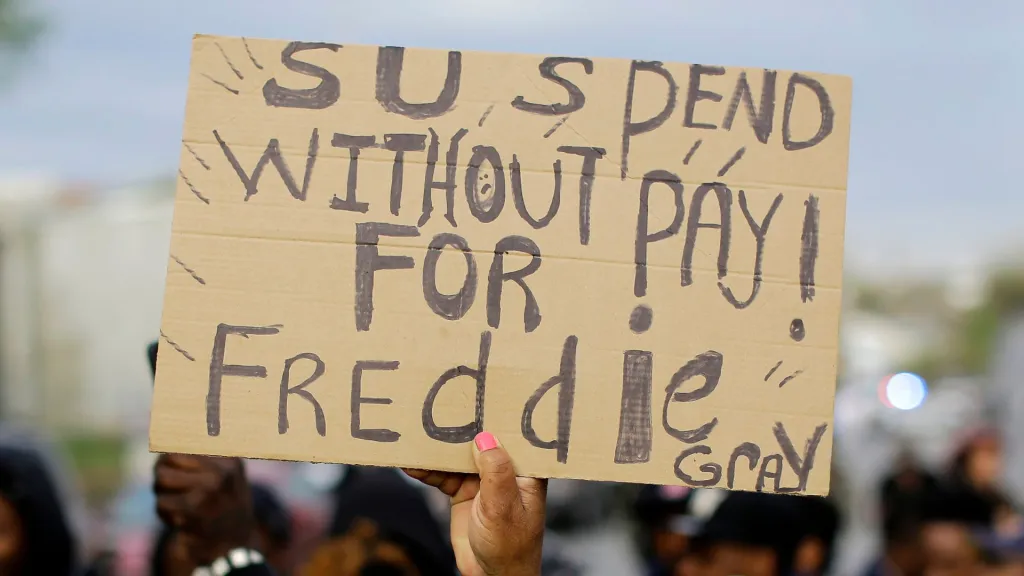
It’s been 10 years since 25-year-old Freddie Gray was arrested on April 12 by Baltimore police and suffered a fatal spinal cord injury while in custody. His April 19, 2015 death cast a national spotlight on Baltimore, sparking citywide protests. On the day of his funeral, April 27, riots broke out. The movement fueled a growing call for police accountability.
Today, faith and community leaders are still grappling with the tragedy and what’s changed— and what hasn’t— in Baltimore since Gray’s life ended shortly after coming into contact with Baltimore police officers.
Pastor Harold Carter Jr., of New Shiloh Baptist Church, recalled hearing about the “rough ride” Gray was subjected to. Though Gray was handcuffed and shackled, the police officers who arrested him did not secure him with a seatbelt, a violation of the Baltimore Police Department’s (BPD) policy.
Carter remembers hearing that some BPD members had a pattern of engaging in this behavior.
“There was a certain group of police officers who, when they picked up people, put them in the back of the paddy wagon. Even though they were restrained, they were not seat-belted,” said Carter. “They were driven through the city, and there were certain curves where they got slammed around.”
Read more on AFRO.
More Breaking News.
Learn more about Freddie Gray.
Comments Are Welcome
Note: We moderate submissions in order to create a space for meaningful dialogue, a space where museum visitors – adults and youth –– can exchange informed, thoughtful, and relevant comments that add value to our exhibits.
Racial slurs, personal attacks, obscenity, profanity, and SHOUTING do not meet the above standard. Such comments are posted in the exhibit Hateful Speech. Commercial promotions, impersonations, and incoherent comments likewise fail to meet our goals, so will not be posted. Submissions longer than 120 words will be shortened.
See our full Comments Policy here.