10 Years After Katrina
Share
Explore Our Galleries









Breaking News!
Today's news and culture by Black and other reporters in the Black and mainstream media.
Ways to Support ABHM?
By Campbell Robertson and Richard Fausset, New York TImes
NEW ORLEANS — It is a wonder that any of it is here at all: The scattered faithful gathering into Beulah Land Baptist Church on a Sunday morning in the Lower Ninth Ward. The men on stoops in Mid-City swapping gossip in the August dusk. The brass band in Tremé, the lawyers in Lakeview, the new homeowners in Pontchartrain Park.
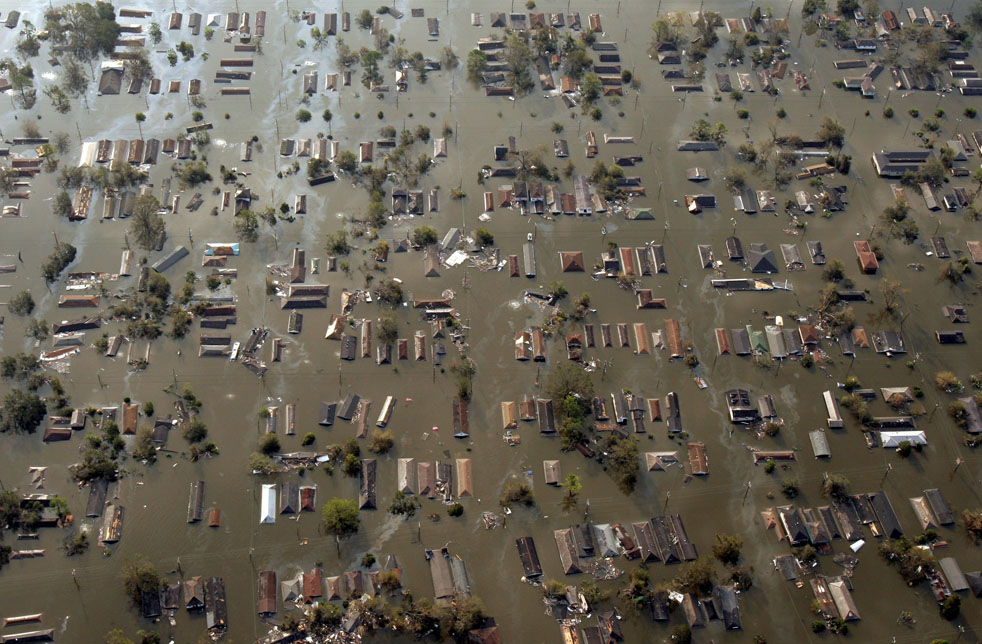
On Aug. 29, 2005, it all seemed lost. Four-fifths of the city lay submerged as residents frantically signaled for help from their rooftops and thousands were stranded at the Superdome, a congregation of the desperate and poor. From the moment the storm surge of Hurricane Katrina dismantled a fatally defective levee system, New Orleans became a global symbol of American dysfunction and government negligence. At every level and in every duty, from engineering to social policy to basic logistics, there were revelations of malfunction and failure before, during, and after Katrina.
Ten years later, it is not exactly right to say that New Orleans is back. The city did not return, not as it was.
It is, first of all, without the more than 1,400 people who died here, and the thousands who are now making their lives someplace else. As of 2013, there were nearly 100,000 fewer black residents than in 2000, their absences falling equally across income levels. The white population decreased by about 11,000, but it is wealthier.
The city that exists in 2015 has been altered, by both a decade of institutional re-engineering and the artless rearrangement that occurs when people are left to fend for themselves.
[…]
As before, there are two cities here. One is booming, more vibrant than ever, still beautiful in its best-known neighborhoods and expanding into places once written off; the other is returning to pre-Katrina realities of poverty and routine violence, but with a new sense of dislocation for many as well.
Old inequities have proved to be resilient. The child poverty rate (about 40 percent) and the overall poverty rate (close to 30 percent) are almost unchanged from 2000.
Read the full article here.
Read more Breaking News here.
Comments Are Welcome
Note: We moderate submissions in order to create a space for meaningful dialogue, a space where museum visitors – adults and youth –– can exchange informed, thoughtful, and relevant comments that add value to our exhibits.
Racial slurs, personal attacks, obscenity, profanity, and SHOUTING do not meet the above standard. Such comments are posted in the exhibit Hateful Speech. Commercial promotions, impersonations, and incoherent comments likewise fail to meet our goals, so will not be posted. Submissions longer than 120 words will be shortened.
See our full Comments Policy here.
[…] Image from America’s Black Holocaust Museum […]