10 Things You Should Know About Slavery and Won’t Learn at ‘Django’
Share
Explore Our Galleries









Breaking News!
Today's news and culture by Black and other reporters in the Black and mainstream media.
Ways to Support ABHM?
By Imara Jones, Colorlines
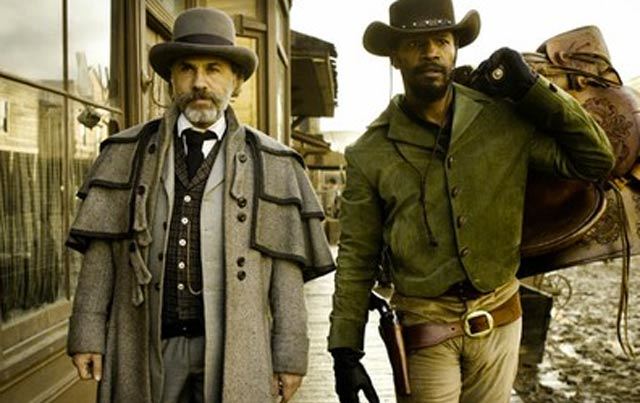
Much hullabaloo has been made recently about slavery as entertainment in movies like “Django Unchained.”
But lost in the discussion is slavery as history, and the simple fact that it was an economic system which seized the economic know-how of Africans in order to construct unimaginable wealth in North America, Europe and throughout the Western Hemisphere. Wealth from the slave trade took Western Europe from being one of the world’s poorest regions to its wealthiest and most powerful in under a century.
Though sadistic and macabre, the plain truth is that slavery was an unprecedented economic juggernaut whose impact is still lived by each of us daily. Consequently, here’s my top-10 list of things everyone should know about the economic roots of slavery.
1) Slavery laid the foundation for the modern international economic system.
The massive infrastructure required to move 8 to 10 million Africans halfway around the world built entire cities in England and France, such as Liverpool, Manchester and Bordeaux. It was key to London’s emergence as a global capital of commerce, and spurred New York’s rise as a center of finance. The industry to construct, fund, staff, and administer the thousands of ships which made close to 50,000 individual voyages was alone a herculean task. The international financial and distribution networks required to coordinate, maintain and profit from slavery set the framework for the modern global economy.
2) Africans’ economic skills were a leading reason for their enslavement.
Africans possessed unique expertise which Europeans required to make their colonial ventures successful. Africans knew how to…
Want to finish that sentence and read the other eight points? Click here.
Comments Are Welcome
Note: We moderate submissions in order to create a space for meaningful dialogue, a space where museum visitors – adults and youth –– can exchange informed, thoughtful, and relevant comments that add value to our exhibits.
Racial slurs, personal attacks, obscenity, profanity, and SHOUTING do not meet the above standard. Such comments are posted in the exhibit Hateful Speech. Commercial promotions, impersonations, and incoherent comments likewise fail to meet our goals, so will not be posted. Submissions longer than 120 words will be shortened.
See our full Comments Policy here.
Thanks for sending this to me. I look forward to following this site. There is so much for us to know about slavery, and I am mindful that Lincoln , the movie, gives a limited picture. I don’t plan to see django. I started watching The Abolitionists on PBS. I am a willing learner about a truer picture of what slavery was about. We, of Caucasian lineage have much to learn. Thanks!
You are most welcome, Larraine! Thanks for visiting and for your thoughtful comments. To follow ABHM by RSS feed, just click on the RSS icon at the foot of any page on the ABHM site.