Why the Onion’s Crappy Apology Is Worthless
Share
Explore Our Galleries









Breaking News!
Today's news and culture by Black and other reporters in the Black and mainstream media.
Ways to Support ABHM?
By Madison Gray, from theRoot
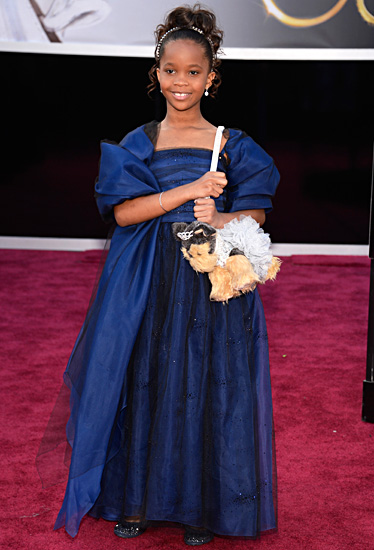
Photo: Getty Images
When I watched Quvenzhané Wallis telling the story of a little girl called Hushpuppy and her adventures living in a poor Bayou area in Beasts of the Southern Wild, I was enchanted by how well she articulated her life and the world around her. I had so much hope that she might be the youngest person ever to take home a golden statuette and wanted to believe that everyone else on the planet shared my sentiment.
The best actress trophy went to Jennifer Lawrence for Silver Linings Playbook, and the pervasive thinking for Quvenzhané was probably something like, “It’s OK, Princess, you were still wonderful.” But that wasn’t the case in the offices of the Onion, the Chicago-based satirical news website. Someone, possibly a social media editor, as yet unnamed, decided to place this on Twitter:
“Everyone else seems afraid to say it, but that Quvenzhané Wallis is kind of a c–t, right?”
The tweet was reportedly taken down an hour after it was posted, but not really. Anyone who follows the Onion on Twitter and everyone who doesn’t got wind of this tweet, and it spread across the Web like, well, the smell of bad onions!
When you put something out there in the media, good or bad, it’s out there and can’t be taken back, no matter how sorry you are […]. It’s just that sexist and racist, and I’m not sparing the feelings of anyone at the Onion, since they didn’t spare Quvenzhané’s.

Don’t get me wrong — edgy comedy is funny. Hell, Richard Pryor did it for years, and I’ll argue that he’s the funniest man of all time. But as raunchy as his language was, he never directly aimed it at anyone’s child.
[…]
So perhaps that’s the takeaway from all this: When you try to be funny, be adhesive. What came out of the Onion was the opposite. In fact it was like dress socks on a bamboo floor: It caused the people at the Onion to slip and fall on their unfunny asses.
This is why, as many n-words and M-Fs as Pryor spewed, he never once had to apologize for them, because there was nothing to apologize for. It was just hot, sticky truth.
Read the full article here.
Wallis was nominated once more.
Read more Breaking News here.
Comments Are Welcome
Note: We moderate submissions in order to create a space for meaningful dialogue, a space where museum visitors – adults and youth –– can exchange informed, thoughtful, and relevant comments that add value to our exhibits.
Racial slurs, personal attacks, obscenity, profanity, and SHOUTING do not meet the above standard. Such comments are posted in the exhibit Hateful Speech. Commercial promotions, impersonations, and incoherent comments likewise fail to meet our goals, so will not be posted. Submissions longer than 120 words will be shortened.
See our full Comments Policy here.