Why Deion Sanders’ success in Colorado matters so much to Black fans
Share
Explore Our Galleries









Breaking News!
Today's news and culture by Black and other reporters in the Black and mainstream media.
Ways to Support ABHM?
By Curtis Bunn, NBC
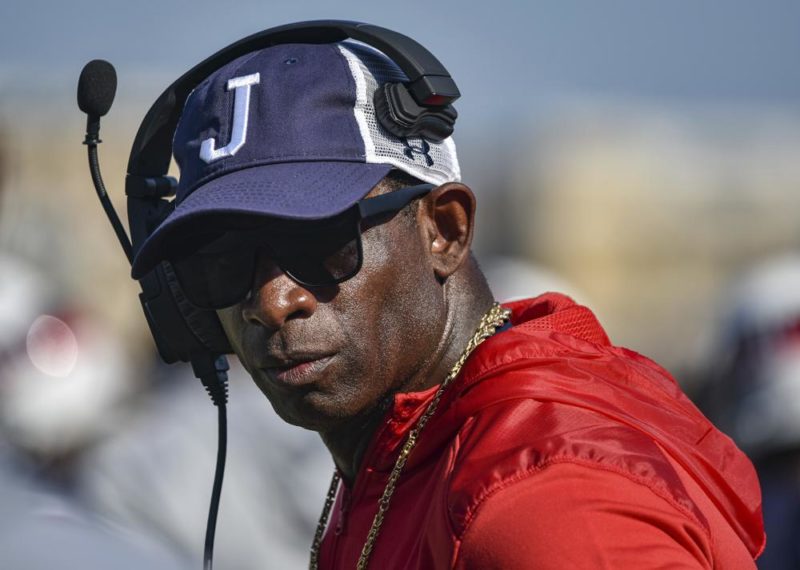
Deion Sanders’ Colorado Buffaloes did not make it to Pac 12 championship on Friday; they lost their last six games. Sanders’ star quarterback, his son Shedeur Sanders, did not finish the season because of an injury. Three top recruits decommitted from joining the program. A coach quit and at least one player entered the transfer portal.
So why is Boulder, Colorado’s notoriously thin air thick with optimism? And why did Sanders become such an enormous deal in the first place?
The answers are many and they are all about Sanders, 56, an all-time NFL great whose confluence of audacity, tenderness and introspection — played out to millions on social media — inspired a legion of followers, countless of them with faint interest in college football until he took over in Boulder. His influence has been so palpable this season that Sports Illustrated named him “Sportsperson of the Year” on Thursday, a nod to his impact beyond the games, as the end of the season did not match the beginning.
Despite all that did not go right in his first season after controversially leaving Jackson State University, a historically Black school, Black fans in particular have rallied around “Coach Prime.” He high-stepped into Boulder, a city with a population of just 1.3% Black people, reinvigorated a downtrodden fan base and built a national coalition of support.
Keep reading to learn how Colorado students and alums responded.
Comments Are Welcome
Note: We moderate submissions in order to create a space for meaningful dialogue, a space where museum visitors – adults and youth –– can exchange informed, thoughtful, and relevant comments that add value to our exhibits.
Racial slurs, personal attacks, obscenity, profanity, and SHOUTING do not meet the above standard. Such comments are posted in the exhibit Hateful Speech. Commercial promotions, impersonations, and incoherent comments likewise fail to meet our goals, so will not be posted. Submissions longer than 120 words will be shortened.
See our full Comments Policy here.