Who Was Africa’s 1st Ambassador to Europe?
Share
Explore Our Galleries









Breaking News!
Today's news and culture by Black and other reporters in the Black and mainstream media.
Ways to Support ABHM?
By Henry Louis Gates Jr.
The answer lies a lot further back in time than you think.
Most of us assume that the flow of human beings, ideas, trade and information between Europe and Africa was one-way, and that Africans were a “primitive” people outside of time, living in ignorance and isolation until Portuguese navigators “discovered” them sometime in the 15th century, and then forced them into slavery.
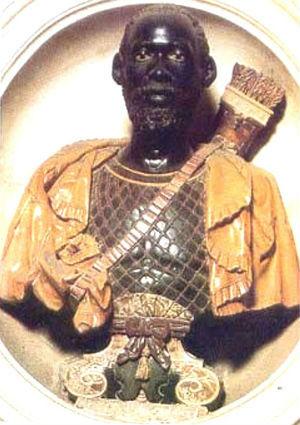
That, at least, is how my generation was taught, when we were taught anything at all about Africa and its Africans.
But it turns out that long before English settlers arrived at Jamestown, Va., in 1607, African kingdoms were a lot more sophisticated and highly organized, and those kingdoms’ relations to European visitors and to their monarchs back home much more complicated than we have been led to believe. And, indeed, the flow of contact between Europe and Africa was in both directions. African kingdoms established formal diplomatic relations with European kingdoms, as equal parties, to regulate matters such as trade.
Nevertheless, it comes as quite a surprise to most of us to learn that some independent African kingdoms actually sent their own ambassadors to their European counterparts, and these ambassadors were accorded all the rights and privileges of other nations’ ambassadors.
As the historians Linda Heywood and John Thornton discovered, the king of Kongo sent an ambassador named Chrachanfusus to the court of the King of Portugal as early as 1488. He presented the king with many splendid gifts, including ivory that was “marvelously white and shone,” according to a report by Portuguesechronicler Rui de Pina. Chrachanfusus was baptized and given the name of Joao de Silva. He is the first African ambassador to Europe of whom we have records.
The Kongo king, Alvaro II, appointed Antonio Manuel ambassador to Rome in 1604, and he set out for Rome soon after. The king sent him there to complain to the pope about the behavior of the Portuguese man who had been sent to Kongo as the bishop in 1596.
Read more here.
Discover more trailblazers in our online exhibits or breaking news section.
Comments Are Welcome
Note: We moderate submissions in order to create a space for meaningful dialogue, a space where museum visitors – adults and youth –– can exchange informed, thoughtful, and relevant comments that add value to our exhibits.
Racial slurs, personal attacks, obscenity, profanity, and SHOUTING do not meet the above standard. Such comments are posted in the exhibit Hateful Speech. Commercial promotions, impersonations, and incoherent comments likewise fail to meet our goals, so will not be posted. Submissions longer than 120 words will be shortened.
See our full Comments Policy here.