White Supremacy
Explore Our Online Exhibits
Breaking News


Worldwide Community Events
Week 2
- Sun 29
- Mon 30
- Tue 31
- Wed 1
- Thu 2
- Fri 3
- Sat 4
- Sun 5
- Mon 6
- Tue 7
- Wed 8
- Thu 9
- Fri 10
- Sat 11
- Sun 12
- Mon 13
- Tue 14
- Wed 15
- Thu 16
- Fri 17
- Sat 18
- Sun 19
- Mon 20
- Tue 21
- Wed 22
- Thu 23
- Fri 24
- Sat 25
- Sun 26
- Mon 27
- Tue 28
- Wed 29
- Thu 30
- Fri 1
- Sat 2
-
No Events
-
No Events
-
No Events
-
No Events
-
No Events
Share
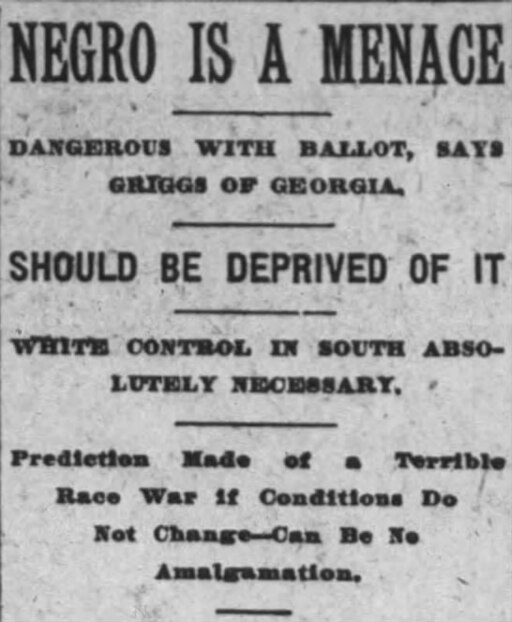
White supremacy is the belief that white people are better than those of other races, making it a type of racism. It also includes actions that prevent other races from gaining power, which is known as white privilege, preserving that power for white people. The basis of white supremacy is the former erroneous belief that significant biological differences existed between people of different races. Although this belief focused heavily on the so-called Black inferiority in and around the slavery era, white supremacy historically and currently oppresses people of many races around the globe, especially indigenous peoples. Furthermore, definitions of who qualifies as white can vary.
This type of racism paved the way for racist hate groups such as the Ku Klux Klan (KKK), the attempt by the self-named Confederate States of America to secede from the Union, and various race riots or massacres, including that in Greenwood, Oklahoma. White supremacy has also been solidified in American legislature through laws such as those preventing Black people from owning property, voting, holding office, and marrying (either at all or those of other races). In the 20th century, Jim Crow laws, which forced racial segregation, upheld the ideology of white supremacy. While laws have changed, institutions and individuals can still promote white supremacy up to and including racist violence.
This idea is closely related to white nationalism, in which being white becomes an identity. Supporters of white nationalism may endorse overthrowing the government to uphold their power. Overlap also exists between white supremacy and racist skinheads who discriminate against Jewish people. Some Christian beliefs and doctrines also align with white supremacy. White (male) supremacy can play a role in domestic terrorism incidents such as shootings like the one in Buffalo, New York.
While Donald Trump was president, this movement gained popularity, with as many as 600 groups currently existing in the United States, members of which typically supported Trump.
Although there is disagreement about how we can dismantle white supremacy, some white supremacists eventually see the error of their ways.
All of our articles, exhibits, and events about white supremacy can be found in the archive below.

On a hot August night in 1930, 15,000 people flooded into the small Indiana town of Marion to see a great spectacle. Three black teenagers were being lynched for supposedly raping a white woman and killing a white man. The boys were savagely beaten by a mob of men, women and children. One by one they were hanged. Two died – but with the rope already tightening around his neck, one boy was saved.
The souvenir photo taken of this “spectacle lynching” is very well-known. They say it inspired the song “Strange Fruit,” written by teacher Abel Meeropol and made popular by singer Billie Holiday.
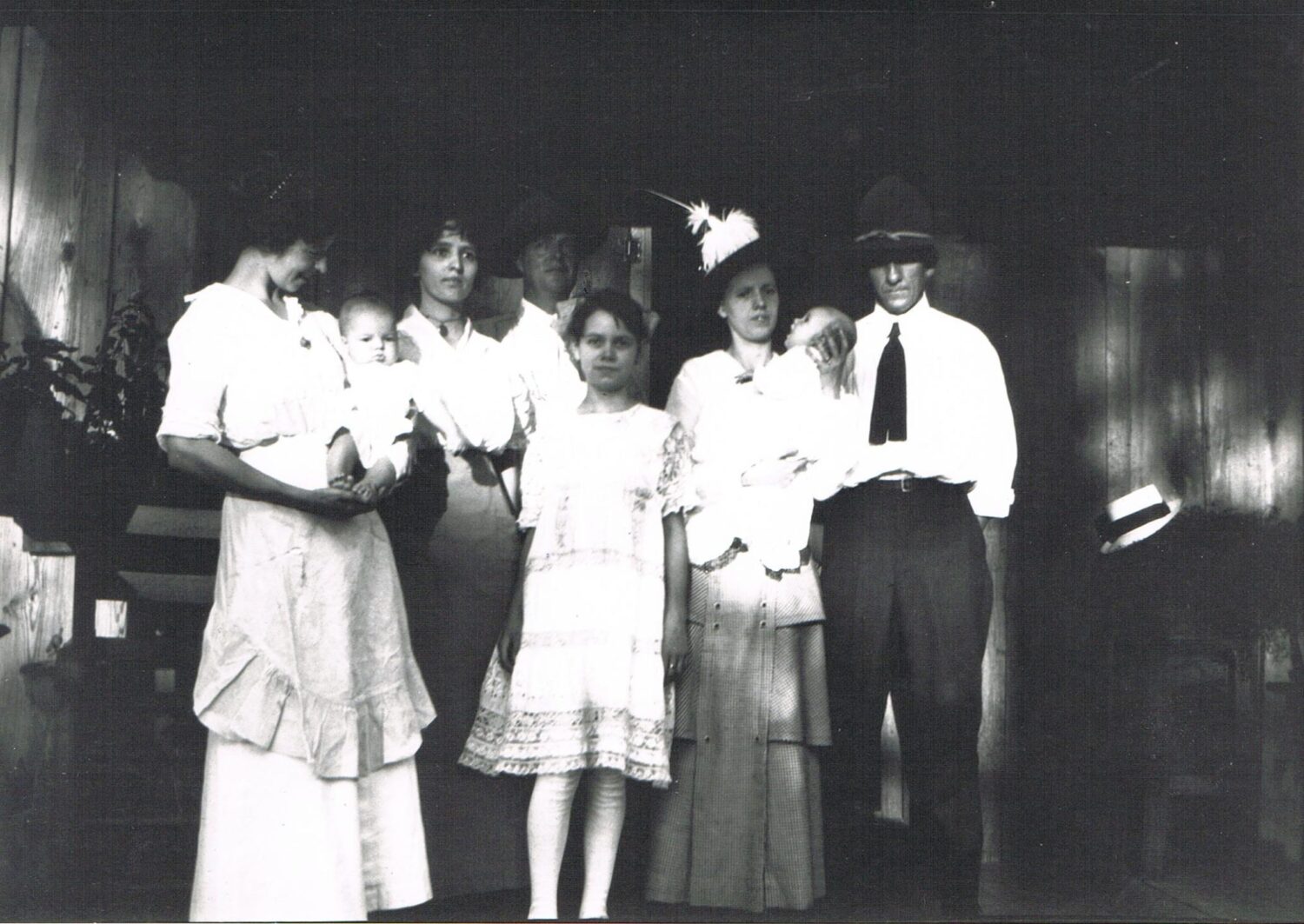
With its store of family memories, Arkansas defines home for me. But embracing and claiming it as my own is prickly business. “Home” has closets of skeletons that are anything but comforting: the Lost Cause, Jim Crow, the Ku Klux Klan, lynchings.
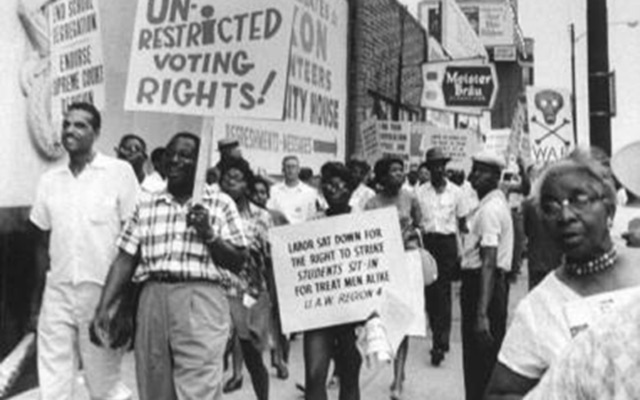
From about 1900 to 1965, most African Americans were not allowed to vote in the South. White people in power used many methods to keep black people from voting. Some of these methods also prevented poor white people from voting. Today there are still laws and customs that make it harder for African Americans, other minorities, and some whites to vote.
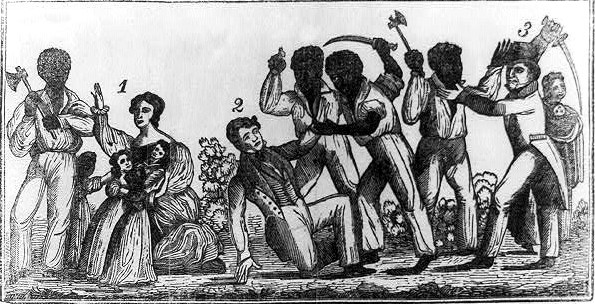
This is the story of one of the largest rebellions by enslaved Africans in American history. It is also the story of historiography–how the past is researched, viewed, and written about.
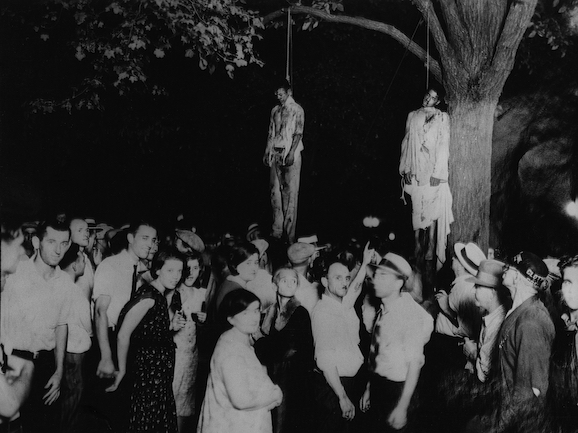
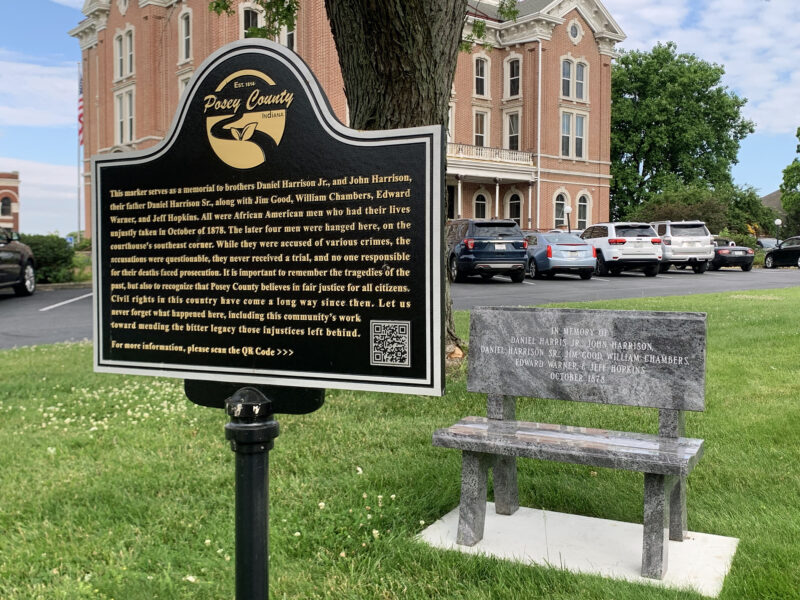
Launched online in December 2011, this is, we believe, the first memorial to remember the many victims of lynching in the United States. Here we gather their life stories, say their names, and note where and when these thousands of men, women and children were terrorized and murdered.

Arno Michaels grew up as a gifted child of privilege. In his teens he became a white-power extremist, a leader of skinheads. Today he is an international activist for peace, justice, and basic human kindness. Read his story and watch a video about his transformation and redemption.
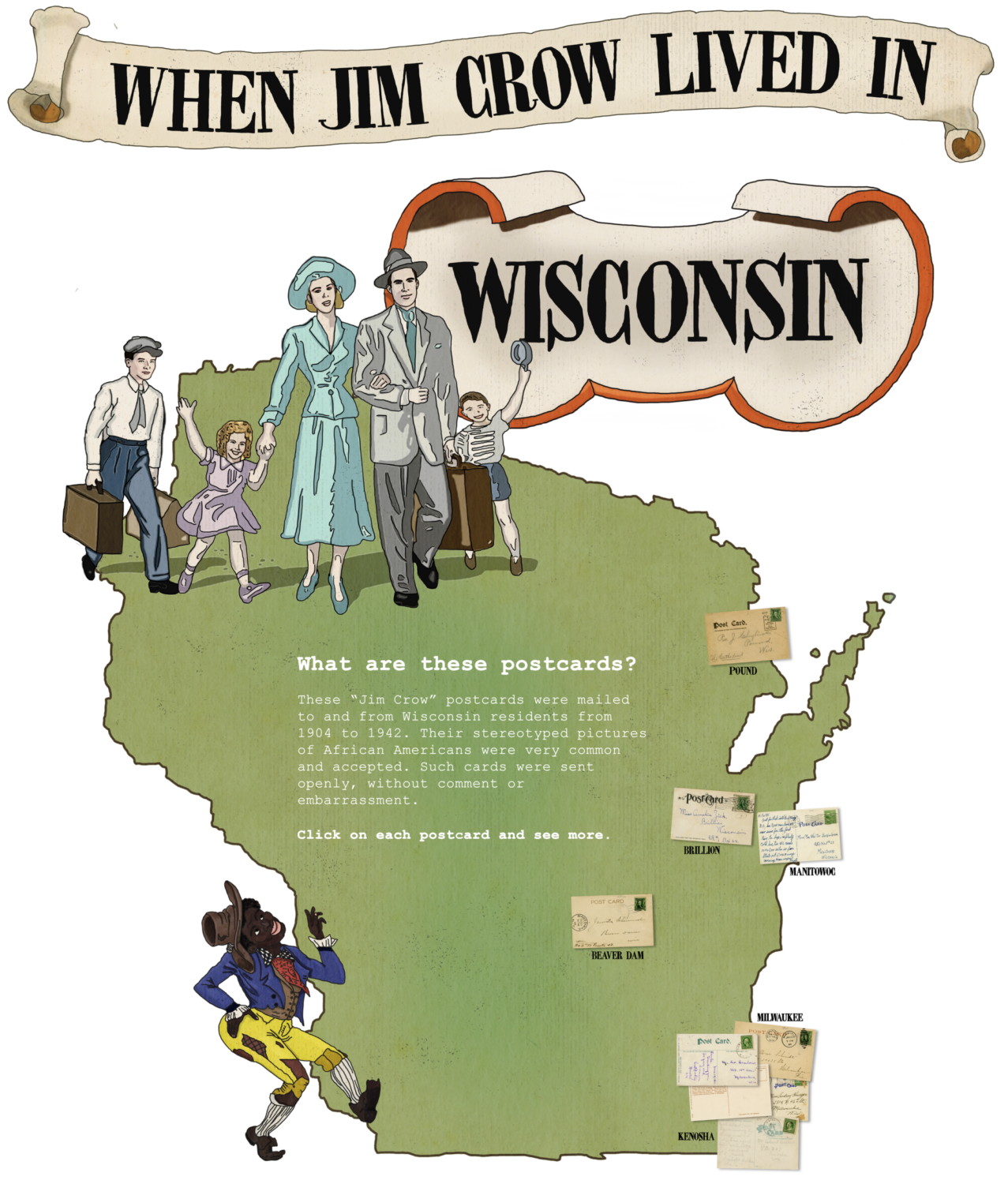
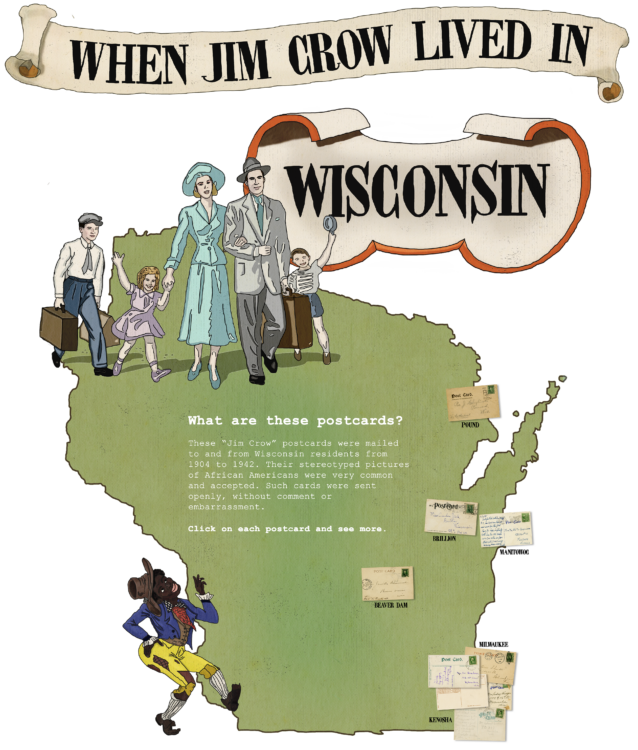
These postcards were mailed to and from Wisconsin residents from 1904 to 1942. Their stereotyped pictures of African Americans were very common and accepted. Such cards were sent openly, without comment or embarrassment.
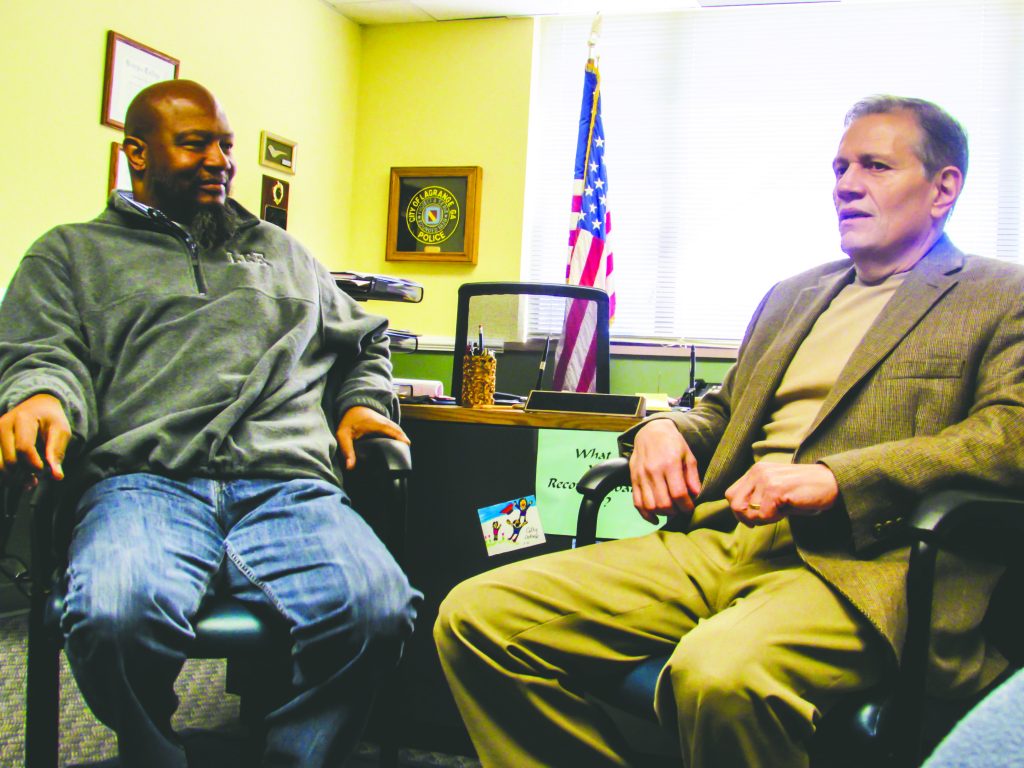
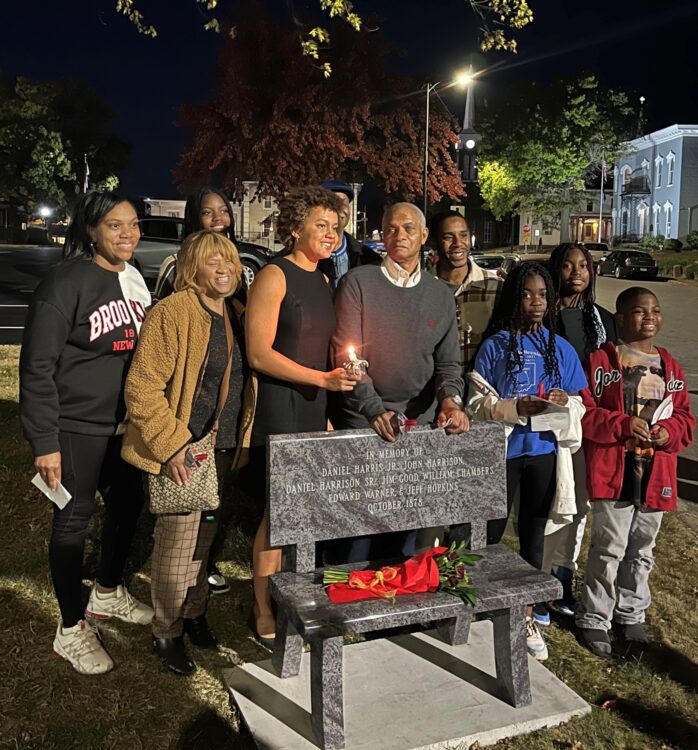
The police chief of Lagrange, Georgia, along with the city’s mayor and the white business community, issued an apology to the Callaway family and the NAACP for the 1940 lynching of teenaged Austin Callaway. A commemorative ceremony and memorial plaque will be placed to honor Callaway and other victims of lynchings in the county.
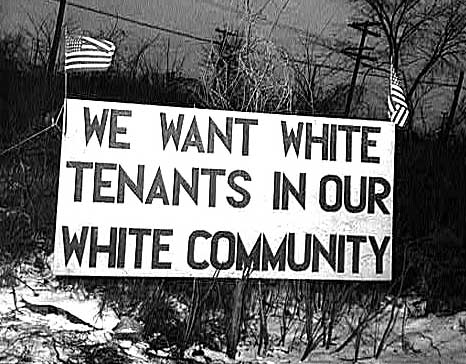
A sundown town is a community that for decades kept non-whites from living in it and was thus “all-white” on purpose. Sundown towns are rare in the South but common in the rest of the country. Learn why sundown cities, towns, suburbs, and neighborhoods developed–and how they continue to shape the lives and relationships of black and white Americans today.
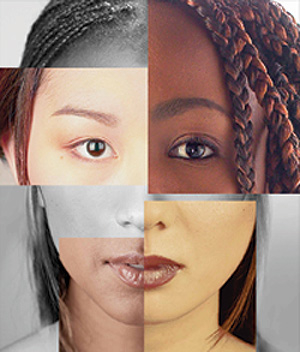
For more than 400 years, the economic, social, and political behavior of Americans has been shaped by ideas about “races” and racial differences. Where did these powerful ideas come from – and are they true? How have your ideas about racial differences been affected?