Where Was the 1st Underground Railroad?
Share
Explore Our Galleries









Breaking News!
Today's news and culture by Black and other reporters in the Black and mainstream media.
Ways to Support ABHM?
By Henry Louis Gates, Jr., theRoot.com
We have all been regaled with stories about our slave ancestors escaping from the harsh life of the plantations in the South, finding their freedom in the North by “following the North Star” through alligator- and snake-infested swamps, hiding by day in dense forests, braving the elements, dangerous animals and disease-bearing mosquitos and eventually finding freedom across the Mason-Dixon Line, frequently guided by that courageous conductor on the Underground Railroad, Harriet Tubman.
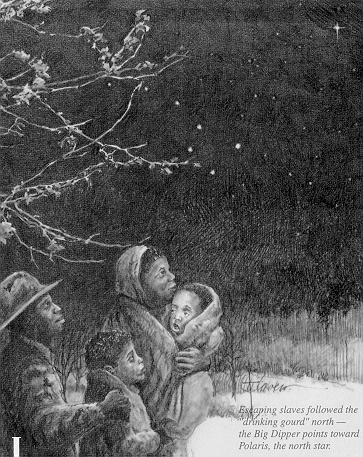
Few elements of African-American history have been more mythologized or misunderstood than the legendary Underground Railroad.
[…]
But the question for today is, “Where was the first Underground Railroad?” I think that the answer will surprise you, just as it surprised me when we filmed this story for my forthcoming PBS series, Many Rivers to Cross: The History of the African American People.
It stands to reason that slaves in the Southern states had to flee north to gain their freedom, following the metaphorical “drinking gourd” (as the Big Dipper was called), right? And this was certainly the case after 1830, when what we now call the Underground Railroad came into common usage in the press. So you will be forgiven if you think that this has always been true. Actually, the very first slaves in what is now the United States fled to their freedom by running south, not north.
How could this have been possible?
Read the answer here.
Our online exhibits reveal more Black history.
More Breaking News here.
Comments Are Welcome
Note: We moderate submissions in order to create a space for meaningful dialogue, a space where museum visitors – adults and youth –– can exchange informed, thoughtful, and relevant comments that add value to our exhibits.
Racial slurs, personal attacks, obscenity, profanity, and SHOUTING do not meet the above standard. Such comments are posted in the exhibit Hateful Speech. Commercial promotions, impersonations, and incoherent comments likewise fail to meet our goals, so will not be posted. Submissions longer than 120 words will be shortened.
See our full Comments Policy here.