What Kamala Harris’s Candidacy Means for Black Women
Share
Explore Our Galleries









Breaking News!
Today's news and culture by Black and other reporters in the Black and mainstream media.
Ways to Support ABHM?
By Nia Porter, Intelligencer
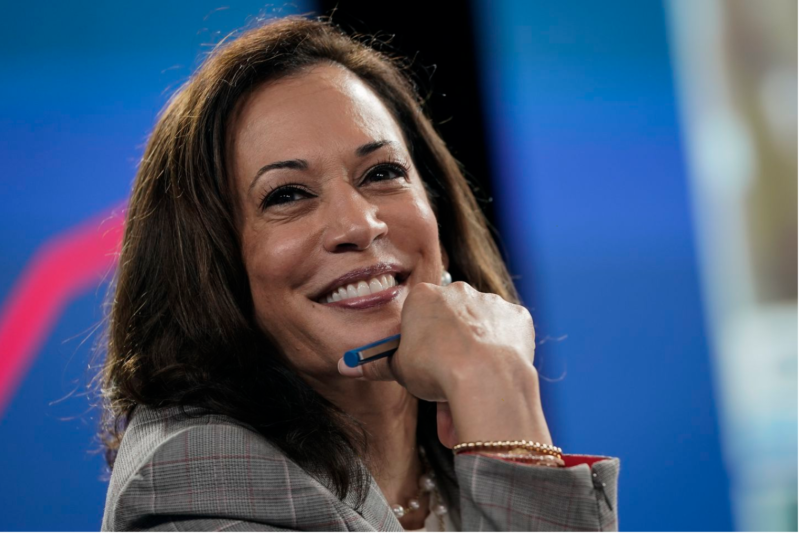
More than half a century after New York Representative Shirley Chisholm became the first Black major-party candidate, Kamala Harris could do what seemed impossible in 1972. And while the vice-president’s rise to the top of the ticket has energized the entire Democratic Party, it has particularly thrilled Black voters and especially Black women. Still, Harris’s first week at the top of the ticket has been beset by a recent wave of racist attacks from commentators and politicians on the other side of the aisle.
In 2011, Kimberly Peeler-Allen co-founded Higher Heights, a national political organization dedicated to growing the political power of Black women across the country. Recently, I spoke with Peeler-Allen, now a visiting practitioner at Rutgers University’s Center for American Women and Politics, about what Harris will bring to the ticket, how her nomination could motivate Black voters, and why fears of a backlash are never far from her mind. She also talked about what the energy was like on a much-discussed Win With Black Women Zoom call that took place after the vice-president announced her run.
Were you surprised at how quickly the party coalesced around Harris, especially given how hesitant many had been about the idea of her replacing Biden?
I was. The wave of support that came within the first 12 hours was really quite overwhelming, because I think a lot of Black women who have been in this space for decades all kind of felt the same way: Are people actually going to support her? The weeks before actually had been really quite painful, hearing people say, “Oh, we need to find a candidate. We need to find somebody, draft somebody” when we had an extremely qualified vice-president sitting right there. If it had been a white man who was vice-president, there would be no discussion. So when the endorsements started coming and the energy around her just really reached a fever pitch, it was overwhelming. It was reassuring.
[…]
There are some concerns that Harris’s backstory as a prosecutor could potentially harm her standing with younger voters and Black voters who might be naturally more skeptical of the criminal-justice system or have had bad interactions with it themselves.
I think there is concern that that will be a deterrent to some voters, and you are seeing a lot of work being done to debunk the myths around her record, particularly when she was district attorney in San Francisco. So I think there is a lot of work that has to be done to really clarify her record and clarify her vision of criminal-justice reform.
Intelligencer has the rest of the interview.
Check out our newest online exhibit.
Follow election progress in our breaking news page.
Comments Are Welcome
Note: We moderate submissions in order to create a space for meaningful dialogue, a space where museum visitors – adults and youth –– can exchange informed, thoughtful, and relevant comments that add value to our exhibits.
Racial slurs, personal attacks, obscenity, profanity, and SHOUTING do not meet the above standard. Such comments are posted in the exhibit Hateful Speech. Commercial promotions, impersonations, and incoherent comments likewise fail to meet our goals, so will not be posted. Submissions longer than 120 words will be shortened.
See our full Comments Policy here.