What does it mean to celebrate Juneteenth?
Share
Explore Our Galleries









Breaking News!
Today's news and culture by Black and other reporters in the Black and mainstream media.
Ways to Support ABHM?
By Michelle Garcia, NBC News
‘We cannot, at this stage, afford symbolism’
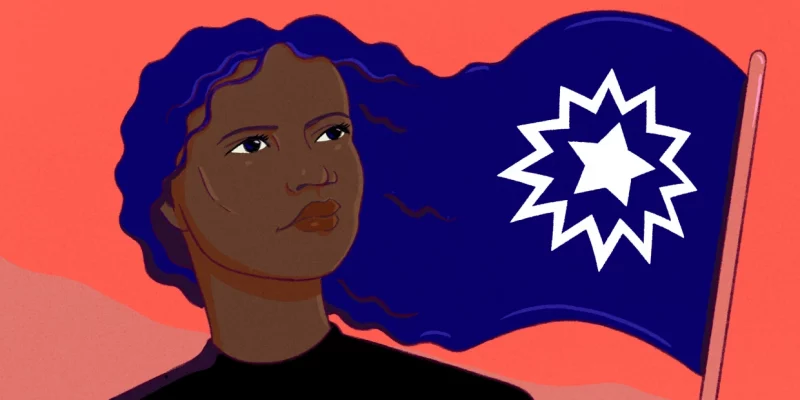
Juneteenth may be the country’s newest federal holiday, but for many Black Americans, June 19 has long been associated with homegrown community celebrations, if not at least understood as a day to symbolize freedom.
“For Black folks, there has been a long tradition of commemorating Juneteenth,” said Amara Enyia, policy and research coordinator at Movement for Black Lives.
But now that Juneteenth is a federal holiday, complete with offices and schools closing in recognition of it, the inevitable has also taken shape: commercialism.
Box stores from coast to coast are lining shelves with Juneteenth products. Walmart caught the most flack recently for stocking a Juneteenth Great Value brand ice cream flavor, the label touting a trademark symbol. The move prompted questions about who can even own the idea of Juneteenth, and the appropriateness of corporations cashing in on what could be considered a bittersweet holiday, commemorating the end of enslavement and the beginning of a generations-long struggle for civil rights…
This year, some attempts to celebrate the day have gone sour, very publicly. Many were angry to see the trademarked Juneteenth ice cream on shelves, developed with the help of a corporation that creates artificial flavors, and a children’s museum apologized after its Juneteenth menu included a watermelon salad. A Juneteenth soul food celebration in Alabama was canceled after a leaked poster for the event revealed none of its featured hosts were Black.
“Companies that are having these picnics for their employees and feeding them fried chicken and watermelon — who made that call?” Torrina Harris of Galveston quipped.
Learn why people criticize the capitalist take on Juneteenth.
These concerns are mirrored by those that the day will be whitewashed, and the process to make Juneteenth a holiday was delayed, just like Galveston’s slow reaction to the Emancipation Proclamation.
Follow for more Black news.
Comments Are Welcome
Note: We moderate submissions in order to create a space for meaningful dialogue, a space where museum visitors – adults and youth –– can exchange informed, thoughtful, and relevant comments that add value to our exhibits.
Racial slurs, personal attacks, obscenity, profanity, and SHOUTING do not meet the above standard. Such comments are posted in the exhibit Hateful Speech. Commercial promotions, impersonations, and incoherent comments likewise fail to meet our goals, so will not be posted. Submissions longer than 120 words will be shortened.
See our full Comments Policy here.