‘We Need a Conviction’: Baltimore Reacts to Mistrial in Freddie Gray Case
Share
Explore Our Galleries









Breaking News!
Today's news and culture by Black and other reporters in the Black and mainstream media.
Ways to Support ABHM?
By Erica Blount Danois, theRoot.com
“Indict! Convict! Send those killer cops to jail! The whole damn system is guilty as hell,” is what protesters shouted outside the courthouse in Baltimore Wednesday after the trial of Police Officer William Porter ended in a hung jury. Porter, the first of six officers facing prosecution in the police-custody death of Freddie Gray, had his trial declared a mistrial by Judge Barry Williams when the jury came back deadlocked.
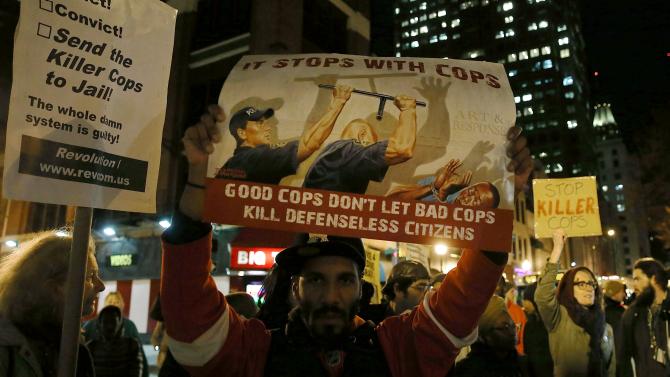 The protesters’ shouts nearly drowned out the whirring of helicopters overhead and the commands from sheriff’s deputies lined up in formation across from them.
“We’re not happy today with what happened,” said protester Westley West. “It’s not what we need; we need a conviction.”…
The crowd of protesters was a small, peaceful group that gathered outside the courthouse after Judge Williams announced that a jury made up of five whites and seven blacks that deliberated for approximately 16 hours could not come to a unanimous decision.
Experts agreed that this was a loss for the prosecution and that it faces an uphill battle in the upcoming trials of the five remaining officers as well as the potential retrial of Porter’s case. The intention was to convict Porter, grant him immunity and then use his statements against other defendants…
One expert, Doug Colbert, a University of Maryland law professor who has been in the courtroom every day since the trial began, felt that the bigger picture conclusion is that Baltimore has already set a precedent in a nationwide battle against police brutality.
“The important thing here is transparency,” said Colbert. “This is one of the rare prosecutions of a police officer throughout the whole country. There is progress that has been made here in terms of the public knowing what happened.”…
Porter remains suspended without pay, according to Police Commissioner Kevin Davis.
“Freddie did not die in vain,” said protester Kwame Rose before he was arrested. “Freddie Gray lives in all of us. We are fighting for more than Freddie Gray; we are fighting for our lives and we are fighting for people that look like Freddie Gray. For Tyrone Davis, Anthony Anderson, Tamir Rice, Keith Davis.”
Read the full article here.
Read more Breaking News here.
Comments Are Welcome
Note: We moderate submissions in order to create a space for meaningful dialogue, a space where museum visitors – adults and youth –– can exchange informed, thoughtful, and relevant comments that add value to our exhibits.
Racial slurs, personal attacks, obscenity, profanity, and SHOUTING do not meet the above standard. Such comments are posted in the exhibit Hateful Speech. Commercial promotions, impersonations, and incoherent comments likewise fail to meet our goals, so will not be posted. Submissions longer than 120 words will be shortened.
See our full Comments Policy here.