Vernon Jordan, Civil Rights Leader and D.C. Power Broker, Dies at 85
Share
Explore Our Galleries









Breaking News!
Today's news and culture by Black and other reporters in the Black and mainstream media.
Ways to Support ABHM?
Mr. Jordan, who was selected to head the National Urban League while still in his 30s, counseled presidents and business leaders.
By: Neil A. Lewis, The New York Times
Vernon E. Jordan Jr., the civil rights leader and Washington power broker whose private counsel was sought in the highest echelons of government and the corporate world, died on Monday at his home in Washington. He was 85.
His death was confirmed in a statement by Vickee Jordan, his daughter. She did not state the cause.
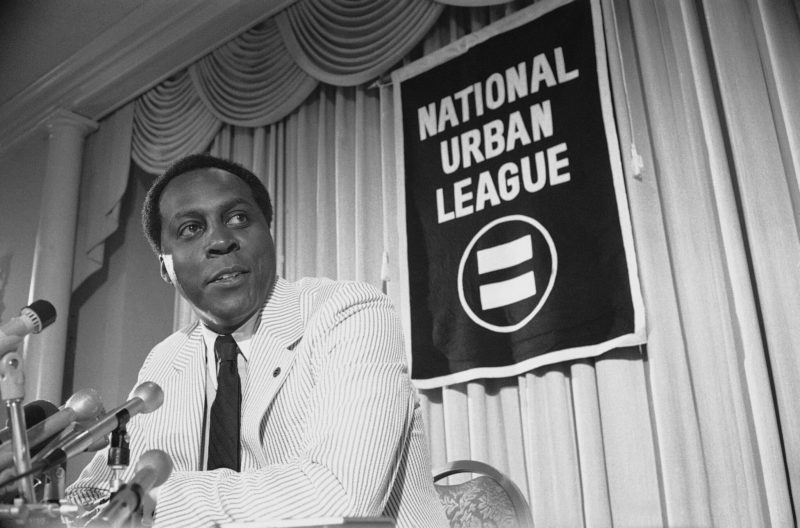
Associated Press
Mr. Jordan, who was raised in segregation-era Atlanta, got his first inkling of the world of power and influence that had largely been denied Black Americans like him while waiting tables at one of the city’s private clubs, where his mother catered dinners, and as a driver for a wealthy white banker, who was startled to discover that the tall Black youth at the wheel could read.
He went on to a dazzlingly successful career as a civil-rights leader and then as a high-powered Washington lawyer in the mold of past capital insiders like Clark M. Clifford, Robert S. Strauss and Lloyd M. Cutler.
Mr. Jordan also leaves behind a long list of younger Black leaders whose careers he fostered and who describe him as a sort of father figure, among them Mr. Walker, Mr. Chenault and Ursula Burns, the former chief executive of Xerox and the first Black woman to lead a Fortune 500 company.
Learn more about African-American civil rights leaders, click here.
More Breaking News here.
Comments Are Welcome
Note: We moderate submissions in order to create a space for meaningful dialogue, a space where museum visitors – adults and youth –– can exchange informed, thoughtful, and relevant comments that add value to our exhibits.
Racial slurs, personal attacks, obscenity, profanity, and SHOUTING do not meet the above standard. Such comments are posted in the exhibit Hateful Speech. Commercial promotions, impersonations, and incoherent comments likewise fail to meet our goals, so will not be posted. Submissions longer than 120 words will be shortened.
See our full Comments Policy here.